An adult daughter sitting with her elderly mother at the kitchen table as they prepare for in-home care.

How To Prepare For In-Home Care

Preparing for in-home care involves open family conversations, practical home safety adjustments, and clear administrative planning. By establishing service agreements, creating a central care folder, and respecting daily routines, you can ensure your ageing parent feels supported and in control. Thoughtful preparation protects their dignity, safety, and independence from the very first visit.


An adult daughter helps her ageing father Apply For Support At Home using a laptop at their kitchen table.

How To Apply For Support At Home

Applying for government-funded aged care helps ensure your ageing parent stays safe and independent in their own home. Learn how to navigate My Aged Care, gather necessary documents, register as an authorised supporter, and prepare for the in-home assessment. Early preparation prevents delays and secures the right level of support when your family needs it most.

An adult daughter talking gently with her father at a kitchen table when a parent refuses in-home care.

What To Do When A Parent Refuses In-Home Care

When an ageing parent refuses in-home care, forcing immediate help can heighten resistance. Learn how to reframe conversations around preserving independence, introduce low-threat domestic assistance, and involve trusted healthcare professionals. Discover practical steps to balance your loved one's dignity of risk with essential safety, while protecting your own emotional wellbeing as a family carer.

An adult daughter and her mother sitting together outdoors, learning what is respite care and how to organise support.

What Is Respite Care And How To Arrange It

Caring for an ageing parent is deeply rewarding, but taking a planned break protects your health and family wellbeing. Learn what respite care is, discover in-home and residential options in Australia, understand costs, and find out how to arrange temporary or emergency support when your family needs time to rest and recharge.

An adult daughter sits with her elderly father reviewing key questions to ask before discharge from hospital.

Questions To Ask Before Discharge For An Ageing Parent

Preparing an ageing parent to leave hospital can feel daunting when decisions happen fast. Knowing the essential questions to ask before discharge helps your family evaluate mobility, medication updates, home safety equipment, and in-home support services. This guide ensures your mum or dad receives adequate care and transitional support rather than facing an unsafe, rushed return home.

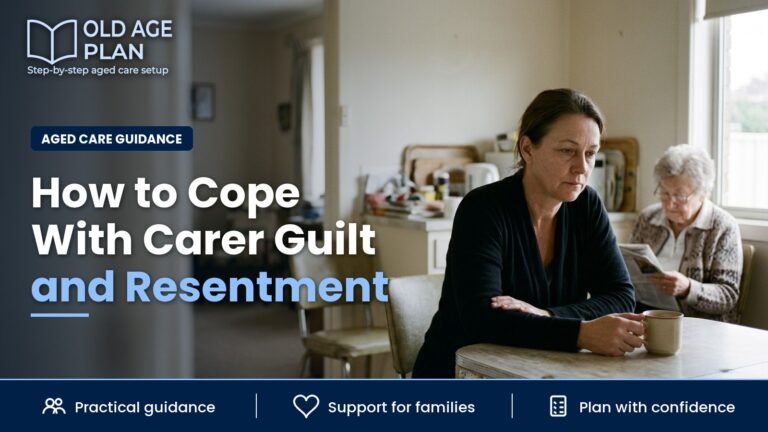
An adult daughter taking a quiet moment at a kitchen table while managing carer guilt and resentment.

How to Cope With Carer Guilt and Resentment

Caring for an ageing parent often brings intense emotional pressure, leaving many family members overwhelmed. Feeling carer guilt and resentment does not mean you lack compassion or love; it signals that your workload has exceeded your capacity. Understanding these feelings helps you reset healthy boundaries, share responsibilities with family, and access formal aged care services.

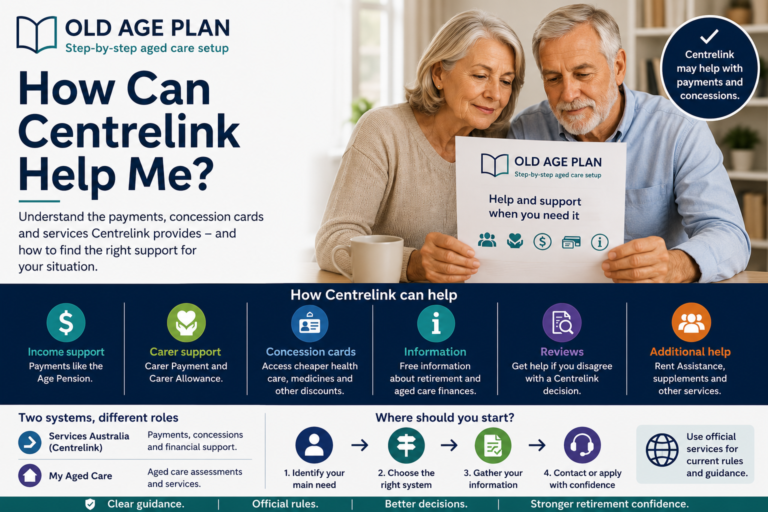
Older Australian couple learning how Centrelink can help with retirement payments, concession cards and aged care support

How Can Centrelink Help Me?

Not sure where to start? Learn how Centrelink helps older Australians with the Age Pension, concession cards, carer payments and retirement support, and understand when you should contact My Aged Care instead.