
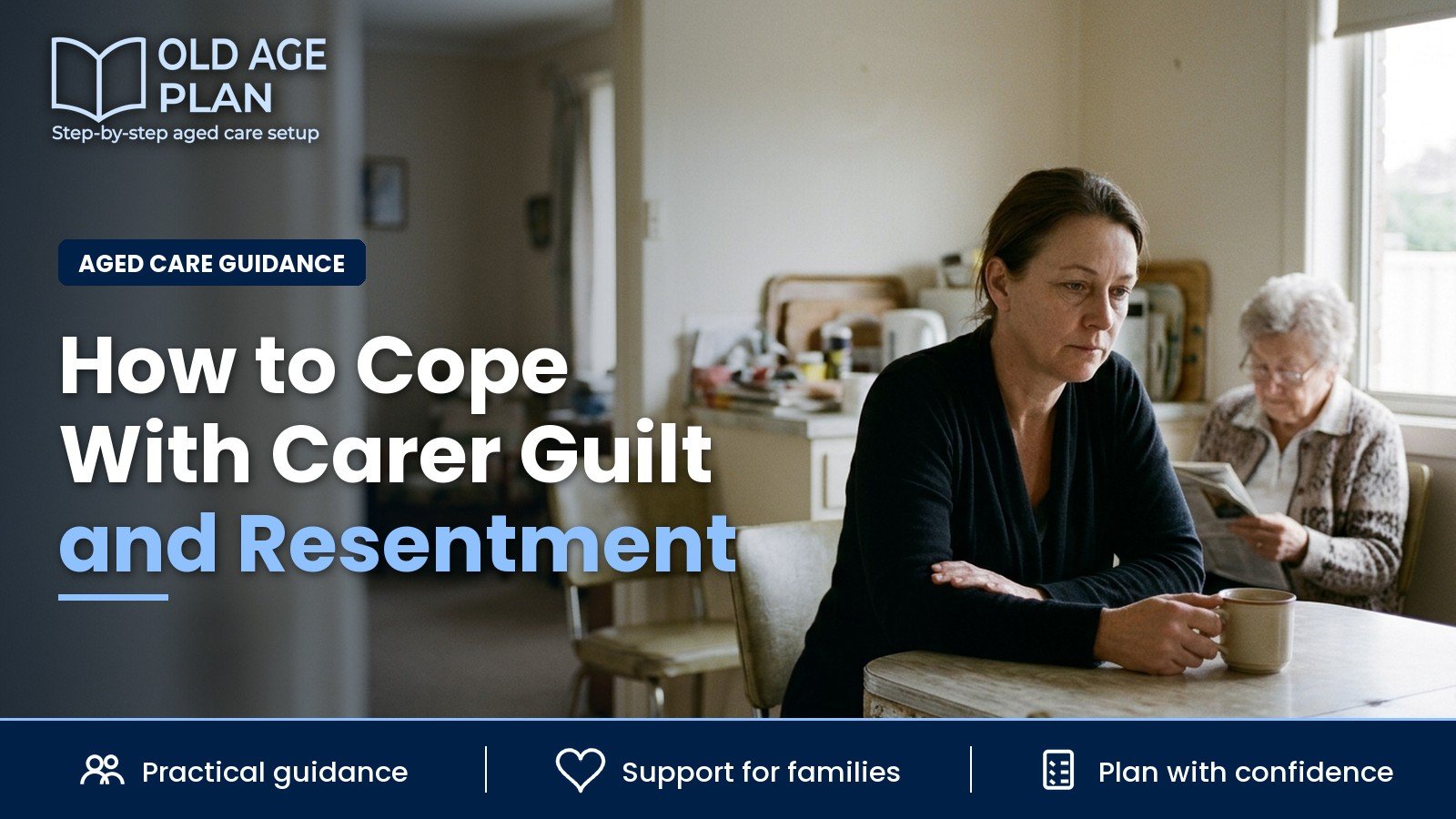

Experiencing carer guilt and resentment is one of the most painful and misunderstood realities of supporting an ageing parent. When you take on the daily responsibilities of assisting an older family member, the emotional toll often builds quietly beneath the surface. You may feel an overwhelming obligation to be patient and ever-present, yet find yourself battling sudden flashes of anger, frustration, and exhaustion. These reactions do not mean you lack compassion or that you have failed your parent. Instead, they are direct signals that your caregiving responsibilities have exceeded your personal capacity.
Many adult children slip into caring gradually, stepping in to manage household chores, transport, meals, and personal care without formal preparation or outside assistance. Over time, the balance of your relationship shifts from parent and adult child to care recipient and provider. As your own personal life, work commitments, and wellbeing are pushed aside, resentment naturally surfaces, followed swiftly by intense guilt for feeling resentful. Understanding why these dual emotions arise is the first essential step toward resetting boundaries, protecting your mental health, and accessing formal aged care support.
Short Answer
Carer guilt and resentment are standard psychological responses to chronic emotional and physical strain, not signs of personal failure. When an adult child provides continuous support to an ageing parent without adequate rest or assistance, their nervous system becomes overwhelmed. Resentment signals that your personal boundaries have eroded and your energy is depleted, while guilt arises from unrealistic expectations of endless self-sacrifice.
Coping effectively requires moving away from the belief that you must manage everything alone. You can alleviate this burden by establishing clear limits on your availability, openly discussing shared duties with family members, and arranging formal aged care services. Subsidised supports—such as planned respite, domestic assistance, and free carer counselling through Carer Gateway and My Aged Care—exist specifically to sustain family carers and restore balance to family relationships.
Key Takeaway
Carer resentment is not evidence of a lack of love; it is an involuntary physiological alarm telling you that your personal boundaries have collapsed. Suppressing anger and pushing through exhaustion leads directly to clinical burnout and compromised care. Acknowledging your distress, setting realistic boundaries, and introducing formal aged care services honours your relationship by keeping both you and your parent safe and supported.
Why Caring for an Ageing Parent Triggers Complicated Emotions
Caring for an older parent introduces a profound role reversal that challenges longstanding family dynamics. For decades, your parent served as a source of authority, protection, and guidance. When physical decline, cognitive changes, or chronic illness force you to assume responsibility for their daily safety and living needs, the psychological adjustment is enormous. You are asked to parent your parent, a dynamic that can feel deeply uncomfortable for both parties.
Most people provide unpaid support because they love their parent, not because they are trained aged care professionals. Without professional distance, every interaction carries emotional weight. When a parent refuses medication, resists outside assistance, or criticises the help provided, adult children often internalise the friction. You may mourn the vibrant person your parent once was while simultaneously feeling trapped by the continuous demands of their present condition.
This emotional collision creates the classic cycle of carer guilt and resentment. Resentment builds when your personal time, career ambitions, and family relationships are consumed by relentless elder care duties. Immediately following that frustration, guilt rushes in. You tell yourself that your parent looked after you as a child, or that they cannot help their decline, leading you to conclude that your anger is ungrateful or cruel. In truth, this internal friction is the predictable outcome of chronic role strain.
Recognising Carer Guilt and Resentment Early
Carer distress rarely appears overnight; it accumulates across months of quiet self-neglect. Early recognition is vital because prolonged resentment corrodes your physical health and fractures your relationship with your parent. Initial warning signs frequently manifest as irritability over minor inconveniences, such as feeling sudden rage when your parent calls for the third time in an hour or misplaces their glasses.
Physical symptoms often accompany these emotional signals. You may notice persistent tension headaches, muscle aches, disrupted sleep patterns, or a feeling of deep dread when driving to your parent's home. Emotionally, you might find yourself daydreaming about escape, wishing someone else would step in, or feeling emotionally detached and numb during caregiving tasks. These are classic defences against emotional overload.
Initial warning signs manifest as irritability when your parent calls over minor inconveniences.
You notice persistent tension headaches, disrupted sleep patterns, and dread when driving home.
You find yourself daydreaming about escape and feeling emotionally detached during caregiving tasks.
Guilt drives overcompensation by agreeing to unsustainable requests before acute physical collapse forces a crisis.
When guilt takes over, it usually drives overcompensation. Carers frequently respond to their internal resentment by trying even harder, agreeing to unsustainable requests, and refusing outside help out of fear of being judged. Catching this pattern early allows you to pause, identify that your capacity is maxed out, and seek practical solutions before acute physical or mental collapse forces a crisis.
Normalising Your Feelings Without Self-Judgement
The first step in resolving carer distress is confronting the taboo surrounding negative emotions. Australian society often celebrates family carers as selfless heroes, which inadvertently creates a harmful standard. When you are expected to be indefinitely patient and cheerful, admitting that you feel furious, trapped, or resentful can feel like a shameful confession. In reality, anger is an honest emotional response to having your personal boundaries violated.
Self-judgement only amplifies your exhaustion. When you criticise yourself for being impatient, you add a layer of emotional suffering onto an already heavy practical workload. Acknowledging that you can love your parent deeply while disliking the burden of caregiving is liberating. These two realities comfortably coexist. Love is the underlying commitment to your parent's wellbeing; resentment is the biological protest against unmanageable stress.
Giving yourself permission to feel frustrated removes the need to hide your distress. Carer Gateway offers access to free, confidential counselling specifically designed to help carers unpack these exact feelings. Speaking openly with a qualified professional or joining a local peer support group reassures you that thousands of other Australian family members are experiencing identical emotions, removing the isolation that feeds carer guilt.
How Unspoken Family Expectations Fuel Burnout
Resentment is rarely directed solely at the ageing parent; it is frequently aimed at siblings and other family members who appear uninvolved. In many Australian families, the caring role defaults to one adult child based on gender, proximity, birth order, or marital status. When one sibling shoulders daily appointments, domestic chores, and medical coordination while others offer occasional phone calls or unsolicited advice, severe bitterness inevitably develops.
Unspoken expectations are dangerous because they assume willingness without formal agreement. The primary carer often waits for siblings to notice their exhaustion and offer help, while siblings assume that because the primary carer is coping silently, no extra help is required. This dynamic fosters passive-aggressive communication, fractured family bonds, and escalating stress within the household.
Caring Role Defaults to One Child
Based on proximity or gender, the caring role often defaults to one adult child.
Domestic Chores and Unsolicited Advice
Severe bitterness develops when one sibling shoulders medical coordination and domestic chores while others offer occasional advice.
Unspoken Assumptions and Silent Coping
When the primary carer is coping silently, siblings assume without formal agreement that no extra help is required.
Schedule a Dedicated Family Meeting
Schedule a dedicated meeting with family members to lay out care requirements and choose specific weekly tasks.
Breaking this cycle requires moving from unspoken assumptions to direct, factual communication. Rather than dropping hints or expressing generalised frustration, schedule a dedicated family meeting to lay out the real scope of your parent's care requirements. Documenting weekly tasks—such as transport, meal preparation, medication management, and cleaning—allows siblings to see the practical reality and choose specific duties they can take over, reducing the primary carer's solo burden.
Practical Ways to Reset Boundaries With an Ageing Parent
Setting boundaries with an ageing parent can feel deeply uncomfortable, particularly if the parent is used to having your undivided attention. However, clear limits are an act of preservation, not abandonment. Without boundaries, your availability becomes limitless, encouraging dependency and accelerating your emotional depletion. Healthy caregiving requires distinct operational boundaries between being a loving son or daughter and acting as a domestic worker.
Start by defining your physical and scheduling limits. You might decide that you will no longer answer non-urgent phone calls after eight o'clock in the evening, or that you will dedicate specific days of the week to visiting rather than dropping in every day. Communicate these limits calmly and proactively rather than during an argument. Use warm, firm language that affirms your care while establishing your reality, such as explaining that you need Tuesday evenings for your own family.
Expect some resistance or initial guilt-tripping from your parent. Resistance is a normal reaction when familiar patterns change. When your parent complains that they only want you to help, acknowledge their feelings without rescinding your boundary. Remind them that by preserving your energy and health, you can continue supporting them reliably over the long term, rather than burning out completely.
When It Is Time to Share the Caring Role
A critical milestone in any caregiving journey is recognising that your parent's care needs have outgrown what one family member can safely provide. Continuing to deliver total care on your own when a parent has significant mobility decline, cognitive deterioration, or complex clinical needs is unsafe for everyone involved. Sharing the role with formal service providers is not giving up; it is transitioning to a sustainable model of support.
Signs that it is time to introduce formal services include regular lifting or transfers that strain your back, increasing wandering or confusion from dementia, medication errors, and persistent sleep deprivation. If you find yourself dreading every visit or noticing that your own medical appointments and relationships have been abandoned, outside support is no longer optional.
Transitioning to shared care allows you to step back into your foundational role as a son, daughter, or partner. When professional care workers handle personal hygiene, showering, and domestic chores, the time you spend with your parent can once again focus on emotional connection, conversation, and companionship. This restoration of relationship quality directly resolves the chronic resentment generated by endless menial tasks.
Support Services Available for Exhausted Family Carers
Australia has established formal government-subsidised pathways to assist carers and older individuals, ensuring you do not have to carry this responsibility alone. The Commonwealth Home Support Program (CHSP) provides entry-level assistance for older Australians aged 65 and over (or 50 and over for Aboriginal and Torres Strait Islander people), helping them remain living independently and safely at home through basic subsidised services.
Under entry-level care programs, older parents can be assessed for domestic assistance, which covers general house cleaning, home laundry services, and shopping support. Taking these repetitive domestic duties off your shoulders frees up critical time and emotional energy. For parents with more complex or intensive requirements, the Support at Home program provides ongoing access to coordinated services, assistive equipment, and modifications.
Respite care is another vital safeguard designed specifically to give both you and your parent a healthy break. Home or community general respite offers day or overnight care at home, in a community centre, or in an aged care facility. Additionally, community cottage respite provides overnight, weekend, or short-term stays in a cottage setting. If an unexpected crisis occurs and you require immediate assistance, Carer Gateway provides emergency respite support via their national line on 1800 422 737.
Commonwealth Home Support Program
This program provides entry-level domestic assistance, which covers house cleaning and shopping, and frees up critical emotional energy.
Support at Home Program
Provides coordinated services, assistive equipment, and modifications for parents with complex or intensive requirements.
General and Cottage Respite
Offers day, overnight, or weekend stays in a cottage setting or community centre to give carers a healthy break.
Carer Gateway Emergency Respite
When an unexpected crisis occurs, access immediate assistance and emergency respite support via 1800 422 737 through Carer Gateway.
Decision Support
Define Clear Operational Boundaries
Identify specific visiting hours to protect your wellbeing, and communicate schedule limits calmly to your parent.
Convene a Structured Family Meeting
List caregiving responsibility on paper to siblings, and request measurable commitments for transport or financial contributions.
Contact Carer Gateway for Support
To access free carer counselling and respite options, phone Carer Gateway on 1800 422 737.
Initiate Formal Aged Care Assessment
To organise subsidised domestic assistance and general respite services for your parent, contact My Aged Care on 1800 200 422.
Warning Signs: High Risk of Imminent Carer Burnout
Frequent Irritability and Explosive Anger
Reacting with disproportionate frustration to simple questions or daily routines signals that your nervous system is in chronic survival mode and requires immediate relief.
Complete Neglect of Personal Health
Cancelling your own medical checks, skipping meals, sacrificing sleep, or ignoring personal prescriptions indicates that the caring role has become dangerously unsustainable.
Persistent Feelings of Dread or Fantasies of Escape
Feeling overwhelming anxiety when approaching your parent's home or constantly wishing to disappear signals that your psychological coping mechanisms are exhausted.
Social Isolation and Severed Relationships
Withdrawing completely from friends, hobbies, and personal family members because caregiving consumes all available hours is a leading precursor to clinical depression.
Common Questions About Carer Guilt and Resentment
Is it normal to feel resentment toward my ageing parent?
Yes. Feeling resentment toward an ageing parent is an entirely normal human response when your personal needs, boundaries, and energy are continuously compromised by caregiving demands. It does not mean you do not love your parent; it means your workload has exceeded your physical and emotional capacity.
How do I handle guilt when saying no to my parent?
Recognise that saying no to an unsustainable demand allows you to say yes to your own health and longevity as a carer. Remind yourself that burning out completely helps no one. Acknowledge your parent's feelings with empathy, but keep your boundary firm and consistent.
What is the difference between normal carer stress and clinical burnout?
Carer stress typically fluctuates and resolves after periods of rest or short breaks. Clinical burnout involves chronic emotional detachment, persistent dread, physical exhaustion that sleep does not fix, and severe feelings of helplessness. If you experience persistent depressive symptoms, seek medical advice.
What free services does Carer Gateway provide?
Carer Gateway offers a range of free services including in-person and telephone counselling, peer support groups, online community forums, self-paced skills courses, self-guided coaching, and assistance with planned or emergency respite care across Australia.
How do I get subsidised domestic assistance for my parent?
Domestic assistance, including house cleaning, laundry, and shopping, can be accessed through aged care programs like the Commonwealth Home Support Program. Your parent must undergo an assessment arranged through My Aged Care to determine their eligibility for subsidised services.
How does respite care work in Australia?
Respite care provides short-term relief for both carers and care recipients. It can occur at home, in community day centres, overnight in cottage settings, or temporarily in residential aged care. Planned respite can be arranged through aged care programs or Carer Gateway.
What should I do if my siblings refuse to help with our parent?
Present your siblings with a clear, factual list of care duties and financial requirements rather than vague requests for help. If they continue to refuse, stop covering every gap alone. Engage formal government-funded services through My Aged Care to fill the shortfall.
What You May Really Be Trying To Decide
If you are searching for ways to deal with carer guilt and resentment, you may not only be asking how to control your difficult emotions.
You may be trying to decide:
Am I a bad person for feeling so frustrated and angry?
Does feeling resentful mean I no longer love my parent?
How much of my own life am I expected to give up?
What if stepping back feels like abandoning Mum or Dad?
Can I admit that I simply cannot cope on my own any more?
What will happen to my own health if nothing changes?
Caring for an ageing parent can quietly push your own needs aside until chronic exhaustion turns into guilt and frustration. These questions matter because they are not about your devotion or character; they are about recognising where your limits lie and deciding whether it is time to give yourself permission to seek support before you reach breaking point.
Sources
Disclaimer
This article provides general information about managing carer guilt and resentment in Australia. It is not medical, legal or financial advice and does not determine eligibility, funding or care outcomes. Processes and individual circumstances vary. Confirm current requirements with the relevant government service or your assessment organisation, and seek qualified advice where appropriate.
Summary
Carer guilt and resentment are not moral failings; they are protective emotional alarms signalling that you are carrying an unmanageable load. When you absorb the complex physical, emotional, and logistical demands of an ageing parent without relief, your wellbeing inevitably suffers. Recognising that love and frustration naturally coexist allows you to stop punishing yourself for having human limitations and start taking constructive action.
Sustainable caregiving requires firm personal boundaries and shared responsibility. By opening transparent discussions with siblings, setting clear operational limits with your parent, and reaching out to Carer Gateway on 1800 422 737 and My Aged Care on 1800 200 422, you can replace chronic exhaustion with formal support. Stepping back from menial care tasks enables you to preserve your health and reclaim your vital role as a loving family member.