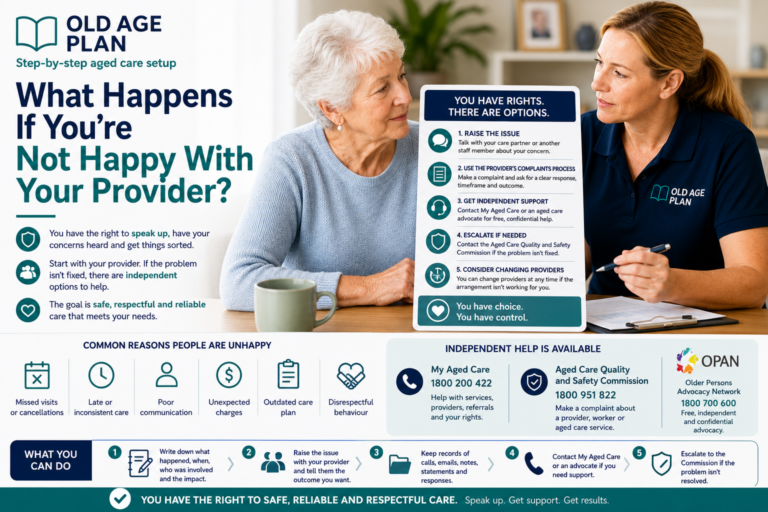
What Happens If You’re Not Happy With Your Provider?

Not happy with your Support at Home provider? Learn your rights, how to raise concerns, make a complaint, seek independent advocacy and decide whether changing providers is the right next step.

The Support at Home category brings together practical guidance to help older Australians and their families understand the Australian Government’s Support at Home program and how it can help people remain independent in their own homes. It explains how the program works, who may be eligible and the decisions involved in accessing and managing in-home aged care services.
Articles in this category cover eligibility, assessments, funding, service types, provider selection, care planning, ongoing reviews, participant contributions and managing support over time. The category also explores common questions, changes to in-home aged care and practical strategies for getting the most from available services while continuing to live safely and independently at home.
Whether you’re preparing to enter the Support at Home program or already receiving services, this category provides Australian-focused information to help you understand your options, navigate the system with confidence and make informed decisions about ongoing care and support at home.

Not happy with your Support at Home provider? Learn your rights, how to raise concerns, make a complaint, seek independent advocacy and decide whether changing providers is the right next step.

You can change Support at Home providers at any time. Learn how to compare providers, reactivate your referral code, transfer your funding, coordinate exit and start dates and protect continuity of care.

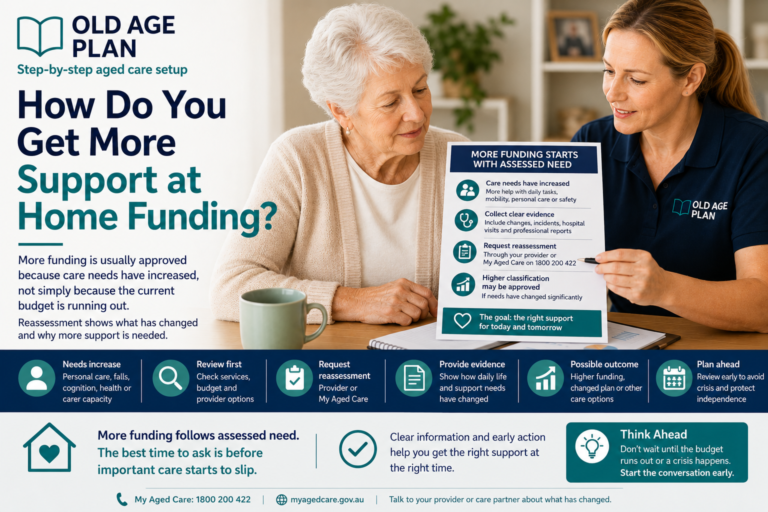
More Support at Home funding usually requires reassessment showing that care needs have increased. Learn how to review the current budget, document changes, request reassessment and understand what may happen after a higher classification is considered.

Care needs often change over time. Learn how Support at Home adapts through service reviews, care plan updates, budget changes and reassessment when your current support is no longer enough.

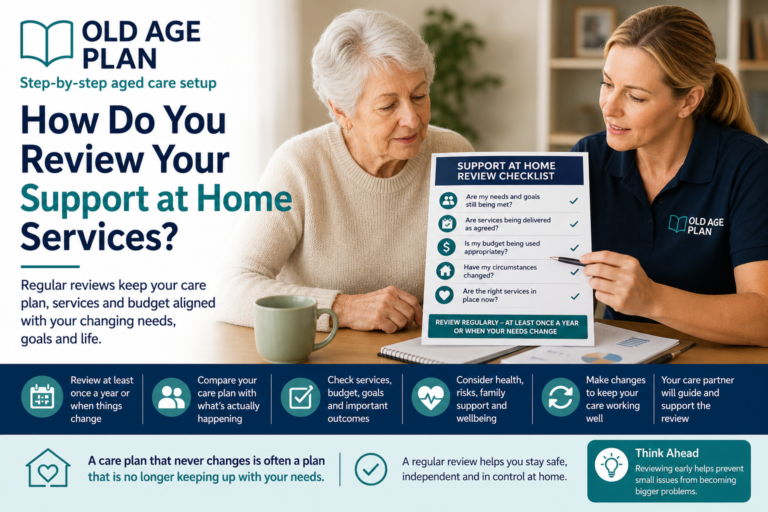
Reviewing your Support at Home services helps confirm whether your care plan, budget and provider arrangements still match your needs. Learn what to check, when to request a review and what may change afterwards.

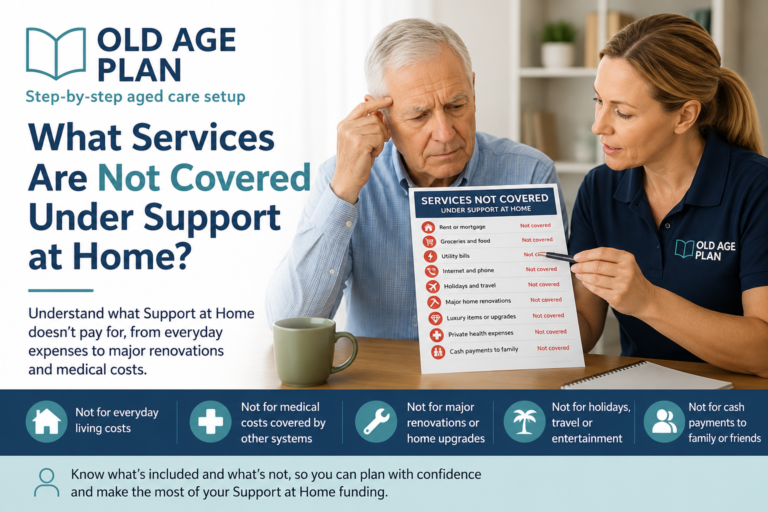
Support at Home does not cover every household expense, medical cost or personal purchase. Learn which services and expenses are generally excluded, how other funding systems may apply and what to confirm before paying for a service privately.

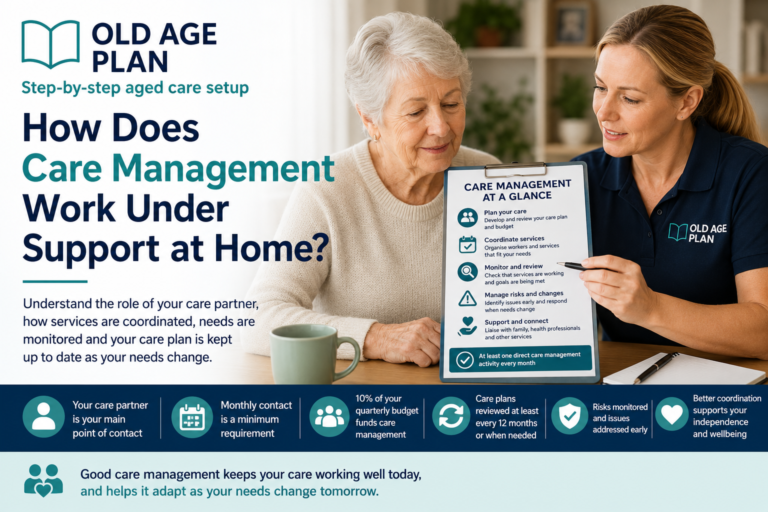
Care management helps coordinate your Support at Home services so they continue meeting your needs as circumstances change. Learn what a care partner does, how care plans are reviewed and what good care management should look like.

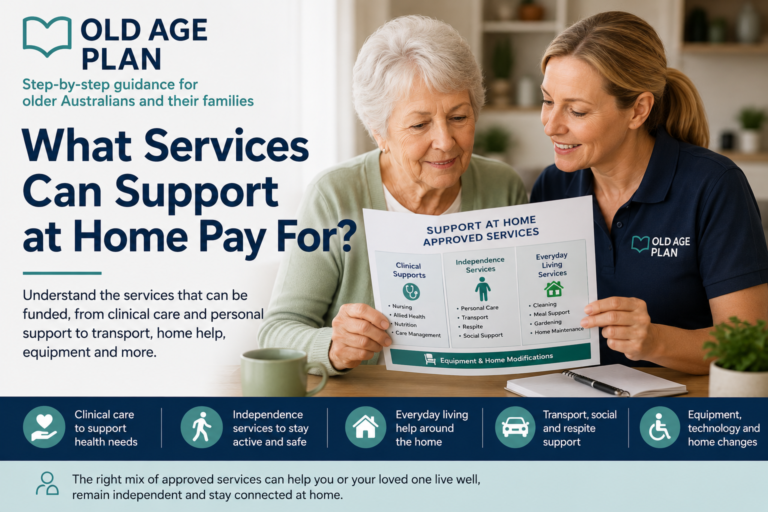
Support at Home can fund approved clinical supports, independence services and everyday living assistance. Learn how funding may cover nursing, personal care, transport, respite, cleaning, meals, assistive technology and home modifications when services align with assessed needs.

Support at Home contributions are the amounts some participants pay towards approved aged care services. Learn which services attract contributions, how Services Australia calculates your rate, how provider prices affect what you pay and what to check on monthly statements.

Support at Home budgets determine how government funding is allocated for approved aged care services. Learn how quarterly budgets work, how providers use the funding, what monthly statements should show and how to recognise when your budget or care plan may need reviewing.