
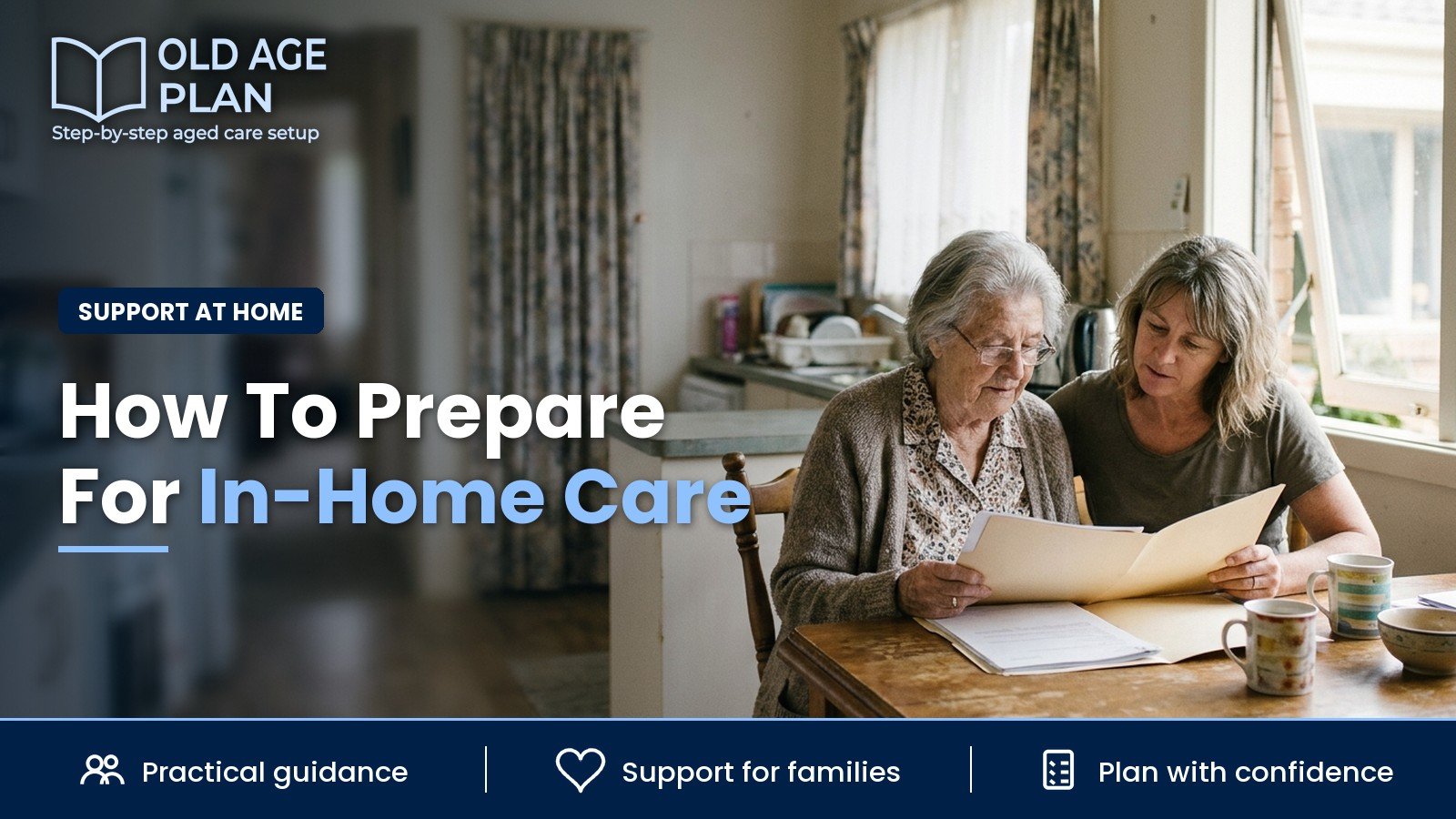

Learning how to prepare for in-home care involves thoughtful conversations, environmental adjustments, and practical administrative steps before support workers arrive. When an ageing parent begins receiving assistance, the process can evoke feelings of vulnerability or a perceived loss of autonomy. Approaching the transition with structured planning helps ensure your parent feels respected and supported throughout every stage.
A smooth start relies on balancing personal routines with practical household safety. By understanding how service agreements function, clarifying what tasks support workers can perform, and setting up clear communication systems, families can establish a reassuring care environment from the very first visit.
Short Answer
Preparing for in-home care requires discussing care preferences openly with your parent, formalising a clear service agreement with your chosen provider, and organising the home to ensure safe, practical access for visiting workers. Setting up a dedicated folder with care plans, emergency contacts, and daily schedules establishes consistent routines early.
Involve your parent in every decision, from scheduling preferred visiting times to detailing specific personal routines. Making small modifications, such as clearing walkways, checking bathroom accessibility, and establishing clear boundaries for personal spaces, allows support workers to deliver assistance safely while fully preserving your parent's comfort and independence.
Key Takeaway
Successful in-home care starts with collaboration, not takeover. Involving your parent in selecting service preferences, establishing a clear care plan, and preparing the physical space ensures home care protects their independence rather than diminishing it.
Having Gentle Conversations About Support
Introducing the concept of home care can be emotionally challenging for an ageing parent. Many older individuals worry that accepting assistance signals a surrender of their personal freedom or privacy. Framing the conversation around staying at home safely, rather than highlighting physical decline, helps alleviate these concerns.
Focus on specific tasks that have become burdensome, such as vacuuming, heavy laundry, or meal preparation. Explaining that domestic assistance and personal care are designed to keep people living independently in their own homes for longer allows your parent to view professional support as an empowering tool rather than an intrusion.
Listen carefully to their hesitations without immediately dismissing them. If a parent feels anxious about unfamiliar people entering their personal space, reassure them that they have input into who visits, when services occur, and how tasks are completed according to their written care plan.
How To Prepare For In-Home Care Practically
Practical preparation begins once you have selected an approved provider and are ready to finalise arrangements. Before services commence, your provider will present a service agreement. This legal contract sets out the exact services delivered, your parent's care needs, and the fees or contributions agreed upon.
Alongside the service agreement, you and your parent will work with the provider to develop a tailored care plan. This document details daily routines, specific preferences, and any particular considerations surrounding care delivery. Having clear documentation prevents misunderstandings about what support workers are contracted to do.
Ensure your parent's My Aged Care Online Account is current and that you or another trusted family member are listed as registered supporters if needed. This account allows you to review care approvals, track service agreements, and update personal details as support needs evolve.
Setting Up The House For Carer Access And Safety
Clear wide pathways through living areas, hallways, and entryways to allow easy mobility for your parent and visiting support workers.
Review bathroom safety, considering whether professional home adjustments like grab rails, non-slip mats, or handheld shower heads are required.
Ensure adequate lighting along entry steps, corridors, and high-traffic areas, replacing dim bulbs to minimise fall risks.
Store cleaning products, fresh bed linen, and laundry essentials in accessible locations if domestic assistance services are scheduled.
Determine safe entry procedures, such as providing a secure key safe or establishing clear instructions on how workers should announce their arrival.
Secure family pets in a comfortable, separate room during initial visits to avoid distress for both the animals and visiting workers.
Creating A Central Folder For Care Notes
A dedicated care folder kept in an accessible location, such as the kitchen counter or hallway console, provides vital continuity across visiting care workers. This folder should contain the formal care plan, emergency contact numbers, GP details, and an outline of regular daily routines.
Include practical household notes that help workers orient themselves without needing to disturb your parent repeatedly. Helpful details include where extra towels are kept, how specific appliances operate, and preferred cleaning supplies. You can also include instructions for rubbish bin collection days and heating controls.
Support workers often use a visit logbook or digital notes to record completed tasks, observations, or general wellbeing updates. Keeping a physical notebook inside the folder allows family members and carers to leave polite notes or questions for visiting staff, establishing clear lines of communication.
Preserving Your Parent's Independence And Routine
A primary goal of in-home support is to support existing habits rather than overhaul them. Discuss your parent's preferred daily rhythm with the provider during the care planning stage. If your parent prefers to shower in the evening or wake late, scheduled visits should respect these personal timings whenever possible.
Encourage workers to assist with tasks rather than taking them over entirely. For example, if your parent enjoys folding laundry or participating in light meal preparation, this should be clearly stated in the care plan. Maintaining active involvement in daily living tasks reinforces confidence and dignity.
Active involvement in tasks
Private areas within the home
Identify private areas within the home that remain off-limits to visiting workers unless specifically requested. Designating a personal sanctuary, such as a study or a favourite sitting area, ensures your parent never feels like a guest within their own residence.
What To Expect On The First Visit
The initial visit is often an introductory session rather than an intensive working appointment. A care coordinator, case manager, or senior worker may accompany the support worker to introduce them to your parent, review the living space, and confirm the details outlined in the care plan.
Having a trusted family member present during this first appointment can provide significant emotional reassurance. Use this time to facilitate introductions, walk through the house together, and verify that the worker understands where supplies are kept and how your parent prefers tasks handled.
Expect the first session to feel slightly unfamiliar. It takes time for both the client and the worker to build rapport and establish a working rhythm. Encourage your parent to observe how the worker operates and reassure them that adjustments can always be made after the visit.
Handling Early Concerns And Teething Issues
Teething issues are common during the initial weeks of in-home care. Tasks might not be completed in the exact manner your parent prefers, or scheduling variations may occur. Open communication with your service provider is the most effective way to resolve these minor friction points.
If a specific support worker is not a good personality match, speak directly with your provider's care coordinator. Service agreements can accommodate requests for different workers, and providers understand that personal compatibility is essential for a successful care relationship.
Review the care plan after the first few weeks to assess whether the allocated hours and services accurately match your parent's needs. You can request changes to the mix of services with your provider at any stage, or seek a formal reassessment if support needs change significantly.
Decision Support
Establishing Service Agreements
Carefully review the proposed service agreement before signing. Confirm it clearly itemises approved tasks, transparently outlines required contributions, and details your provider's cancellation policies.
Addressing Home Modifications
Identify whether clinical assessments are required for home adjustments like grab rails, ramps, or lever taps through qualified allied health professionals to ensure safety before personal care begins.
Clarifying Task Inclusions
Differentiate between covered domestic assistance and excluded services. Professional cleaning, pet care, and non-prescribed modifications cannot be funded through standard subsidised home care services.
Engaging Carer Support Services
Recognise the emotional toll on family carers. Explore free support, counselling, or scheduled respite through dedicated services like Carer Gateway to maintain personal wellbeing alongside professional home care.
Warning Signs: Early Home Care Friction
Parental Withdrawal
If a parent becomes unusually quiet, anxious, or uncooperative before scheduled visits, discuss their feelings gently to identify whether the concern relates to loss of control or worker incompatibility.
Care Plan Drift
Notice if visiting workers are routinely performing tasks outside the agreed care plan or failing to complete essential agreed duties. Address discrepancies promptly with the service coordinator.
Safety Hazards Ignored
Failing to rectify loose rugs, poor bathroom access, or inadequate lighting can lead to falls or prevent workers from delivering personal care safely under occupational safety guidelines.
Family Carer Exhaustion
Believing that professional home care completely eliminates family caregiver stress is unrealistic. Persistent caregiver exhaustion indicates the current service mix or respite level requires formal review.
Common Questions About Preparing For In-Home Care
What is the difference between a care plan and a service agreement?
A service agreement is a legal contract outlining approved services, fees, and client obligations. A care plan is a separate operational document detailing exact care needs, daily routines, and personal preferences.
Can I be present during the first few home care visits?
Yes. Having a family member present during initial visits can provide reassurance, facilitate introductions, and ensure the support worker understands the home layout and specific preferences.
What tasks are excluded from domestic assistance services?
Domestic assistance covers general cleaning, laundry, and shopping assistance. It excludes specialised professional cleaning, pest control, dry cleaning, pet care services, and the cost of groceries.
How are home modifications arranged before care starts?
Simple or complex home adjustments, such as grab rails or ramps, require identification and prescription by a qualified health professional to ensure they are clinically fit-for-purpose and properly funded.
What happens if my parent does not get along with their assigned carer?
You can contact your service provider's care coordinator to discuss your concerns. Providers understand the importance of rapport and can assign alternative workers to match your parent's preferences.
Can our approved mix of services be adjusted later?
Yes. You and your provider can discuss and modify the mix of services at any time within your approved budget. If your parent's care needs increase, you can request a formal reassessment.
What support is available for family members who provide ongoing care?
Unpaid family carers can access free counselling, peer support, coaching, and planned respite services through Carer Gateway by calling 1800 422 737 to support their own physical and mental health.
What You May Really Be Trying To Decide
If you are searching how to prepare for in-home care, you may not only be asking how to organise the house or set up a schedule.
You may be trying to decide:
Will Mum feel like her privacy is being taken away?
How do I help Dad feel comfortable having strangers in his home?
What if they resent me for bringing outside help in?
Will this make my parent feel like they are losing their independence?
How do we protect their dignity while letting carers do their job?
What if they refuse to let the support workers through the front door?
Underneath the practical checklists, the real decision is about how to preserve your parent's autonomy and emotional safety. Bringing care into a private family home is rarely just about organising rooms and routines; it is about finding a way to introduce vital support without making your parent feel as though they have lost ownership of their own life.
Standard Setup Pathway
For families ready to organise the home, establish service agreements, and schedule visits with an approved provider.
Parental Withdrawal Pathway
For families when a parent feels anxious about privacy, becomes uncooperative, or may refuse to let support workers through the front door.
Sources
Disclaimer
This article provides general information about preparing for in-home aged care in Australia. It is not medical, legal or financial advice and does not determine eligibility, funding or care outcomes. Processes and individual circumstances vary. Confirm current requirements with the relevant government service or your assessment organisation, and seek qualified advice where appropriate.
Summary
Preparing for in-home care requires thoughtful collaboration between your ageing parent, your family, and your chosen care provider. By holding respectful conversations early, establishing clear service agreements, and organising the physical environment for safety and accessibility, you can create a secure foundation that protects your parent's dignity and personal routines.
The transition to home care is an ongoing process that benefits from clear communication and regular reviews. Using central folders, monitoring early interactions, and engaging external support when needed ensures in-home assistance effectively supports your parent to continue living safely and independently in their own home.