How Long Does A My Aged Care Assessment Take?

How long does a My Aged Care assessment take? Learn how long the assessment appointment usually lasts, what affects waiting times and how long it may take before support begins.


Aged care decisions often begin before families fully understand the system, the available support pathways or the consequences of each choice.
Old Age Plan’s Aged Care Guidance category provides clear, practical information for Australian families navigating My Aged Care, assessments, Support at Home, residential aged care, provider decisions, care planning and changes in support needs.
These guides are designed to help families understand how the aged care system works, identify the questions they need to ask and recognise where important decisions may affect funding, services, independence, safety or future care arrangements.
Topics include preparing for a My Aged Care assessment, understanding referral codes and support plans, choosing or changing an aged care provider, managing Support at Home budgets and contributions, planning for residential aged care and responding when existing care is no longer enough.
Start with the guide that best matches the decision currently in front of your family. Each article explains the issue in plain language and connects to related aged care guidance where further planning may be required.
How long does a My Aged Care assessment take? Learn how long the assessment appointment usually lasts, what affects waiting times and how long it may take before support begins.
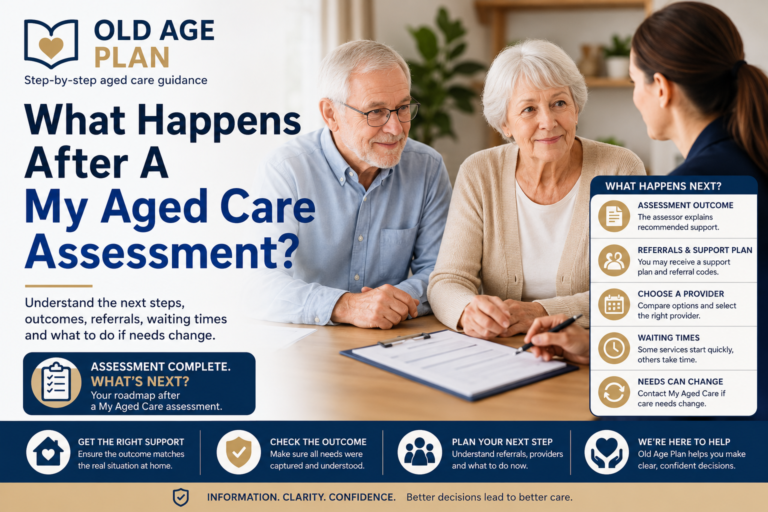
Wondering what happens after a My Aged Care assessment? Learn about assessment outcomes, support plans, referrals, provider selection, waiting times and what to do if care needs change.
Can a family member be present during a My Aged Care assessment? Learn who can attend, the role of family support, and how to help the assessor understand the older person's real care needs.
Preparing for a My Aged Care assessment can feel overwhelming when you do not know what questions will be asked. This guide explains the common assessment questions, why they matter and how families can prepare to ensure support needs are clearly understood.
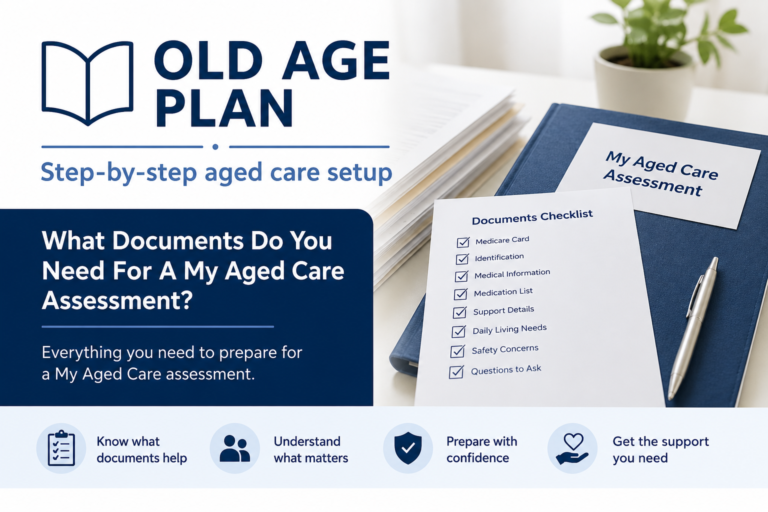
Preparing for a My Aged Care assessment is about more than gathering paperwork. This guide explains which documents to have ready, what information assessors may ask for and how families can better prepare for an accurate assessment of care and support needs.
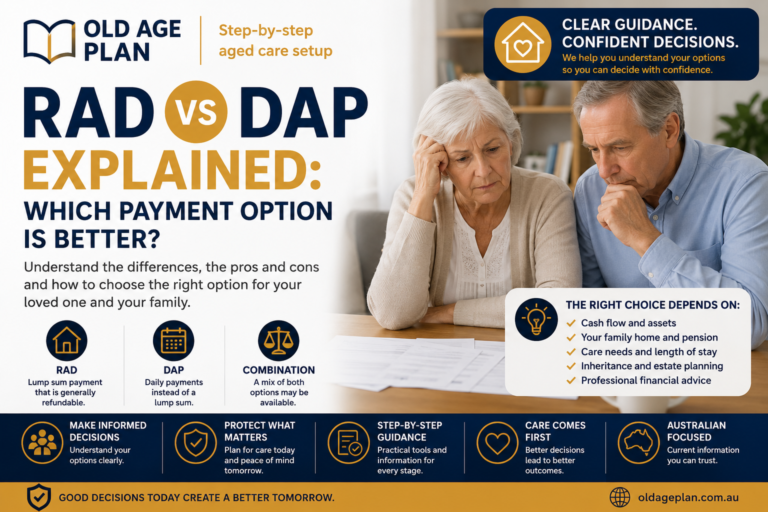
RAD and DAP are two of the most confusing residential aged care payment terms families encounter. This guide explains the difference between lump sum and daily accommodation payments, the financial trade-offs and the decisions families need to understand before committing.
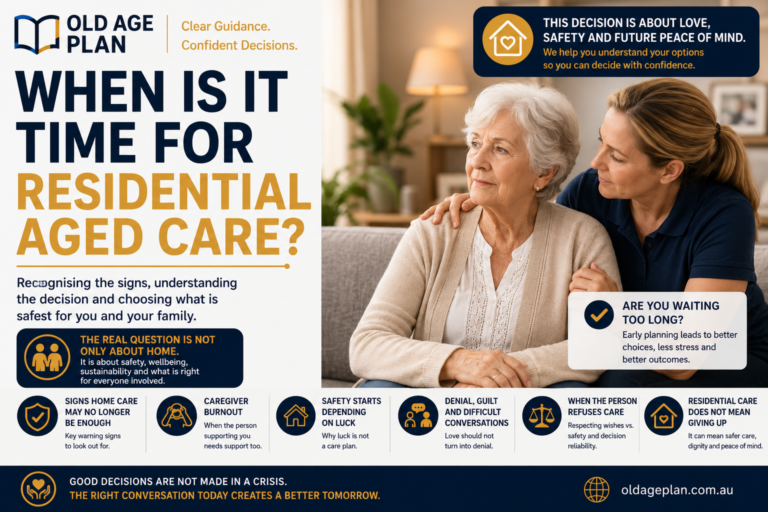
Knowing when it is time for residential aged care is one of the hardest decisions families face. This guide explains the warning signs, emotional barriers and the key questions that help determine whether home care is still safe and sustainable.

Residential aged care costs can feel overwhelming because families are often making financial and care decisions at the same time. This guide explains the main fees, accommodation payments and the cost mistakes families should avoid.

Residential aged care is one of the biggest decisions families make in later life. This guide explains when residential care may need to be considered, how costs work and how to evaluate whether home care is still sustainable.

Applying for My Aged Care is often the first formal step into Australia’s aged care system. This guide explains how to apply, who can apply on someone’s behalf and where families often get stuck.