
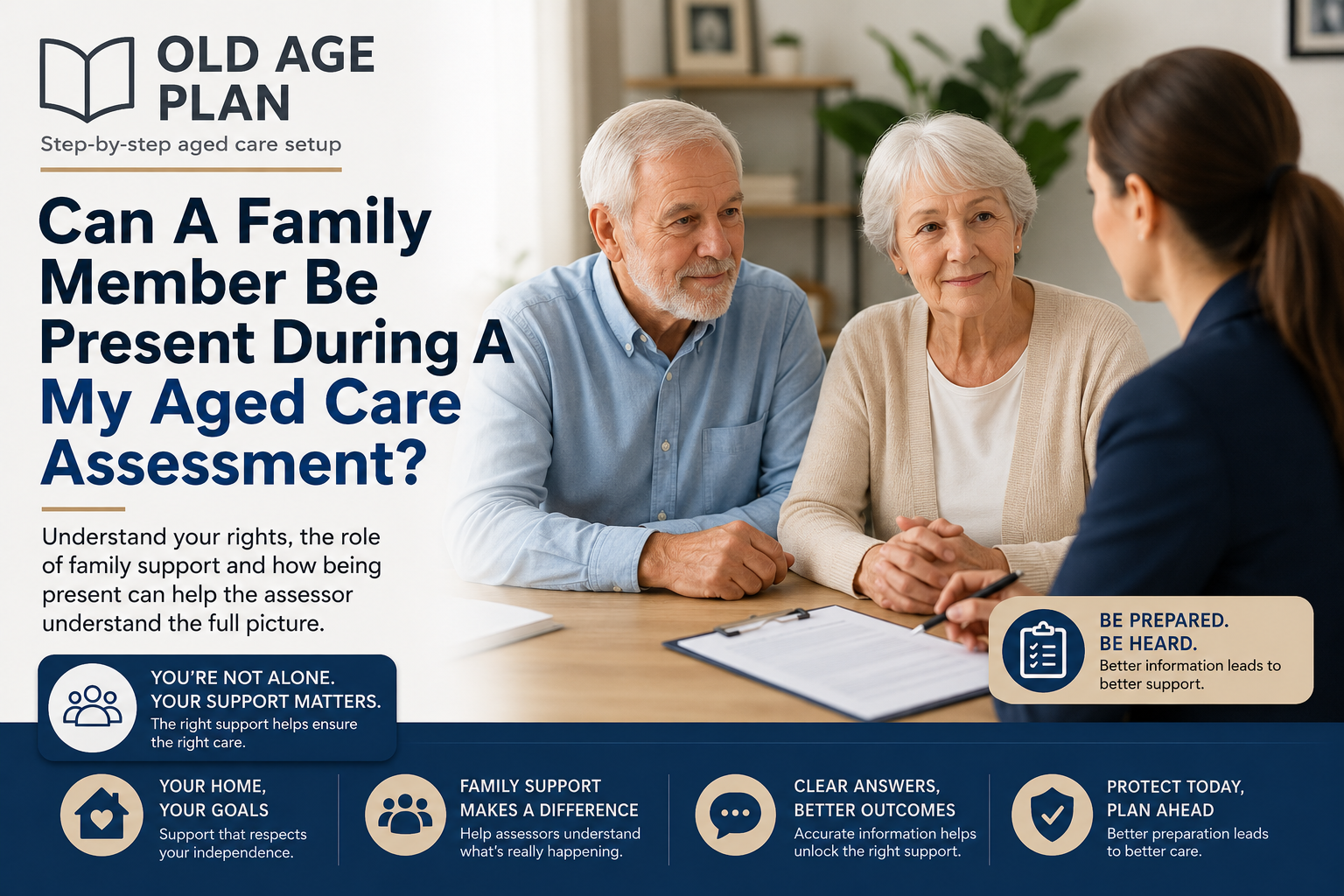

Can A Family Member Be Present During A My Aged Care Assessment?
If a My Aged Care assessment is coming up, it is common for families to wonder whether they are allowed to be there.
The short answer is usually yes. A family member, friend, carer or other trusted supporter can be present during the assessment if the older person wants them there. But being present is not the same as taking over the conversation.
The real purpose of family involvement is to support the older person, help them feel more comfortable, and make sure important care needs are not missed.
Short Answer
Yes. A family member, friend, carer or registered supporter can usually be present during a My Aged Care assessment if the older person agrees. The support person can help explain what is happening at home, but the assessment should still centre on the older person’s needs, wishes and preferences.
Key Takeaway
A family member can be present during a My Aged Care assessment, but their role should be supportive, not controlling. The best support person helps the assessor understand the full picture while still respecting the older person’s voice, dignity and choices.
Why Family Presence Can Matter
Many older people manage better during a short appointment than they do across a normal week.
They may also minimise problems, forget details, feel embarrassed, or say they are coping because they do not want to be a burden.
This is why family involvement can be valuable. A family member may be able to explain what happens between visits, what support is already being provided, and what risks are not obvious during the assessment itself.
OAP Reality Check: The question is not only “Can I be there?” The deeper question is “If I am not there, will the assessor understand what is really happening at home?”
Who Can Be Present During The Assessment?
My Aged Care says an older person can choose to have someone with them during the assessment. This may include a family member, friend, carer, registered supporter, Elder Care Support worker, care finder or interpreter.
The important point is consent. The older person should agree to who is present and what role that person will play.
What A Family Member Can Help With
A family member can help the assessment run more clearly and calmly.
Emotional Support
The older person may feel more comfortable having someone familiar nearby, especially if they are anxious, unwell or unsure what to expect.
Memory Support
A family member may help remember important details about falls, medication issues, hospital visits, daily routines or changes in support needs.
Hidden Care Support
Family may explain what help is already being provided with meals, cleaning, transport, supervision, personal care or safety checks.
Risk Visibility
A family member may describe risks that are not obvious during the assessment, such as bad days, confusion, wandering, unsafe cooking or carer exhaustion.
What A Family Member Should Not Do
Being present does not mean answering every question for the older person.
The assessor needs to understand the older person’s own views, wishes, preferences and goals. If a family member dominates the conversation, important information may become distorted.
Do Not Take Over
Let the older person answer when they can. Add context only where needed.
Do Not Minimise Needs
Avoid saying things are fine if family support is actually holding the situation together.
Do Not Argue In Front Of The Assessor
Family conflict can make the assessment harder and may distract from the older person’s needs.
Do Not Speak Against Their Wishes
If the older person has clear preferences, those preferences should be heard and respected wherever possible.
When Family Presence Is Especially Important
Family presence may be especially useful when the older person has difficulty explaining their needs clearly.
This may happen because of memory changes, hearing problems, language barriers, anxiety, cognitive decline, pain, fatigue, embarrassment or a strong desire to appear independent.
Memory Problems
The person may forget falls, appointments, medication mistakes or episodes of confusion.
Carer Pressure
The assessor may not see how much unpaid support is already being provided unless someone explains it.
Safety Concerns
Risks such as unsafe cooking, wandering, poor hygiene or falls may not be obvious during one conversation.
Communication Difficulty
The person may need help understanding questions, hearing clearly or expressing what they mean.
Can A Family Member Speak To The Assessor?
Yes, but usually with the older person’s permission.
My Aged Care explains that the assessor may ask permission to talk to people who support the older person, such as family, a carer, registered supporter or nominated Elder Care Support person.
This matters because the assessment is not only about what the older person says in the room. It is also about understanding the support network around them.
What Is A Registered Supporter?
A registered supporter is someone the older person chooses to help them make and communicate decisions about aged care.
My Aged Care says a registered supporter can help communicate the person’s wishes, support decisions about assessments and services, and request or access some information.
A family member or trusted friend may be registered as a supporter if that is what the older person wants.
Informal Support Person
A family member or friend may attend the assessment for emotional support and practical help.
Registered Supporter
A registered supporter has a more formal role in helping the person communicate wishes and deal with My Aged Care information.
Appointed Decision-Maker
An appointed decision-maker may have legal authority in certain situations, depending on the relevant documents and state or territory rules.
Advocate Or Care Finder
An advocate or care finder may help when the person is isolated, vulnerable or does not have someone suitable to support them.
What If The Older Person Does Not Want Family There?
If the older person does not want a particular family member present, that preference should be taken seriously.
There may be valid reasons. They may feel embarrassed. They may want privacy. There may be family conflict. Or they may worry that someone else will speak over them.
However, if there are serious safety concerns, cognitive changes or hidden care pressures, the family may still need to find an appropriate way to provide information, with consent where required.
How To Prepare If You Are Attending
If you are attending as a support person, preparation matters.
The goal is not to build a case against the older person. The goal is to help the assessor understand daily life accurately.
Write Down Examples
Include recent falls, missed meals, medication mistakes, confusion, hygiene changes or safety incidents.
List Current Support
Write down what family already does each week, including transport, shopping, cleaning, appointments and supervision.
Describe Bad Days
Do not only describe the best version of the situation. Explain what happens when things are difficult.
Clarify Goals
Think about what the older person wants: staying home, feeling safer, reducing stress, or getting practical help.
What You May Really Be Trying To Decide
The surface question is:
Can a family member be present during a My Aged Care assessment?
But the deeper concern is often:
Will the assessment reflect the real level of need if family does not help explain it?
This is the real decision tension. Families want the older person to be respected, but they also worry that important support needs will be missed if everyone is too polite, too brief or too optimistic.
Decision Support: How To Be Helpful Without Taking Over
The best support person balances two responsibilities.
Respect Their Voice
Let the older person speak for themselves where possible. Their preferences and goals matter.
Add Missing Context
Gently add information when the person forgets, minimises or cannot explain what is happening.
Explain Support Load
Make hidden family support visible so the assessor understands what is already required to keep things stable.
Keep The Focus Practical
Use specific examples instead of blame, frustration or broad statements like “everything is getting worse.”
Related Old Age Plan Articles
Next Steps With Old Age Plan
FAQ
Can a family member attend a My Aged Care assessment?
Yes. A family member can usually attend if the older person wants them there. A friend, carer or registered supporter may also be present.
Can a family member answer questions during the assessment?
A family member may provide information or support, usually with the older person’s permission. The assessment should still centre on the older person’s own needs, wishes and preferences.
Can someone speak to My Aged Care on behalf of an older person?
Yes, with permission. A family member, friend or carer may help with the application. A registered supporter may also be set up for ongoing support with My Aged Care discussions and information.
What if the older person wants privacy?
Their preference should be respected where possible. If family has important safety or support information, it may still be worth asking the assessor how that information can be shared appropriately.
Should a family member prepare notes before attending?
Yes. Notes about daily support, safety concerns, bad days, recent changes and carer pressure can help the assessor understand the real situation more clearly.
Summary
A family member can usually be present during a My Aged Care assessment if the older person agrees. Their role is to support the older person, help explain daily life clearly and make sure hidden support needs are not missed.
The best support person does not take over. They help the assessor understand the full picture while preserving the older person’s voice, dignity and decision-making wherever possible.
Sources
Disclaimer
This article provides general information only and is not medical, legal, financial or aged care advice.
Aged care rules, assessment processes and support pathways may change. Your situation may also depend on consent, health needs, communication ability, family involvement, legal authority and local service availability.
For current information, contact My Aged Care or speak with a qualified aged care, health, legal or financial professional where needed.