
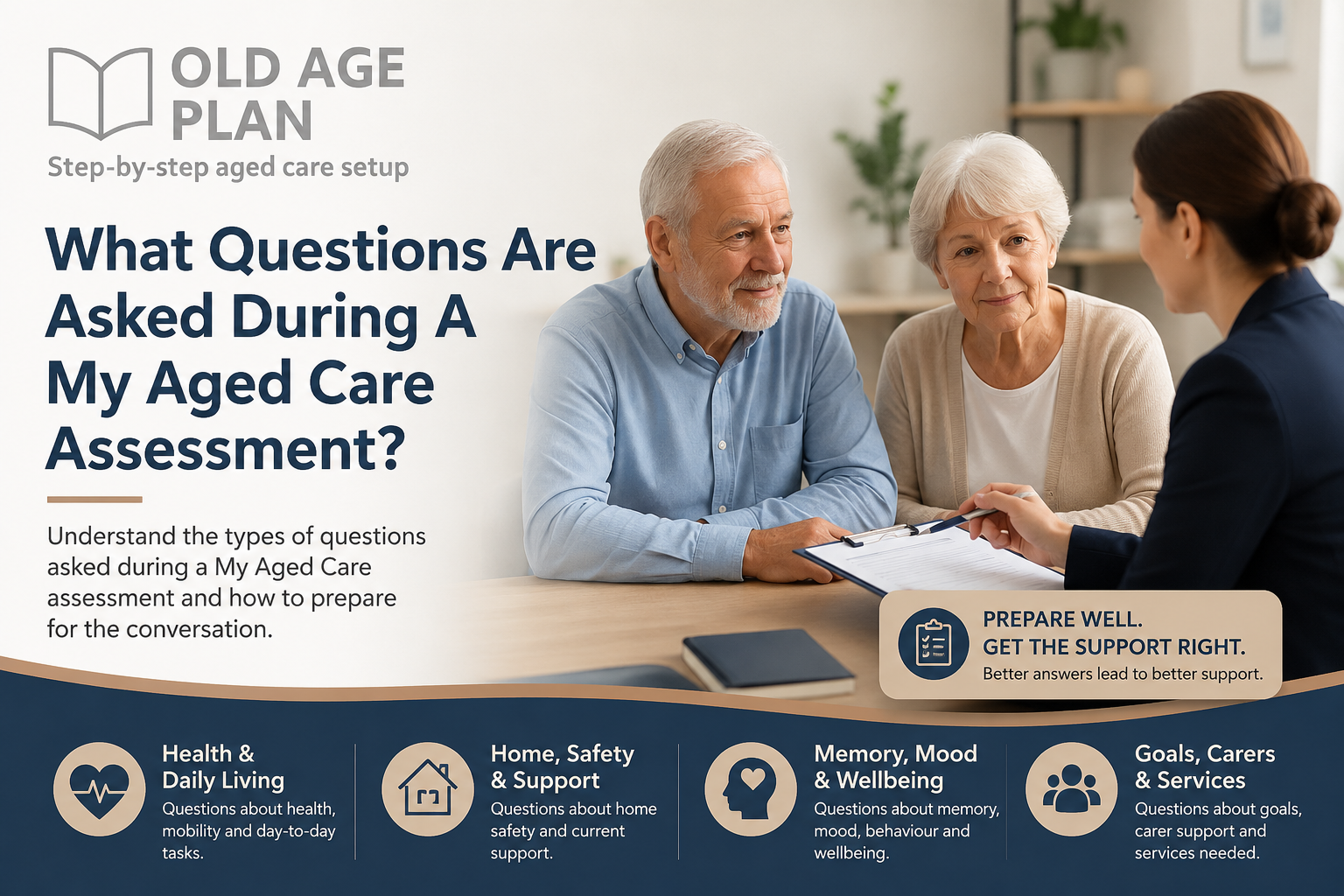

What Questions Are Asked During A My Aged Care Assessment?
If you are preparing for a My Aged Care assessment, one of the biggest worries is not knowing what the assessor will ask.
Families often think the assessment is just a quick conversation about services. But the real purpose is broader than that. The assessor is trying to understand how the older person is managing day to day, what has changed, what support is already in place, and whether current care is enough.
The questions are not designed to catch anyone out. They are designed to build a picture of care needs. The risk is that families sometimes answer too briefly, minimise problems, or forget to explain what is happening on bad days.
Short Answer
During a My Aged Care assessment, the assessor may ask about health, mobility, personal care, housework, meals, memory, safety, social support, current services, carer pressure and what help is needed to keep living safely at home or move into more suitable care.
Key Takeaway
The most important thing is not to give the neatest answer. It is to give the most accurate answer. A My Aged Care assessment works best when the assessor understands the real level of support needed, including the things that are only visible to family members, carers or close friends.
Why The Assessment Questions Matter
My Aged Care uses assessment information to work out what type of support may be suitable. That may include entry-level support, Support at Home services, respite, home modifications, equipment, or residential aged care pathways depending on the person’s needs.
The assessor is not only looking at one task. They are looking at how daily life works as a whole.
OAP Reality Check: The danger is not being asked a hard question. The danger is answering a serious question as if everything is “mostly fine” when the family is already holding the situation together.
Common Questions Asked During A My Aged Care Assessment
Every assessment is different, but many questions fall into the same practical areas.
Health And Medical Needs
The assessor may ask about medical conditions, recent hospital stays, falls, pain, medications, memory concerns, continence, vision, hearing and general health changes.
Daily Living Tasks
They may ask whether the person can shower, dress, eat, move around, use the toilet, prepare meals, clean, shop, manage laundry and maintain the home safely.
Mobility And Safety
Questions may cover walking, stairs, transfers, falls risk, getting in and out of bed, using mobility aids and whether the home environment is still safe.
Memory And Decision-Making
The assessor may ask about confusion, missed appointments, medication mistakes, wandering, poor judgement, repeated questions, financial confusion or changes in decision reliability.
Current Support
They may ask who currently helps, how often they help, whether family or friends are providing unpaid care, and whether that support is becoming difficult to sustain.
Goals And Preferences
The assessor may ask what the person wants to keep doing, what matters to them, what support would help, and whether they want to remain at home if possible.
Questions About Personal Care
Personal care questions can feel uncomfortable, but they are important. The assessor may ask whether help is needed with showering, dressing, toileting, grooming, continence, getting in and out of bed, or moving around safely.
This is one of the areas where families often understate the need.
For example, “Dad can shower himself” may technically be true. But if he needs someone nearby because he is unsteady, forgets steps, refuses to wash properly, or cannot safely get in and out of the bathroom, the real answer is more complicated.
Questions About Meals, Cleaning And Home Tasks
The assessor may ask whether the person can shop, cook, prepare meals, clean the home, do laundry, manage rubbish, change bed linen, and keep the home safe and hygienic.
These questions are not just about convenience. They help identify whether the person is at risk of poor nutrition, unsafe cooking, falls, isolation or declining independence.
Missed Meals
Not eating properly can be a sign that support is needed, even if the person says they are managing.
Unsafe Cooking
Burnt pots, forgotten appliances or fear of cooking may signal a safety concern.
Housework Decline
A messy or unsafe home may reflect reduced capacity, fatigue, pain or mobility problems.
Family Compensation
If family members are quietly doing everything, the assessor needs to know that.
Questions About Memory, Confusion And Behaviour
If memory or cognitive changes are involved, the assessor may ask about confusion, forgetting medication, getting lost, repeated questions, poor judgement, unsafe decisions, changes in behaviour or difficulty managing daily routines.
This does not mean the assessment is diagnosing dementia. It means the assessor is trying to understand whether cognitive changes are affecting safety and support needs.
Families should be careful not to reduce this to “just forgetful” if the real issue is more serious.
Questions About Carers And Family Support
The assessor may ask who is helping now, how often they help, what they do, and whether the carer is coping.
This matters because an older person can appear more independent than they really are when family support is hidden.
Visible Need
What the older person appears unable to do alone.
Hidden Support
What family, friends or neighbours are already doing in the background.
Carer Load
The time, stress, supervision and emotional pressure involved in keeping things stable.
Sustainability
Whether current informal care can realistically continue without more help.
Questions About Safety At Home
Safety questions may cover falls, medication errors, confusion, wandering, emergency response, stairs, bathroom safety, trip hazards, cooking risks and whether the person can call for help if something goes wrong.
This is where the difference between “they live at home” and “they are safe at home” becomes important.
A person may still be living at home, but only because family members are checking constantly, removing hazards, managing medication, handling meals or responding to problems.
Questions About Goals And What Help Is Wanted
The assessor may also ask about goals. This might include staying at home, getting out more, feeling safer, reducing carer pressure, managing health, improving mobility or receiving help with daily tasks.
These questions matter because aged care support should connect to real life, not just a list of services.
A useful answer is not only “we need cleaning.” It may be, “Mum wants to stay at home, but cleaning, showering and meals are becoming harder, and we are worried the current support is not enough.”
What You Should Ask The Assessor
The assessment should not be one-way. My Aged Care encourages people to prepare questions for the assessor.
Available Services
Ask what services may help with the person’s current goals and care needs.
Local Availability
Ask what services are available locally and whether there may be waiting times.
Carer Support
Ask what support may be available for family members or carers.
Next Steps
Ask what happens after the assessment and who to contact if needs change.
What You May Really Be Trying To Decide
The surface question is:
What questions are asked during a My Aged Care assessment?
But the deeper question is usually:
How do we make sure the assessor understands what is really happening?
That is the real decision point. Families are often not worried about the questions themselves. They are worried about whether the answers will properly show the level of need.
Decision Support: How To Answer Assessment Questions Clearly
The best assessment answers are clear, honest and practical.
Do Not Only Describe Good Days
Explain what happens on difficult days, not just when everything goes well.
Do Not Hide Family Help
If family support is keeping the person safe, say exactly what support is being provided.
Use Real Examples
Examples are often clearer than general statements like “she struggles sometimes.”
Explain Risk, Not Just Tasks
If a task creates falls risk, confusion, distress or carer pressure, explain that clearly.
Related Old Age Plan Articles
Next Steps With Old Age Plan
FAQ
Will the assessor ask medical questions?
Yes. The assessor may ask about health conditions, medications, mobility, memory, falls, pain, hospital visits and how health issues affect daily life.
Will they ask about personal care?
They may ask whether help is needed with showering, dressing, toileting, grooming, continence, eating, transfers and other daily personal tasks.
Can family help answer questions?
A family member, carer or support person can usually be present if the older person agrees. This can help make sure hidden support needs are explained clearly.
Should we mention carer stress?
Yes. If a carer is under pressure, providing frequent support or struggling to continue, that information can be relevant to the assessment.
What if we forget to mention something?
You can contact My Aged Care or the assessor if you have questions after the assessment or if important information was missed.
Summary
A My Aged Care assessment may include questions about health, daily living, mobility, safety, memory, personal care, home tasks, current support, carer pressure and goals.
The purpose is to understand what support may be needed. The most important preparation is to describe the real situation clearly, including bad days, hidden family support and risks that may not be obvious during a short visit.
Sources
Disclaimer
This article provides general information only and is not medical, legal, financial or aged care advice.
Aged care rules, assessment processes and service pathways may change. Your situation may also depend on health needs, home safety, carer support, location and eligibility.
For current information, contact My Aged Care or speak with a qualified aged care, health, legal or financial professional where needed.