
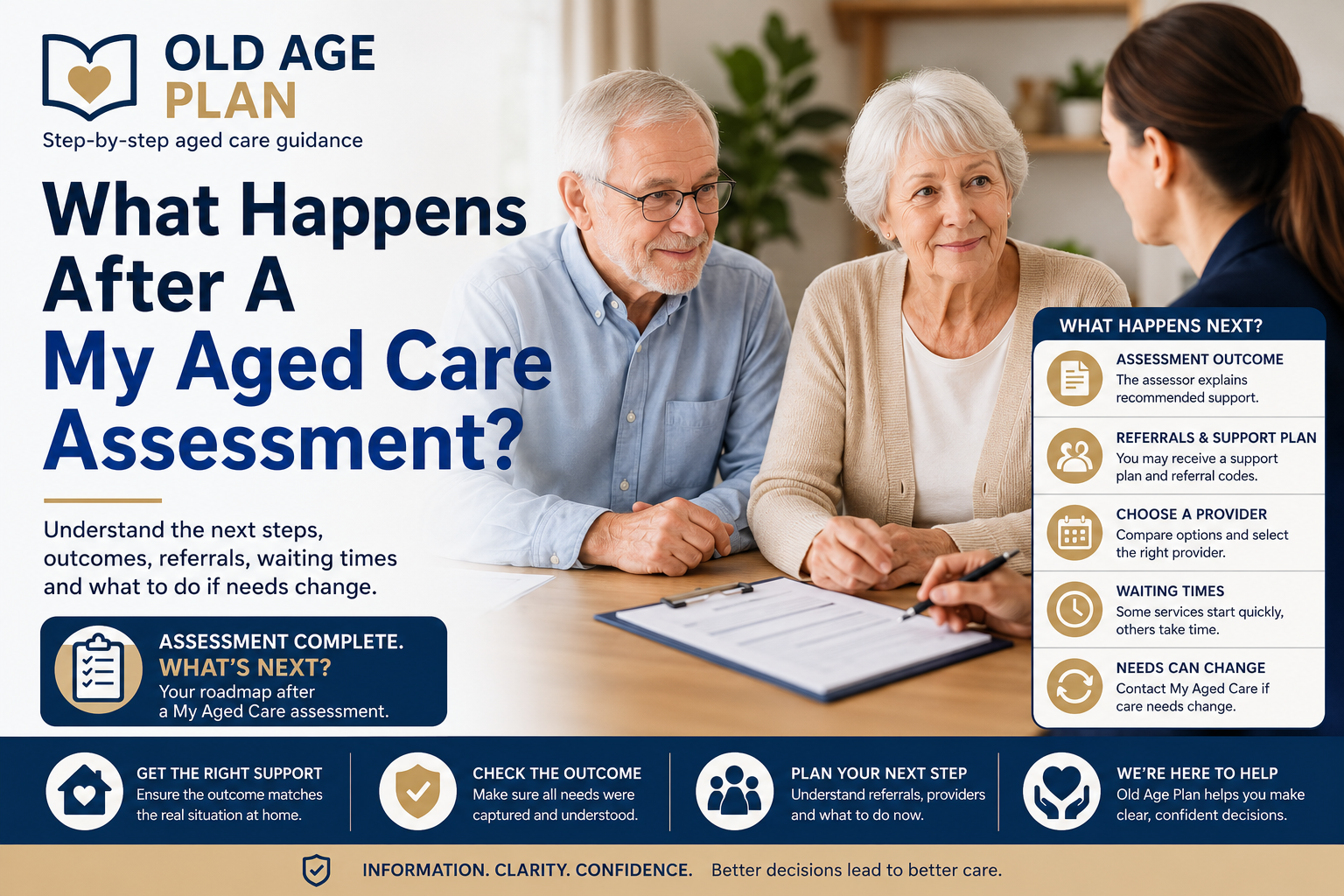

What Happens After A My Aged Care Assessment?
After a My Aged Care assessment, many families expect a simple answer: approved or not approved.
In reality, the next step depends on what the assessor finds, what level of support is recommended, what services are available, and whether the older person needs entry-level help, more coordinated support, respite, equipment, home modifications or residential aged care.
The assessment is not always the end of the process. Often, it is the point where families move from “we need help” into decisions about services, providers, waiting times and what to do while support is being arranged.
Short Answer
After a My Aged Care assessment, the assessor explains the outcome, recommends suitable services and may refer the older person for approved aged care support. The person may receive a support plan, referral codes, service recommendations or information about next steps. Depending on the assessment outcome, they may then need to choose providers, wait for services, request more information or seek a review if needs were not properly recognised.
Key Takeaway
The most important thing after a My Aged Care assessment is to understand what was approved, what was not approved, what happens next, and whether the outcome reflects the real level of need. Do not assume the process is finished just because the assessment conversation has ended.
The Assessor Will Explain The Outcome
After the assessment, the assessor should explain what support they believe is suitable.
This may happen during the assessment conversation, shortly afterwards, or through written information depending on the assessment type and outcome.
The outcome may include referrals for services, recommendations for supports, a support plan, or information about further steps. If the person needs a higher level of support, the assessment may also lead into more formal aged care pathways.
OAP Reality Check: The assessment outcome is not just paperwork. It can shape what help becomes available, how quickly support begins and whether family pressure reduces or keeps building.
You May Receive A Support Plan
A support plan outlines the person’s assessed needs, goals and recommended services.
This plan can help families understand what the assessor recognised and what support pathway has been recommended.
It is important to read the support plan carefully. Look for whether it reflects the real situation at home, including safety concerns, personal care needs, mobility issues, memory problems, carer pressure and hidden support already being provided by family.
Possible Outcomes After The Assessment
Not every person receives the same outcome after a My Aged Care assessment. The next step depends on need, eligibility and the type of assessment completed.
Entry-Level Support
The person may be referred for basic help at home, such as cleaning, transport, meals, social support or minor home modifications.
More Coordinated Support
If needs are more complex, the person may be assessed for higher levels of support that involve more ongoing care coordination.
Respite Support
The assessor may identify that short-term respite could help the older person, their carer or the wider family support system.
Residential Aged Care Pathway
If living at home is becoming unsafe or unsustainable, the assessment may support eligibility for residential aged care.
You May Need To Choose A Provider
If services are approved, the next step is often choosing a provider.
This is where many families realise the assessment did not automatically arrange everything. Approval may open the door to support, but the person may still need to contact providers, compare options and work out who can deliver the services.
Provider choice should not be rushed. Families may need to consider availability, location, service types, communication, fees, cultural needs, flexibility and whether the provider can meet the person’s actual care needs.
You May Receive Referral Codes
In some situations, My Aged Care may provide referral codes that allow approved providers to access the referral and arrange services.
These codes are important. Keep them somewhere safe and ask what each code relates to.
If there are multiple referrals, make sure you understand which services they apply to and whether any action is required from the older person, family or provider.
There May Be Waiting Times
One of the biggest misunderstandings after an assessment is assuming support will begin immediately.
Some services may start relatively quickly, while others may involve waiting. Availability can depend on location, service type, provider capacity and the level of support approved.
Approval Is Not Always Immediate Care
Being approved for support does not always mean services begin straight away.
Provider Availability Matters
A service may be approved, but a suitable provider still needs to be available.
Needs May Change While Waiting
If the person declines, has a fall or becomes unsafe, the original assessment may no longer reflect reality.
Family Support May Continue
Family may need to keep providing support while formal services are being arranged.
What To Check After The Assessment
After the assessment, families should slow down and check the outcome carefully.
What Was Approved?
Confirm which services, referrals or care pathways were recommended or approved.
What Was Not Approved?
Check whether any important need was missed, minimised or not included.
What Happens Next?
Ask whether My Aged Care, the assessor, the family or the provider needs to take the next step.
Who Should Be Contacted?
Make sure you know who to contact if services do not start, needs change or the outcome seems wrong.
If The Outcome Does Not Reflect The Real Situation
Sometimes the assessment outcome does not feel right.
This may happen if the older person understated their difficulties, family support was not fully explained, the assessment happened on a good day, or important safety concerns were not discussed.
If the outcome does not match the person’s actual needs, it may be appropriate to contact My Aged Care, provide more information, ask questions about the decision, or seek a review pathway.
Signs The Outcome May Be Too Low
Families should pay attention if the assessment outcome seems out of step with daily life.
Personal Care Was Missed
The person needs help showering, dressing, toileting or moving safely, but this was not reflected.
Safety Risks Were Understated
Falls, wandering, unsafe cooking, medication mistakes or confusion were not properly captured.
Carer Pressure Was Hidden
Family support is heavy, frequent or unsustainable, but the outcome treats the person as mostly independent.
Bad Days Were Not Explained
The assessment captured a good day but missed the real pattern across the week.
What If Care Needs Change After The Assessment?
Care needs can change after an assessment.
The person may have a fall, return from hospital, become more confused, lose mobility, need more personal care or place more pressure on family carers.
If needs change, families should not assume they must wait indefinitely. Contact My Aged Care and explain what has changed. A new assessment, review or updated support pathway may be needed depending on the situation.
What If The Person Is Waiting For Services?
If the person is waiting for services, keep records of what is happening.
This may include provider contact dates, changes in condition, increased carer pressure, safety incidents, hospital visits, falls or new support needs.
This information can help if the situation worsens or if the family needs to explain why current support is no longer enough.
Track Service Delays
Record when referrals were made, when providers were contacted and what responses were received.
Track Safety Changes
Note falls, confusion, medication problems, hygiene decline or new risks at home.
Track Family Support
Record what family members are doing while formal services are not yet in place.
Track Escalation Points
Identify when the current arrangement is no longer safe, manageable or sustainable.
What You May Really Be Trying To Decide
The surface question is:
What happens after a My Aged Care assessment?
But the deeper decision is often:
What do we do now, and is the outcome enough?
That is the real pressure point. Families are not only waiting for an answer from My Aged Care. They are trying to work out whether the assessment has created a safe next step or whether more action is needed.
Decision Support: How To Move Forward After The Assessment
After the assessment, do not treat the outcome as a passive waiting period. Treat it as a decision checkpoint.
If The Outcome Looks Right
Confirm next steps, contact providers, keep records and monitor whether services actually meet the person’s needs.
If The Outcome Looks Too Low
Gather examples, identify what was missed and contact My Aged Care to ask what review options are available.
If Needs Change Quickly
Do not wait for the original plan to catch up. Report the change and ask whether reassessment is needed.
If Family Is Struggling
Make carer pressure visible. Hidden family support can make the person appear safer than they really are.
Related Old Age Plan Articles
Next Steps With Old Age Plan
FAQ
Do you get an answer straight after a My Aged Care assessment?
Sometimes the assessor may explain likely next steps during or shortly after the assessment. In other cases, written information, referrals or approvals may follow later.
Will services start immediately after the assessment?
Not always. Approval or referral does not always mean services begin immediately. Availability can depend on provider capacity, location and the type of support needed.
What is a support plan?
A support plan outlines assessed needs, goals and recommended services. It helps show what support was identified during the assessment.
What if the assessment outcome is wrong?
If the outcome does not reflect the real level of need, contact My Aged Care, explain what was missed and ask what review or reassessment options are available.
Can you request another assessment later?
If care needs change, the person or their representative can contact My Aged Care to explain the change and ask what reassessment or review options apply.
Summary
After a My Aged Care assessment, the person may receive service recommendations, referrals, a support plan or information about next steps. They may then need to choose providers, wait for services, clarify the outcome or request further review if needs were not properly recognised.
The assessment outcome should be treated as a decision checkpoint. Families should check what was approved, what was missed, what happens next and whether the recommended support is enough for the real situation at home.
Sources
Disclaimer
This article provides general information only and is not medical, legal, financial or aged care advice.
Aged care rules, assessment outcomes, service availability and review pathways may change. Your situation may also depend on health needs, urgency, provider availability, family support, local services and eligibility.
For current information, contact My Aged Care or speak with a qualified aged care, health, legal or financial professional where needed.