How To Apply For My Aged Care
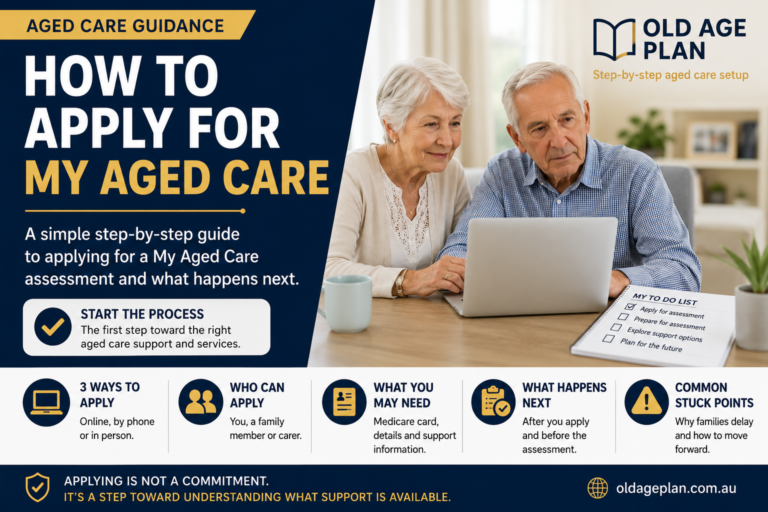
Applying for My Aged Care is often the first formal step into Australia’s aged care system. This guide explains how to apply, who can apply on someone’s behalf and where families often get stuck.


Applying for My Aged Care is often the first formal step into Australia’s aged care system. This guide explains how to apply, who can apply on someone’s behalf and where families often get stuck.

Home Care Packages have been replaced by the Support at Home program, but many families still search using the old term. This guide explains how government-funded home support works and what families need to understand before choosing care.

A My Aged Care assessment helps determine what support an older person may need and what services they may be eligible for. This guide explains what usually happens during the assessment, what assessors ask and where families often get caught out.

My Aged Care is the gateway into Australia’s aged care system, but many families struggle with what happens next. This guide explains how My Aged Care works, where people get stuck and how to make better aged care decisions before pressure becomes crisis.

An ACAT assessment helps determine whether an older person is eligible for higher-level government-subsidised aged care support. This guide explains what ACAT is, what assessors look for and the mistakes families often make before assessment.
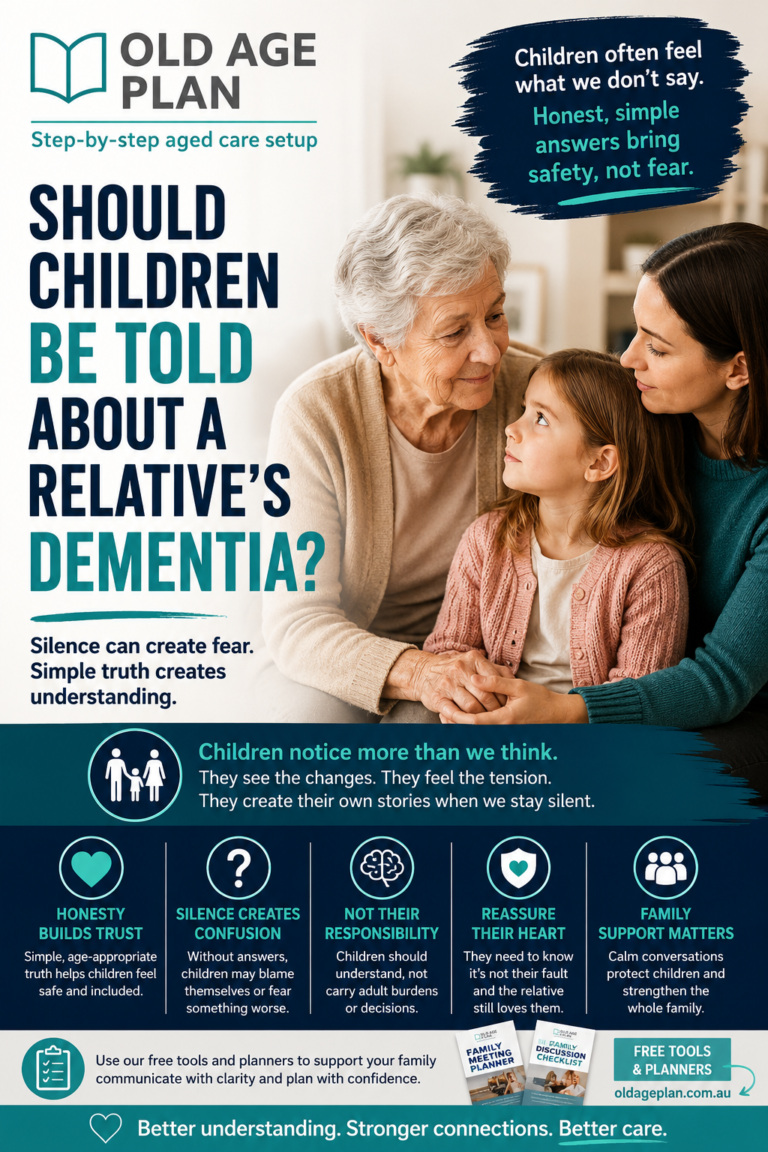
Should children be told about a relative’s dementia? Learn why silence can create fear, how honest conversations reduce confusion, and how families can support children through change.
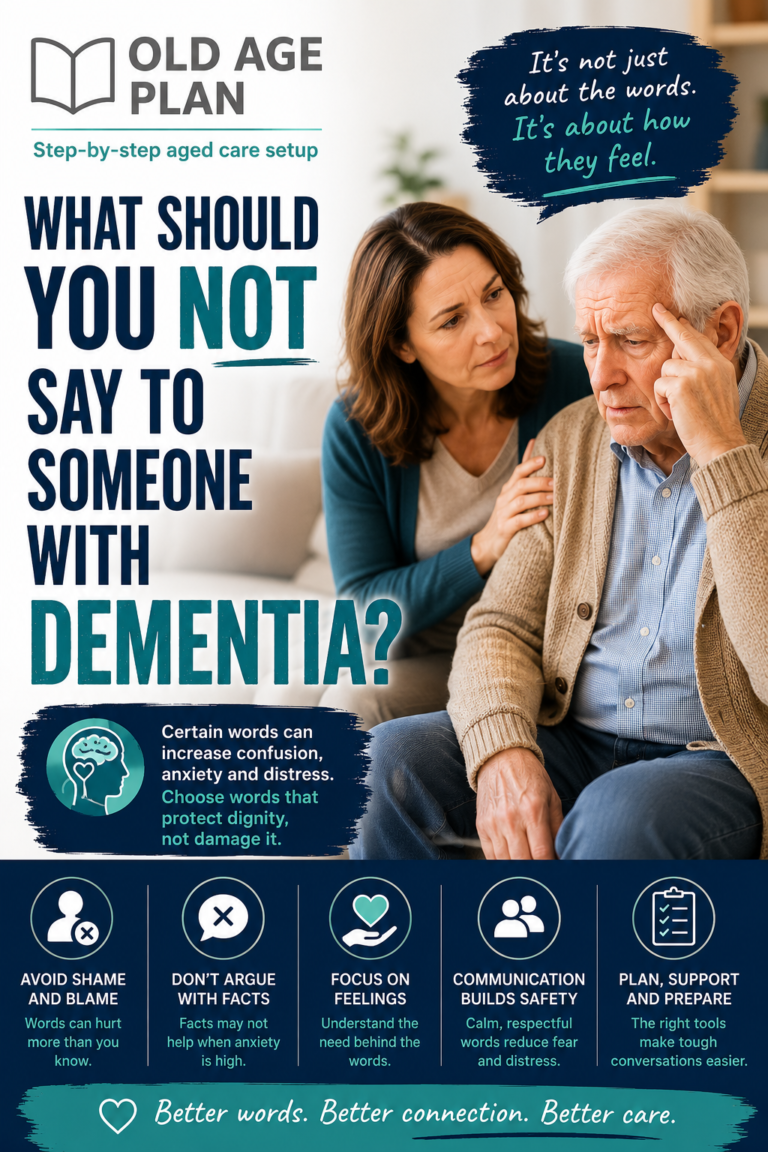
What should you not say to someone with dementia? Learn which phrases can increase shame, confusion and distress, and how better communication can protect dignity and trust.
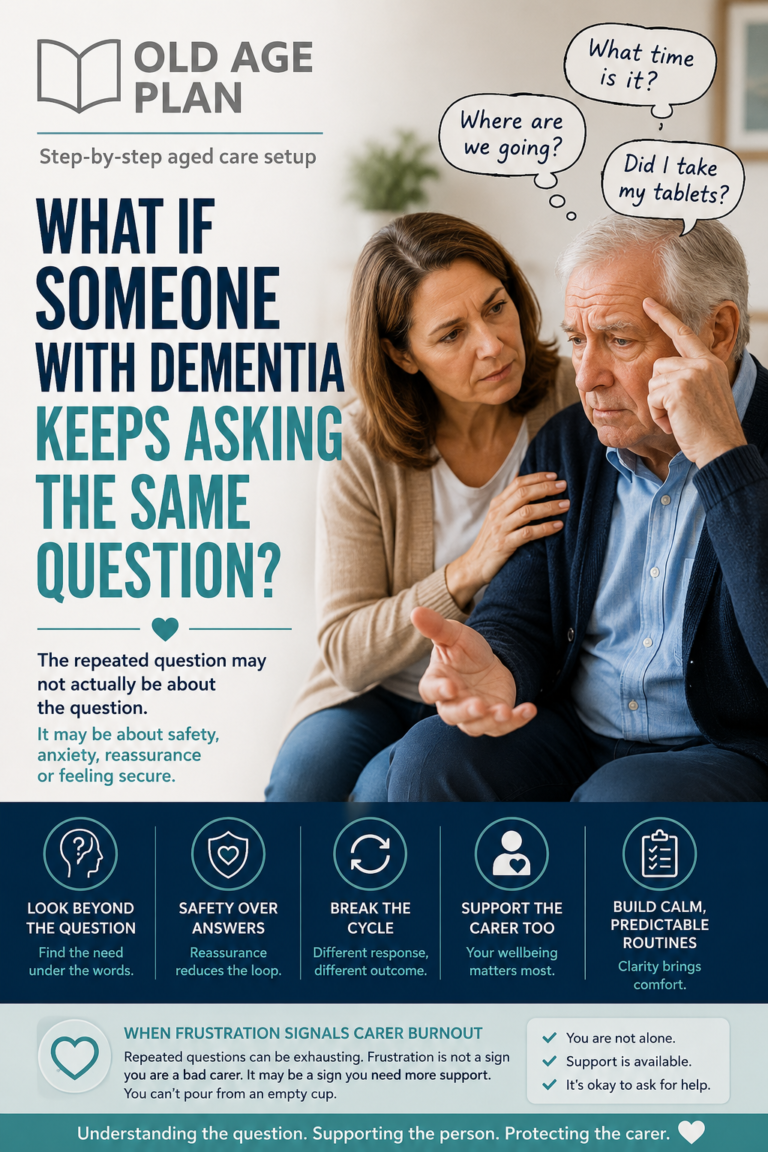
What if someone with dementia keeps asking the same question? Learn why repeated questions may signal anxiety or safety needs, and how carers can respond without burnout.
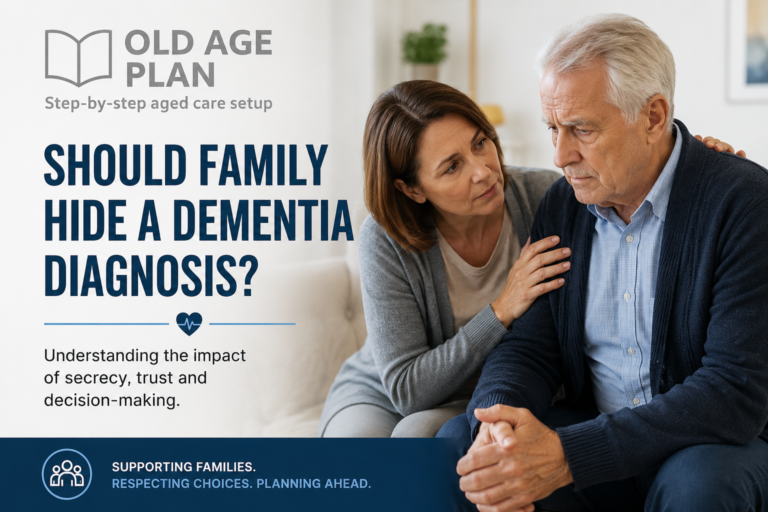
Should family hide a dementia diagnosis? Learn when protecting someone may help, when secrecy becomes harmful, and how to balance truth, dignity and decision-making during difficult family conversations.
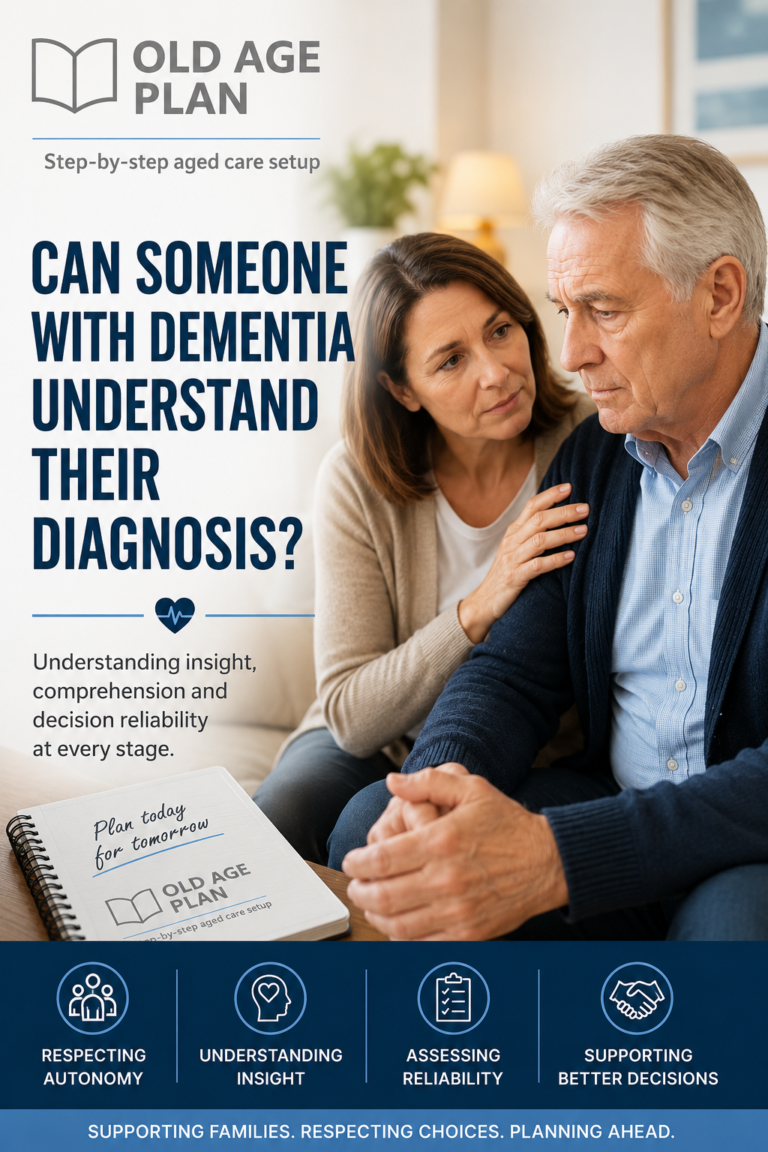
Can someone with dementia understand their diagnosis? Learn why understanding is not binary, how memory affects disclosure, and when decision reliability matters most.