
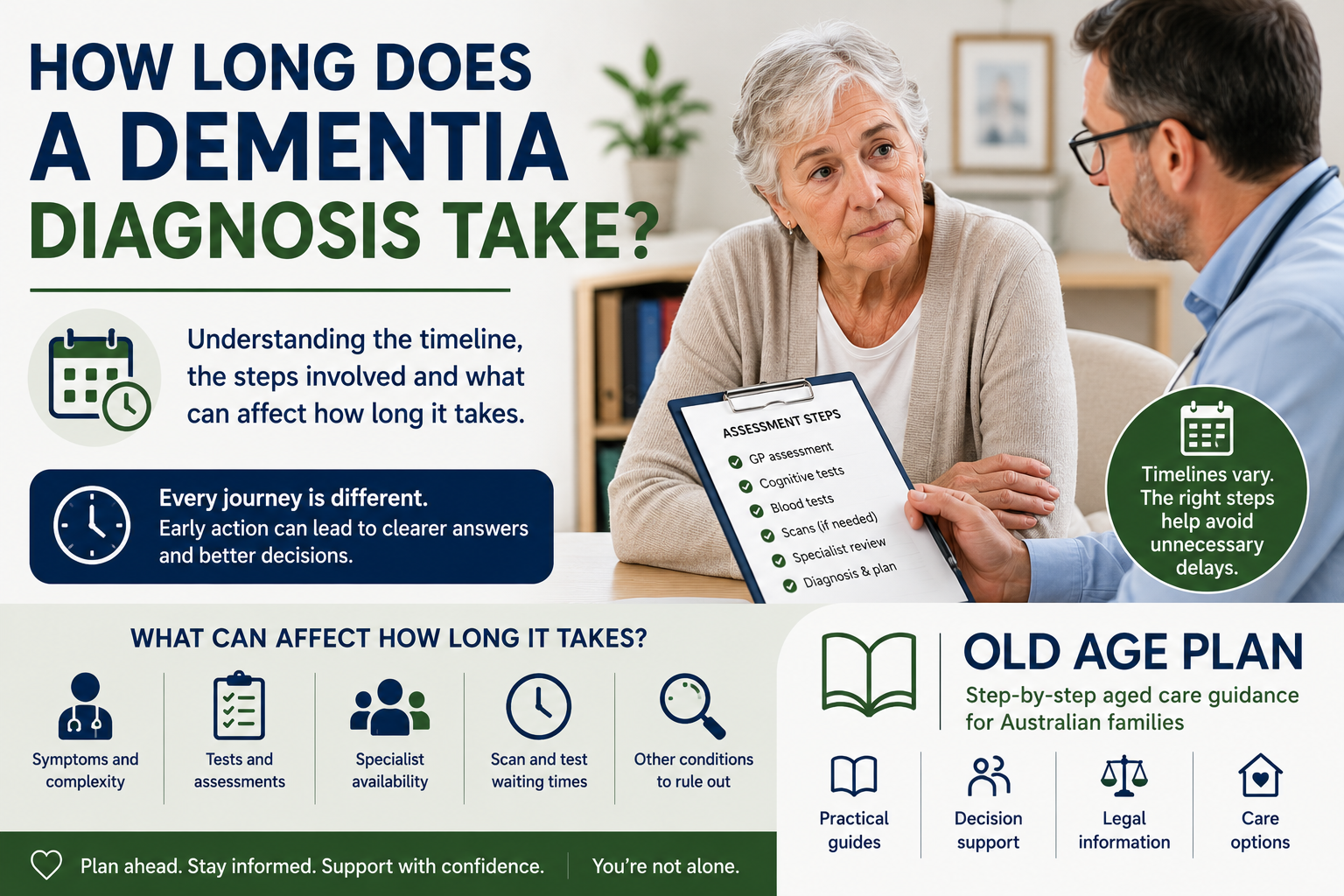

How Long Does A Dementia Diagnosis Take?
How long does a dementia diagnosis take? It can vary. Some people may receive a diagnosis after a few appointments, while others may need weeks or months of tests, reviews and specialist referrals before the diagnosis is clear.
For families, the waiting can be difficult because the diagnosis often affects more than health.
It may affect legal planning, driving, medicines, money, care support and family decisions.
The important issue is not only how long diagnosis takes.
It is whether the right steps are happening in the right order, without unnecessary delay.
Short Answer
A dementia diagnosis may take several weeks to several months, depending on symptoms, appointment availability, test results, specialist referrals and how clear the diagnosis is.
Some cases are more straightforward. Others take longer because doctors need to rule out other causes, review changes over time or confirm the type of dementia.
Key Takeaway
Dementia diagnosis is often a process, not a single appointment.
If memory or thinking changes are affecting safety, daily life or decision-making, it is better to start the assessment pathway early rather than wait until decisions become urgent.
Why Dementia Diagnosis Can Take Time
Dementia can be difficult to diagnose because symptoms may overlap with other conditions.
Memory loss, confusion or thinking changes may be affected by:
- depression
- anxiety
- delirium
- infection
- poor sleep
- medicine side effects
- thyroid problems
- vitamin deficiencies
- hearing or vision problems
Doctors may need to check these possibilities before confirming dementia.
This can make the process feel slow, but it can also prevent the wrong conclusion being reached too quickly.
What Usually Happens First?
The process often begins with a GP appointment.
The GP may ask about:
- memory changes
- thinking and reasoning
- daily tasks
- mood and sleep
- medicines
- medical history
- family observations
- safety concerns
They may also arrange blood tests, urine tests, cognitive screening or further review.
If the situation is unclear or complex, the GP may refer the person to a specialist or memory clinic.
What Can Make Diagnosis Faster?
Diagnosis may be faster when symptoms are clear, records are available and appointments can be arranged quickly.
It may help if the person or family can explain:
- when symptoms started
- how symptoms have changed
- specific examples of memory or thinking problems
- whether daily tasks are affected
- medicine changes
- recent illness or hospital visits
- safety concerns
Clear examples can help the GP or specialist see patterns more quickly.
What Can Delay A Dementia Diagnosis?
Several things can slow the diagnosis process.
Common delays include:
- waiting for GP appointments
- waiting for specialist referrals
- waiting for scan or test results
- unclear or mild symptoms
- symptoms that come and go
- other medical problems needing review
- the person not wanting assessment
- family disagreement about what is happening
Delays do not always mean the system is failing.
Sometimes more information is needed.
But if major decisions are waiting on the diagnosis, it may be reasonable to ask what can be done next and whether any referrals can be followed up.
Can Dementia Be Diagnosed In One Appointment?
Sometimes a doctor may strongly suspect dementia after one appointment, especially if symptoms are clear and daily function has changed.
However, a formal diagnosis often needs more than one step.
Doctors may need to:
- check medical history
- review medicines
- complete cognitive testing
- rule out other causes
- order blood tests or imaging
- seek specialist input
- monitor symptoms over time
A quick answer may feel reassuring, but speed is not the only goal.
The diagnosis needs to be reliable enough to guide the decisions that follow.
How Long Do Referrals Usually Take?
Referral timing can vary depending on location, urgency, public or private pathways and specialist availability.
Some families may wait only a few weeks.
Others may wait longer, especially for public specialist clinics or memory services.
If waiting times are long and symptoms are worsening, families can ask the GP whether:
- the referral should be marked urgent
- another service is available
- private assessment is an option
- interim support is needed
- new symptoms should be reviewed sooner
The key is not to sit silently in uncertainty if the situation is changing.
What If Symptoms Change Suddenly?
Sudden confusion or rapid change should not simply be assumed to be dementia progression.
Sudden changes may be linked to infection, delirium, medication effects, dehydration, pain or another medical issue.
If symptoms change quickly, medical advice should be sought promptly.
This is important because some causes may need urgent treatment.
Diagnosis Timing And Legal Planning
Diagnosis timing can matter if legal planning is incomplete.
A dementia diagnosis does not automatically mean a person has lost capacity.
However, if decision-making is becoming less reliable, delaying legal planning may reduce options.
Families may need to think about:
- Enduring Power of Attorney
- Enduring Guardianship
- Advance Care Directives
- wills
- medical decision-making
- financial authority
The key question is whether the person can still understand and make the specific decision involved.
If legal planning is urgent, medical and legal advice may both be needed.
What You May Really Be Trying To Decide
If you are asking how long a dementia diagnosis takes, you may really be asking:
- How quickly can we get answers?
- Should we start with the GP now?
- Do we need a specialist?
- Are we waiting too long?
- Can legal planning still happen?
- What should we do while waiting?
- How do we know if symptoms are urgent?
These are practical decision questions.
The safest approach is usually to start the pathway early and keep asking what the next step should be.
Decision Support
While waiting for diagnosis, focus on what can be clarified now.
Ask:
- What has already been checked?
- What tests are still needed?
- Is specialist referral required?
- Are symptoms stable or worsening?
- Are there safety risks now?
- Are legal or care decisions waiting on the diagnosis?
If symptoms are mild and stable, waiting for the correct process may be appropriate.
If symptoms are worsening, sudden, unsafe or affecting major decisions, follow-up may be needed sooner.
The goal is not to rush the diagnosis.
The goal is to avoid losing time when important options depend on getting clearer answers.
Related Old Age Plan Articles
- How Is Dementia Diagnosed?
- Can A GP Diagnose Dementia In Australia?
- Can Dementia Be Diagnosed Early?
- What Tests Are Used To Check Memory Problems?
- What Is A Cognitive Assessment?
- Should You Get A Second Opinion After A Dementia Diagnosis?
- What Happens After A Dementia Diagnosis?
Next Steps With Old Age Plan
If you are waiting for a dementia assessment or diagnosis, it can help to organise what has happened so far and what still needs to be clarified.
Old Age Plan’s Free Tools can help you record concerns, prepare questions and keep track of next steps before GP or specialist appointments.
You may also find it helpful to read related guides on GP assessment, cognitive tests and what happens after diagnosis.
The goal is not to pressure the process unnecessarily.
The goal is to make sure delays do not cause important medical, legal or care decisions to be missed.
Sources
- Healthdirect Australia — Dementia
- Healthdirect Australia — Dementia overview
- Dementia Australia — Diagnosis
- Dementia Australia — Early warning signs of dementia
- RACGP — Dementia
- My Aged Care — Living with memory loss, dementia or depression
Disclaimer
This article provides general information only. It is not medical, legal or financial advice.
Dementia symptoms, diagnosis timelines, capacity and support needs can vary between individuals. Medical assessment and diagnosis should be provided by qualified health professionals, and legal or capacity-related questions should be discussed with qualified professionals.
Laws, services, policies and procedures may change over time. You should seek advice from appropriate professionals and refer to official Australian Government, health, dementia and legal resources for current information.
For dementia-related information and support, you may wish to contact Dementia Australia, Healthdirect, My Aged Care, your GP or Legal Aid.
Summary
A dementia diagnosis may take weeks or months depending on symptoms, tests, referrals and how clear the diagnosis is.
For many families, the process begins with a GP and may continue through blood tests, cognitive screening, scans or specialist review.
The important thing is to start the assessment pathway early enough that medical, legal and care decisions are not delayed until options become narrower.