
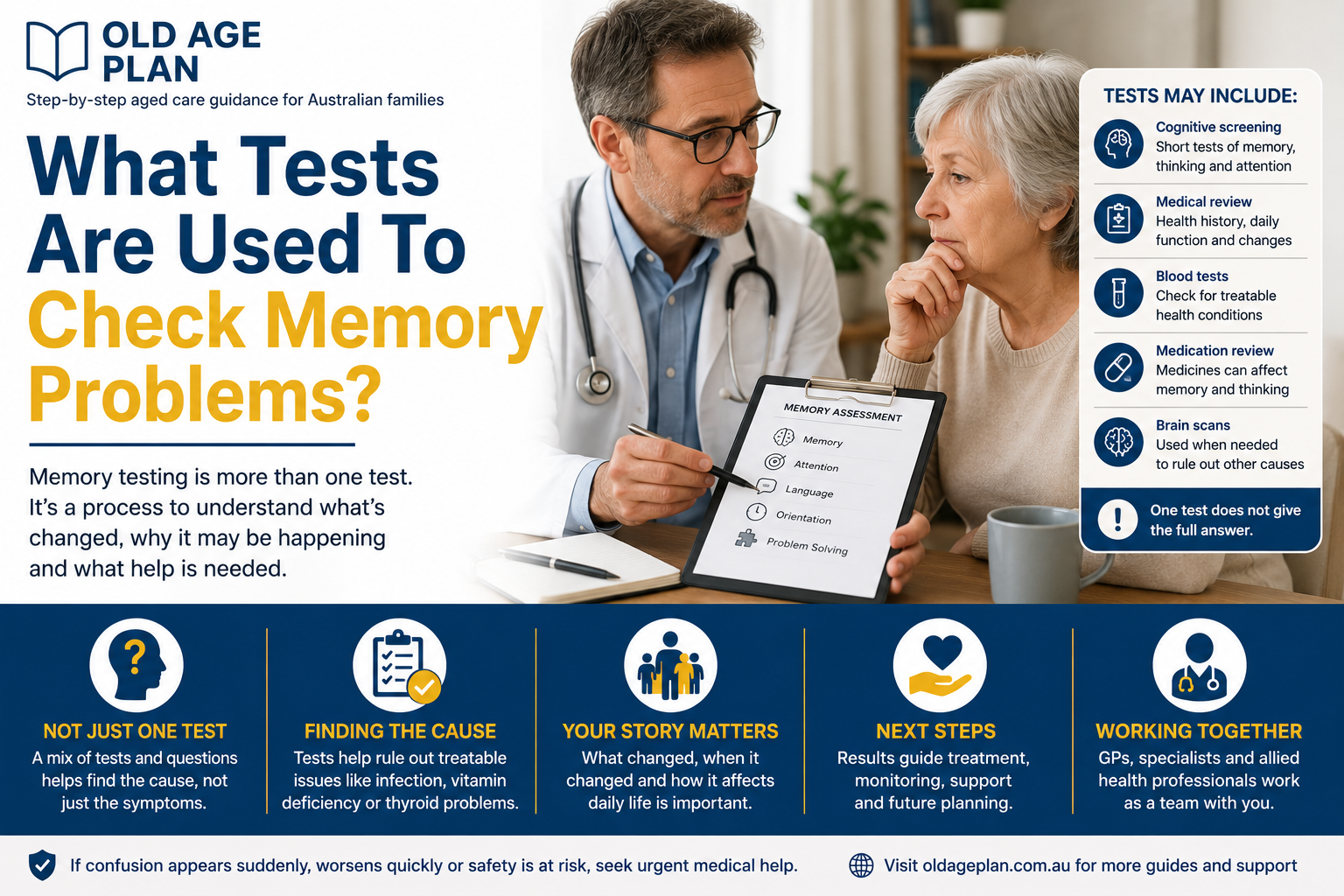

What Tests Are Used To Check Memory Problems?
Memory problems can feel worrying before anyone knows what is causing them.
What tests are used to check memory problems?
Doctors may use a mix of questions, memory screening tools, physical checks, blood tests, medication reviews and sometimes brain scans to understand what may be affecting memory and thinking.
One test alone usually does not give the full answer. The goal is to build a clearer picture of what has changed, how it affects daily life and whether further assessment is needed.
Short Answer
Tests used to check memory problems may include cognitive screening tests, medical history questions, physical examination, blood tests, medication review and sometimes brain imaging.
A GP is usually the first step. They may check whether memory changes could be linked to medicines, infection, mood, sleep, vitamin levels, thyroid problems, delirium, mild cognitive impairment or dementia.
If more information is needed, the GP may refer the person to a specialist, memory clinic or allied health professional for further assessment.
Key Takeaway
Key takeaway: Memory testing is not usually one single test. It is a process of checking thinking, health, medicines, daily function and possible causes so the next decision is based on evidence, not guessing.
Why Memory Problems Need More Than One Test
Memory problems can have many causes.
Some causes may be temporary or treatable. Others may need longer-term support and planning.
This is why doctors usually do not rely on one quick memory question.
They may need to look at the person’s health, daily function, recent changes, medicines, mood, sleep and safety.
The purpose is not only to ask, “Is this dementia?”
A better question is:
What information is needed to understand what has changed?
Cognitive Screening Tests
A cognitive screening test is a short assessment used to check areas such as memory, attention, language, orientation and problem-solving.
These tests may involve questions or simple tasks.
For example, the person may be asked to remember words, draw something, follow instructions, name objects or answer questions about time and place.
These tests can help identify whether further assessment may be needed.
They do not always provide a final diagnosis on their own.
Medical History And Daily Function Questions
A doctor will usually ask about what has changed.
This may include:
- when the memory problems started
- whether they are getting worse
- whether the change was sudden or gradual
- whether daily tasks are affected
- whether family or friends have noticed changes
- whether mood, sleep or behaviour has changed
- whether safety, driving, money or medicines are affected
This part matters because memory testing is not only about scores.
It is also about how thinking changes affect real life.
Medication Review
A medication review may be important, especially for older adults.
Some medicines, medicine combinations or dose changes can affect alertness, memory, concentration or confusion.
The doctor or pharmacist may review prescription medicines, over-the-counter medicines, supplements and medicines taken only sometimes.
This can help identify whether medication may be contributing to the problem.
Blood Tests And Physical Health Checks
Blood tests may be used to check for health issues that can affect memory or thinking.
These may include checks for thyroid problems, vitamin deficiencies, infection, kidney or liver function, diabetes or other medical concerns.
A doctor may also check blood pressure, general health, hydration, sleep, pain and other factors.
This matters because not every memory problem is dementia.
Brain Scans
Brain scans may sometimes be used as part of a memory assessment.
Scans may help identify strokes, tumours, bleeding, shrinkage patterns or other changes that may affect thinking.
Not everyone needs a scan straight away.
The decision depends on the symptoms, medical history and what the doctor is trying to rule out or confirm.
Specialist Or Memory Clinic Assessment
If the GP needs more information, they may refer the person to a specialist or memory clinic.
This may involve more detailed cognitive assessment, medical review or input from different health professionals.
The aim is to understand whether the memory problem is linked to mild cognitive impairment, dementia, another medical issue or a combination of factors.
What If The Test Results Are Unclear?
Sometimes test results do not give a simple answer immediately.
The doctor may suggest monitoring symptoms, repeating tests later, treating possible contributing causes or arranging further assessment.
This can feel frustrating, but it is often part of the process.
Memory and thinking changes may need to be understood over time.
What You May Really Be Trying To Decide
Many families asking about memory tests are really trying to reduce uncertainty.
The real questions may be:
- What will happen at the appointment?
- Will the test prove dementia?
- Could this be something treatable?
- Should we prepare information before seeing the doctor?
- What happens if the result is not clear?
- Will this affect future planning decisions?
The most useful way to think about memory testing is that it starts a clearer decision pathway.
It does not always provide every answer immediately, but it can help families stop guessing.
Decision Support Questions
Before an appointment, it may help to think about:
- What changes have been noticed?
- When did they start?
- Are they getting worse?
- Are daily tasks affected?
- Have medicines changed recently?
- Has there been illness, infection, dehydration or hospitalisation?
- Are mood, sleep or appetite different?
- Are safety, money, driving or care decisions affected?
Clear examples can help the doctor understand the real-life pattern behind the memory concern.
Related Old Age Plan Articles
- When Should Memory Loss Be Checked?
- When Should You See A Doctor About Memory Problems?
- Can Delirium Be Mistaken For Dementia?
- Can Medication Cause Confusion In Older Adults?
- What Is Mild Cognitive Impairment?
- How Is Dementia Diagnosed?
Sources
- Dementia Australia — Dementia testing and diagnosis
- healthdirect Australia — Memory loss
- healthdirect Australia — Dementia overview
- Better Health Channel — Dementia
- Dementia Australia — Early warning signs of dementia
Disclaimer
This article provides general information only. It is not medical, legal or financial advice. Memory problems can have many causes, and assessment needs vary between people. If you are concerned about memory, thinking, confusion or changes in daily function, speak with a GP or qualified health professional. If confusion appears suddenly or safety is at risk, seek urgent medical help.
Summary
Tests used to check memory problems may include cognitive screening, medical history questions, medication review, blood tests, physical checks and sometimes brain scans.
One test alone usually does not provide the full answer.
The aim is to understand what has changed, rule out possible causes and decide whether further assessment, treatment, monitoring or support may be needed.