

What Scans Are Used To Diagnose Dementia?
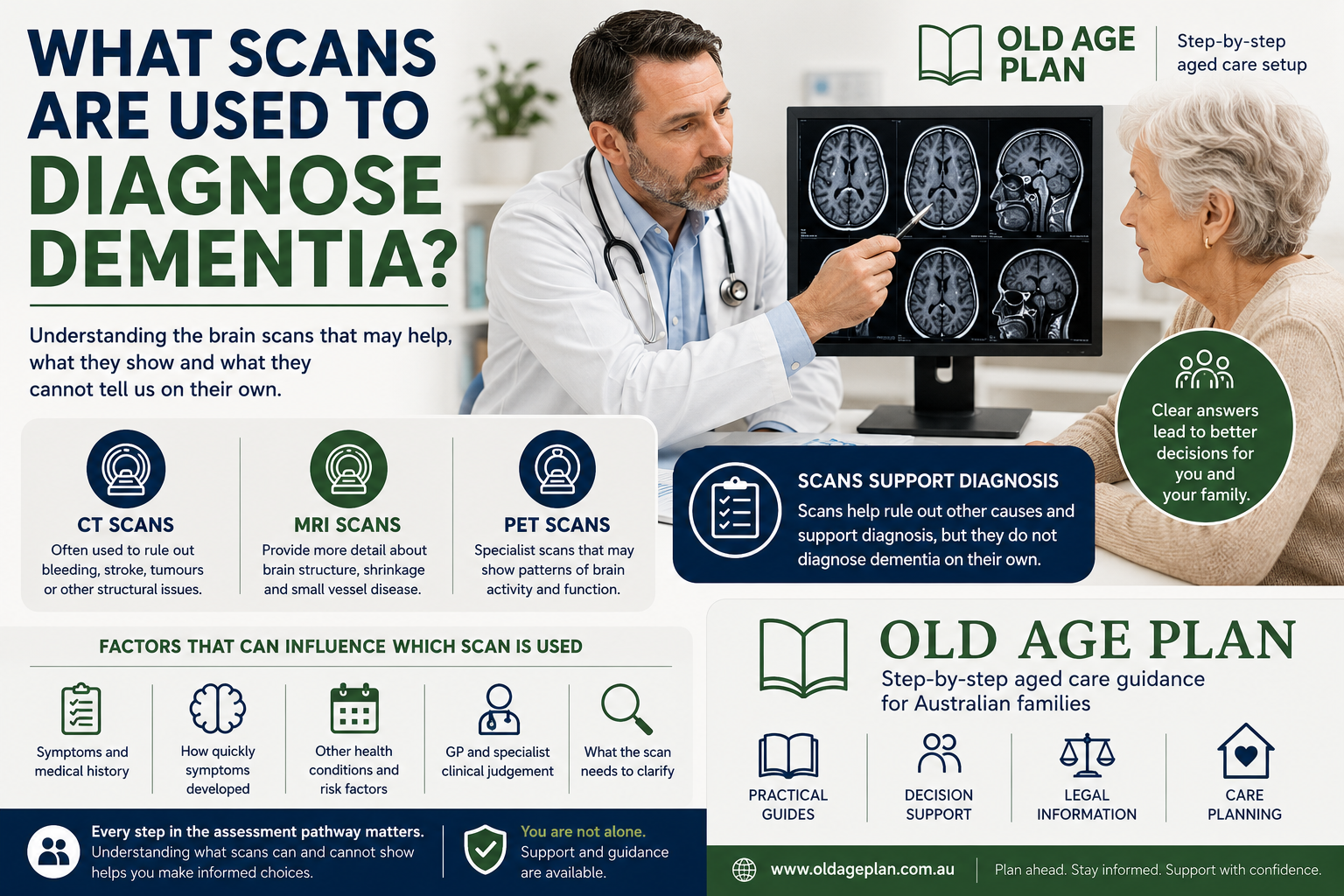
What scans are used to diagnose dementia? Doctors may use brain imaging such as CT scans, MRI scans and, in some situations, PET scans to help understand changes in the brain and rule out other possible causes of symptoms.
However, scans do not diagnose dementia on their own.
They are usually one part of a wider assessment that may include medical history, cognitive testing, blood tests, physical examination and information about daily function.
The real question is not only what scan is used.
It is what the scan is expected to clarify and how the result will affect the next decision.
Short Answer
The most common scans used during dementia assessment are CT scans and MRI scans. These can help doctors look for brain changes, strokes, tumours, bleeding, shrinkage or other conditions that may explain memory or thinking symptoms.
In some cases, PET scans or other specialist imaging may be used, especially when the diagnosis is unclear or a specialist needs more information.
Key Takeaway
Brain scans can support dementia diagnosis, but they are not a complete answer by themselves.
A scan may help rule out other causes, show patterns that support a diagnosis or guide specialist review. The result needs to be interpreted alongside symptoms, testing and day-to-day changes.
Why Scans May Be Used In Dementia Assessment
Memory and thinking changes can have more than one cause.
A scan may be used to help check whether symptoms could be linked to another medical issue, such as:
- stroke or small vessel disease
- brain tumour
- bleeding
- fluid build-up
- brain injury
- significant brain shrinkage
- other structural changes
This matters because not every memory problem is dementia.
Some causes may need different treatment, monitoring or urgent attention.
CT Scans
A CT scan uses X-rays to create images of the brain.
It may be used because it is widely available, relatively quick and useful for detecting some structural problems.
A CT scan may help identify:
- stroke-related changes
- bleeding
- tumours
- fluid build-up
- some patterns of brain shrinkage
- other visible brain changes
A CT scan may be a common first imaging step, especially when doctors need to rule out other causes of symptoms.
However, a normal CT scan does not automatically rule out dementia.
MRI Scans
An MRI scan uses magnetic fields and radio waves to create detailed images of the brain.
MRI may provide more detail than CT in some situations.
It may help doctors look for:
- patterns of brain shrinkage
- small vessel disease
- previous strokes
- inflammation or other brain changes
- changes that may support a particular diagnosis
MRI can be useful when symptoms are mild, complex or unusual.
It may also be helpful when a specialist is trying to distinguish between different possible causes of cognitive change.
PET Scans
PET scans are more specialised and are not used for every dementia assessment.
They may show patterns of brain activity or, in some cases, changes linked to specific dementia-related processes.
A PET scan may be considered when:
- the diagnosis remains unclear
- symptoms do not fit a typical pattern
- the person is younger
- specialist review needs more information
- different dementia types need to be considered
PET scans are usually part of a specialist pathway rather than the first step for most families.
Can A Scan Confirm Dementia?
A scan can support a dementia diagnosis, but it usually cannot confirm dementia by itself.
Dementia is diagnosed by looking at the full picture.
This may include:
- symptoms
- daily functioning
- medical history
- cognitive assessment
- medicine review
- blood tests
- brain imaging
- family or carer observations
A scan may show changes that fit dementia, but the doctor still needs to understand how those changes match the person’s symptoms and daily life.
Can A Scan Be Normal If Someone Has Dementia?
Yes, especially in earlier stages.
A scan may not show obvious changes, or the changes may be too subtle to explain symptoms clearly.
This can be confusing for families.
A normal scan does not always mean nothing is happening.
It may mean the diagnosis needs to rely more on clinical assessment, cognitive testing, symptom patterns and follow-up over time.
Why A Doctor Might Order A Scan
A doctor may order a scan to answer a specific question.
For example:
- Could another brain condition explain the symptoms?
- Is there evidence of stroke or vascular changes?
- Are symptoms consistent with a particular dementia pattern?
- Is specialist referral needed?
- Has there been a sudden change that needs urgent review?
This is why it helps to ask what the scan is expected to clarify.
The scan should serve a decision, not just add another result to the file.
Who Decides Which Scan Is Needed?
The pathway may involve more than one professional.
A GP may begin the assessment and arrange initial tests or imaging.
A radiologist interprets the scan images.
A specialist, such as a geriatrician, neurologist or psychiatrist, may use the scan result alongside other information to support diagnosis and planning.
The right authority pathway depends on the question being answered.
If the question is medical diagnosis, health professionals guide the process.
If the diagnosis affects legal capacity, driving, care or financial decisions, other professionals may also need to be involved.
Do All People Being Assessed For Dementia Need A Scan?
Not always.
Whether a scan is needed depends on symptoms, medical history, age, risk factors, how quickly symptoms developed and whether the diagnosis is clear.
A doctor may recommend imaging if it is likely to clarify the diagnosis or rule out important causes.
In other cases, the assessment may focus first on history, cognitive testing, physical health, medicines and blood tests.
What If The Scan Finds Something Unexpected?
Sometimes a scan identifies something that was not expected.
This may lead to further testing, specialist referral or a different treatment pathway.
Unexpected findings can create uncertainty, but they may also prevent families from assuming dementia when another issue needs attention.
The important next step is to ask what the result means in context.
What You May Really Be Trying To Decide
If you are asking what scans are used to diagnose dementia, you may really be trying to decide:
- Why has a scan been ordered?
- Is the scan necessary?
- Will the scan prove whether it is dementia?
- What if the scan is normal?
- Should we ask for MRI instead of CT?
- Do we need a specialist?
- Will the result change what happens next?
These are practical decision questions.
The scan matters most when it helps clarify diagnosis, rule out other causes or guide the next step.
Decision Support
Before agreeing to or waiting on a scan, it may help to ask the doctor what decision the scan is meant to support.
Useful questions include:
- What are we trying to rule out?
- What type of scan is being recommended?
- Why is this scan suitable for this situation?
- What happens if the scan is normal?
- What happens if the scan shows changes?
- Will a specialist review the result?
- Will the result affect treatment, care planning or legal decisions?
The goal is not to demand every possible test.
The goal is to understand whether imaging will improve decision quality and reduce uncertainty.
Related Old Age Plan Articles
- How Is Dementia Diagnosed?
- Can A GP Diagnose Dementia In Australia?
- How Long Does A Dementia Diagnosis Take?
- What Tests Are Used To Check Memory Problems?
- What Is A Cognitive Assessment?
- Can Dementia Be Misdiagnosed?
- Should You Get A Second Opinion After A Dementia Diagnosis?
Next Steps With Old Age Plan
If a scan has been recommended during dementia assessment, it can help to organise what question the scan is meant to answer.
Old Age Plan’s Free Tools can help you record concerns, prepare questions and keep track of what needs to be clarified before or after medical appointments.
You may also find it helpful to read related guides on GP assessment, cognitive testing and diagnosis timelines so the scan result fits into the wider pathway.
The goal is not to collect tests for the sake of it.
The goal is to understand what each test adds, what it does not answer and what decision should follow next.
Sources
- Healthdirect Australia — Dementia
- Healthdirect Australia — Dementia overview
- Dementia Australia — Diagnosis
- RACGP — Dementia
- Healthdirect Australia — CT scan
- Healthdirect Australia — MRI scan
Disclaimer
This article provides general information only. It is not medical, legal or financial advice.
Dementia symptoms, diagnosis, scans and support needs can vary between individuals. Medical assessment and diagnosis should be provided by qualified health professionals.
Laws, services, policies and procedures may change over time. You should seek advice from appropriate professionals and refer to official Australian Government, health and dementia resources for current information.
For dementia-related information and support, you may wish to contact Dementia Australia, Healthdirect, My Aged Care or your GP.
Summary
CT scans, MRI scans and sometimes PET scans may be used during dementia assessment. These scans can help doctors rule out other causes, identify brain changes and support diagnosis.
However, scans do not diagnose dementia by themselves.
They need to be interpreted alongside symptoms, cognitive testing, medical history and daily function so families can make clearer decisions about what happens next.