

What Causes Dementia?
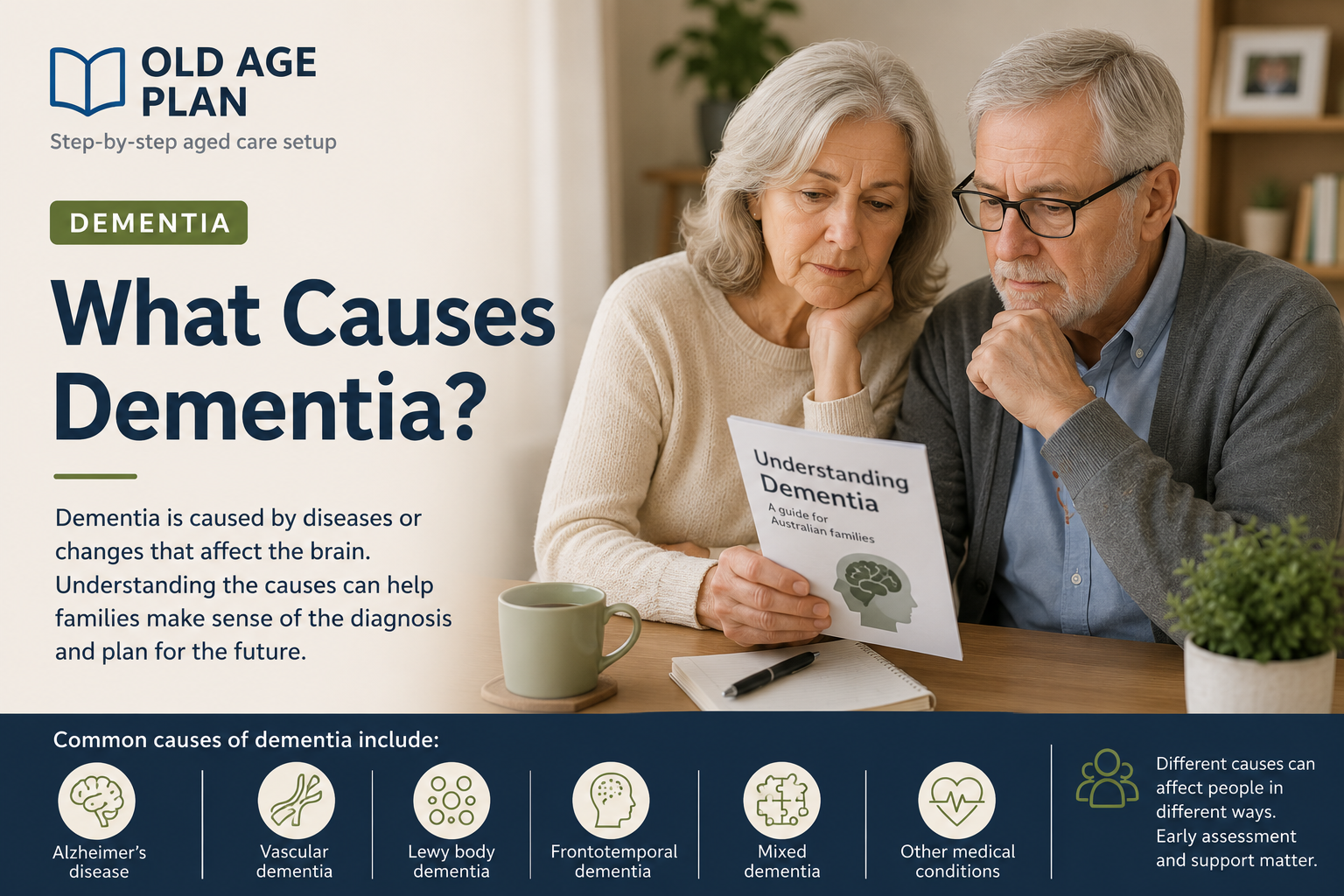
What causes dementia? Dementia is caused by diseases and changes in the brain that affect memory, thinking, behaviour and daily function.
It is not one single disease.
It is a term used to describe a group of conditions that affect the brain over time.
For families, this can be confusing.
One person may be told they have Alzheimer’s disease.
Another may be told they have vascular dementia.
Someone else may have mixed dementia or another type.
Understanding what causes dementia can help families make sense of the diagnosis and know what questions to ask next.
Short Answer
Dementia is caused by diseases or damage that affect the brain.
Common causes include Alzheimer’s disease, vascular dementia, Lewy body dementia, frontotemporal dementia and mixed dementia.
Some risk factors may increase the chance of developing dementia, but not every person with risk factors will develop dementia.
Key Takeaway
Dementia is caused by changes in the brain that affect how a person thinks, remembers, communicates and manages daily life.
Different types of dementia have different causes.
Understanding the cause can help families plan care, ask better questions and seek the right support.
Dementia Is Caused By Brain Changes
Dementia happens when diseases or damage affect brain cells.
These changes can interfere with how brain cells communicate.
Over time, this can affect memory, thinking, language, behaviour and daily function.
The exact changes depend on the type of dementia.
This is why two people with dementia may have very different symptoms.
Alzheimer’s Disease
Alzheimer’s disease is one of the most common causes of dementia.
It affects the brain gradually over time.
Memory problems are often one of the first noticeable signs.
However, Alzheimer’s disease can also affect language, judgement, planning and daily activities.
Families may first notice repeated questions, forgotten conversations or difficulty managing familiar routines.
Vascular Dementia
Vascular dementia is linked to reduced blood flow or damage to blood vessels in the brain.
This can happen after a stroke.
It can also develop more gradually when blood vessels become damaged over time.
Vascular dementia may affect planning, concentration, judgement, movement or memory.
Symptoms can sometimes appear suddenly after a stroke or slowly over time.
Lewy Body Dementia
Lewy body dementia is linked to abnormal protein deposits in the brain.
It may affect thinking, movement, sleep, alertness and behaviour.
Some people may experience visual hallucinations or changes in attention.
Families may notice that symptoms seem to fluctuate from day to day.
Frontotemporal Dementia
Frontotemporal dementia affects parts of the brain involved in behaviour, personality and language.
It may appear at a younger age than some other types of dementia.
Early signs may include changes in behaviour, reduced empathy, poor judgement or difficulty with speech and language.
This type of dementia can be especially difficult for families because the person may seem unlike themselves.
Mixed Dementia
Some people have more than one type of dementia at the same time.
This is often called mixed dementia.
For example, a person may have changes linked to both Alzheimer’s disease and vascular dementia.
This can make symptoms more complex.
Other Possible Causes Of Dementia
There are many possible causes of dementia.
Some are more common than others.
Other conditions that may be linked with dementia include Parkinson’s disease, Huntington’s disease, alcohol-related brain damage, traumatic brain injury and some rare neurological conditions.
A doctor can help investigate what may be causing a person’s symptoms.
Risk Factors That May Increase Dementia Risk
A risk factor is something that may increase the chance of developing dementia.
It does not mean dementia will definitely happen.
Some risk factors cannot be changed.
Others may be reduced or managed.
Risk factors may include:
- older age
- family history
- untreated hearing loss
- high blood pressure
- diabetes
- smoking
- physical inactivity
- excessive alcohol use
- social isolation
- depression
- traumatic brain injury
- obesity in mid-life
- high cholesterol
Managing health and lifestyle risks may support brain health.
However, dementia can still occur even when a person has lived a healthy life.
You can read more here: Can Dementia Be Prevented?
Is Dementia Inherited?
Some families worry that dementia is always inherited.
In most cases, dementia is not caused by a single inherited gene.
Family history may increase risk in some situations.
However, having a parent or relative with dementia does not mean someone will definitely develop dementia.
Some rare forms of dementia can have a stronger genetic link.
A doctor can explain whether family history may be relevant.
You can read more here: Can Dementia Run In Families?
Can Dementia Be Caused By Normal Ageing?
No.
Dementia is not a normal part of ageing.
Age is one of the biggest risk factors, but dementia is caused by diseases or damage affecting the brain.
Normal ageing may involve occasionally forgetting a word or taking longer to remember something.
Dementia causes changes that affect daily life.
Can Other Conditions Look Like Dementia?
Yes.
Some health problems can cause symptoms that look like dementia.
These may include:
- depression
- infections
- medication side effects
- sleep problems
- vitamin deficiencies
- thyroid problems
- dehydration
- delirium
This is one reason medical assessment is important.
Not every memory or thinking problem is dementia.
Why The Cause Matters
Understanding the likely cause of dementia can help families understand what may happen next.
It may also guide treatment, support and future planning.
For example, vascular dementia may involve closer attention to stroke risk and heart health.
Frontotemporal dementia may require different behaviour and communication support.
Knowing the cause can also help families prepare for future care needs.
What Should Families Do Next?
If dementia symptoms are suspected, the first step is usually speaking with a GP.
Families may find it helpful to write down examples of changes before the appointment.
This may include changes in memory, behaviour, communication, judgement, daily tasks or safety.
The doctor may then suggest further assessment, tests or referral to a specialist.
A planner or checklist may help families organise questions before appointments.
Related Old Age Plan Articles
- What Is Dementia?
- What Are The Early Signs Of Dementia?
- Is Dementia A Normal Part Of Ageing?
- What Is The Difference Between Dementia And Alzheimer’s Disease?
- What Types Of Dementia Are There?
- How Is Dementia Diagnosed?
Sources
- Healthdirect Australia — Dementia
- Healthdirect Australia — Vascular Dementia
- Dementia Australia — About Dementia
- Dementia Australia — Dementia Risk Factors
- Australian Institute Of Health And Welfare — Dementia Risk Factors
Summary
Dementia is caused by diseases or damage that affect the brain.
Common causes include Alzheimer’s disease, vascular dementia, Lewy body dementia, frontotemporal dementia and mixed dementia.
Risk factors may increase the chance of dementia, but they do not guarantee it will happen.
If families notice changes in memory, thinking, communication or daily function, they should seek medical advice.