
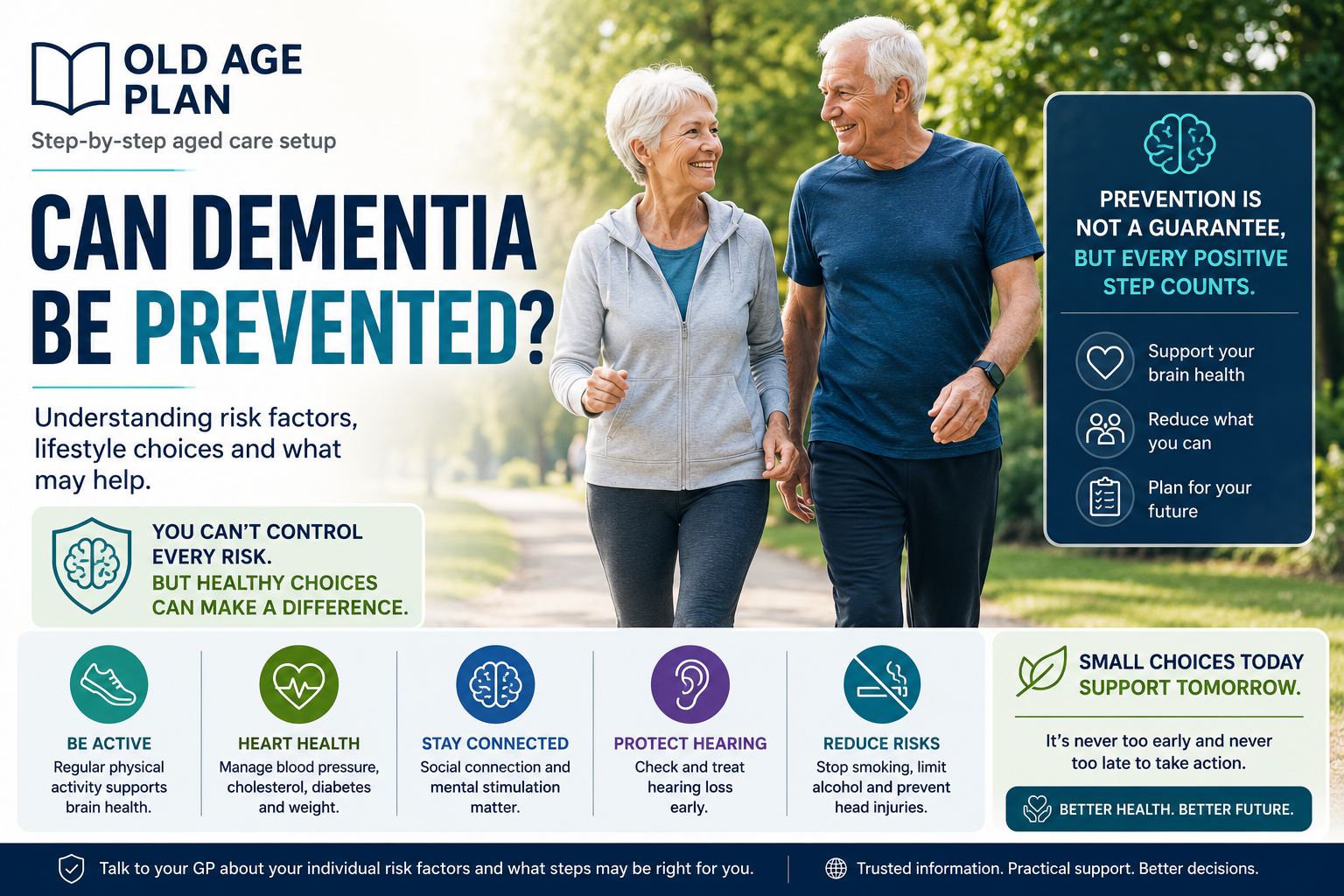

Can Dementia Be Prevented?
Many families start asking about dementia prevention after seeing memory or thinking changes in someone close to them.
You may be wondering whether dementia can be avoided, whether family history matters, or whether lifestyle changes can make a real difference.
If you are asking can dementia be prevented, the honest answer is that dementia cannot always be prevented, but some risk factors may be reduced.
This means there may be practical steps that support brain health, even though no action can guarantee dementia will never happen.
Short Answer
Dementia cannot always be prevented.
However, some risk factors may be reduced through health, lifestyle and environmental changes.
Dementia Australia explains that there is no evidence dementia can be definitively prevented, but some factors may reduce risk or delay symptoms.
Key Takeaway
Dementia prevention is usually about risk reduction, not certainty.
Some risks, such as age and family history, cannot be changed.
Other risks, such as physical inactivity, smoking, high blood pressure, hearing loss and social isolation, may be managed with the right support.
Why Dementia Prevention Matters
Dementia is not a normal part of ageing.
However, the risk of dementia increases as people get older.
That can make prevention questions feel personal, especially if dementia has affected a parent, partner or close relative.
The Australian Government lists several ways people may reduce their dementia risk, including staying physically active, stopping smoking, reducing alcohol, managing blood pressure, protecting hearing and staying socially connected.
These steps do not guarantee prevention.
However, they may support better brain and overall health.
When Families Usually Start Asking Questions
Families often ask about prevention after:
- a parent or partner receives a dementia diagnosis
- memory changes appear in the family
- someone worries about their own future risk
- a doctor mentions blood pressure, diabetes, hearing loss or cholesterol
- family history raises concerns
- someone wants to know what can be done now
The real question is often not just “Can dementia be prevented?”
It may be:
What can we sensibly do now to reduce risk where possible?
Can Dementia Be Fully Prevented?
No one can guarantee that dementia will be prevented.
Dementia has many possible causes and risk factors.
Some factors are not within a person’s control.
These may include age, genetics and some medical history.
However, risk reduction still matters.
The Australian Institute of Health and Welfare notes that it is never too early and never too late to take action to reduce dementia risk.
What Risk Factors Cannot Be Changed?
Some dementia risk factors cannot be changed.
These may include:
- age
- some genetic factors
- some family history
- some past medical events
Having risk factors does not mean dementia will definitely happen.
It simply means the chance may be higher.
What Risk Factors May Be Reduced?
Some dementia risk factors may be managed or reduced.
Dementia Australia lists modifiable risk factors including hearing loss, depression, traumatic brain injury, physical inactivity, diabetes, smoking, high blood pressure and unhealthy weight.
Other recognised risk factors include excessive alcohol use, high LDL cholesterol, untreated vision loss, social isolation and air pollution.
Families do not need to tackle everything at once.
The most useful first step may be speaking with a GP about personal risk factors.
Physical Activity And Brain Health
Regular physical activity may help reduce dementia risk.
It can also support heart health, balance, mood, sleep and general wellbeing.
Dementia Australia explains that physical inactivity can increase dementia risk and that even a small increase in activity can make a difference.
The right level of activity depends on the person’s health and ability.
A GP or allied health professional can give advice if there are medical concerns, falls risk or mobility issues.
Heart Health And Dementia Risk
Heart and blood vessel health can affect brain health.
High blood pressure, diabetes, high cholesterol, smoking and stroke risk can all matter.
Vascular dementia is linked with reduced blood flow or damage to blood vessels in the brain.
Managing blood pressure, blood glucose, cholesterol and smoking may reduce risk and support overall health.
Hearing, Vision And Dementia Risk
Untreated hearing loss is recognised as a dementia risk factor.
The Australian Government also lists protecting hearing and vision as ways to reduce dementia risk.
Hearing and vision problems can also make daily life harder, increase isolation and reduce confidence.
Checking hearing and vision may be a practical step, especially if communication or social participation is becoming harder.
Social Connection And Mental Stimulation
Social engagement and cognitive activity may help protect brain health.
The Australian Institute of Health and Welfare lists social engagement and cognitive activity as protective factors that may reduce the likelihood of dementia.
This does not mean people need complicated programs.
Meaningful conversation, hobbies, learning, volunteering, reading, games, community activity and regular contact with others may all support mental stimulation.
Smoking, Alcohol And Head Injury
Smoking during adult life can increase dementia risk.
Excessive alcohol use is also recognised as a risk factor.
Head injuries may increase risk, particularly repeated or serious injuries.
Reducing these risks may involve quitting smoking, reducing alcohol, using helmets where appropriate, preventing falls and seeking medical advice after head injuries.
Can Diet Affect Dementia Risk?
A healthy diet may support heart health and general wellbeing.
Because heart health and diabetes risk are linked with dementia risk, diet can be part of a broader risk-reduction approach.
There is no single food that guarantees dementia prevention.
Be careful with claims that one supplement, drink or diet can prevent dementia.
It is better to seek advice from a doctor or dietitian if there are specific health concerns.
Does Family History Mean Dementia Is Inevitable?
No.
Having a family member with dementia does not mean dementia is inevitable.
Family history may increase risk in some situations, but many cases are not caused by a single inherited gene.
If family history is a concern, a GP can help explain whether further advice may be useful.
What Should You Ask Your Doctor?
If you are concerned about dementia risk, you may want to ask a GP about:
- blood pressure
- diabetes risk
- cholesterol
- hearing and vision checks
- smoking support
- alcohol use
- falls and head injury risk
- mood and depression
- sleep concerns
- safe physical activity
A doctor can help identify which risk factors are most relevant.
Decision Support
If you are trying to decide what to focus on first, consider:
- Has a GP reviewed blood pressure, diabetes risk and cholesterol recently?
- Is hearing or vision affecting daily life?
- Is the person physically inactive or becoming socially isolated?
- Are smoking or alcohol concerns present?
- Has there been a history of falls or head injury?
- Are mood, sleep or depression concerns affecting wellbeing?
- Which change feels realistic to start with?
The goal is not to control every risk.
The goal is to reduce avoidable risks where possible.
What Could Happen Next?
After discussing dementia risk with a GP, the next step may include health checks, lifestyle advice, medication review, hearing or vision assessment, allied health referral or support to manage existing conditions.
For some families, the next step may simply be choosing one practical health change and reviewing it over time.
Small steps can still matter when they are realistic and consistent.
What You May Really Be Trying To Decide
If you are searching for whether dementia can be prevented, you may not only be looking for a yes or no answer.
You may also be trying to decide:
- whether you or someone close to you may be at higher risk
- which risk factors are worth checking
- whether lifestyle changes can genuinely help
- what to ask a GP
- what changes are realistic now
- whether family history should change your planning
Those are practical questions.
A sensible next step may be to focus on the risks that can be checked, managed or reduced.
Related Old Age Plan Articles
- What Causes Dementia?
- Can Dementia Be Treated?
- What Is Dementia?
- Is Dementia A Normal Part Of Ageing?
- What Are The Early Signs Of Dementia?
- How Is Dementia Diagnosed?
Sources
- Dementia Australia — Reduce Your Risk Of Dementia
- Dementia Australia — Dementia Risk Factors
- Australian Government Department Of Health — About Dementia
- AIHW — Dementia Risk Factors
- World Health Organization — Risk Reduction Of Cognitive Decline And Dementia
Summary
Dementia cannot always be prevented.
However, some dementia risk factors may be reduced or managed.
These may include physical inactivity, smoking, high blood pressure, diabetes, hearing loss, depression, social isolation, excessive alcohol use and head injury risk.
A practical first step is to speak with a GP about personal risk factors and focus on realistic changes that support brain and overall health.