
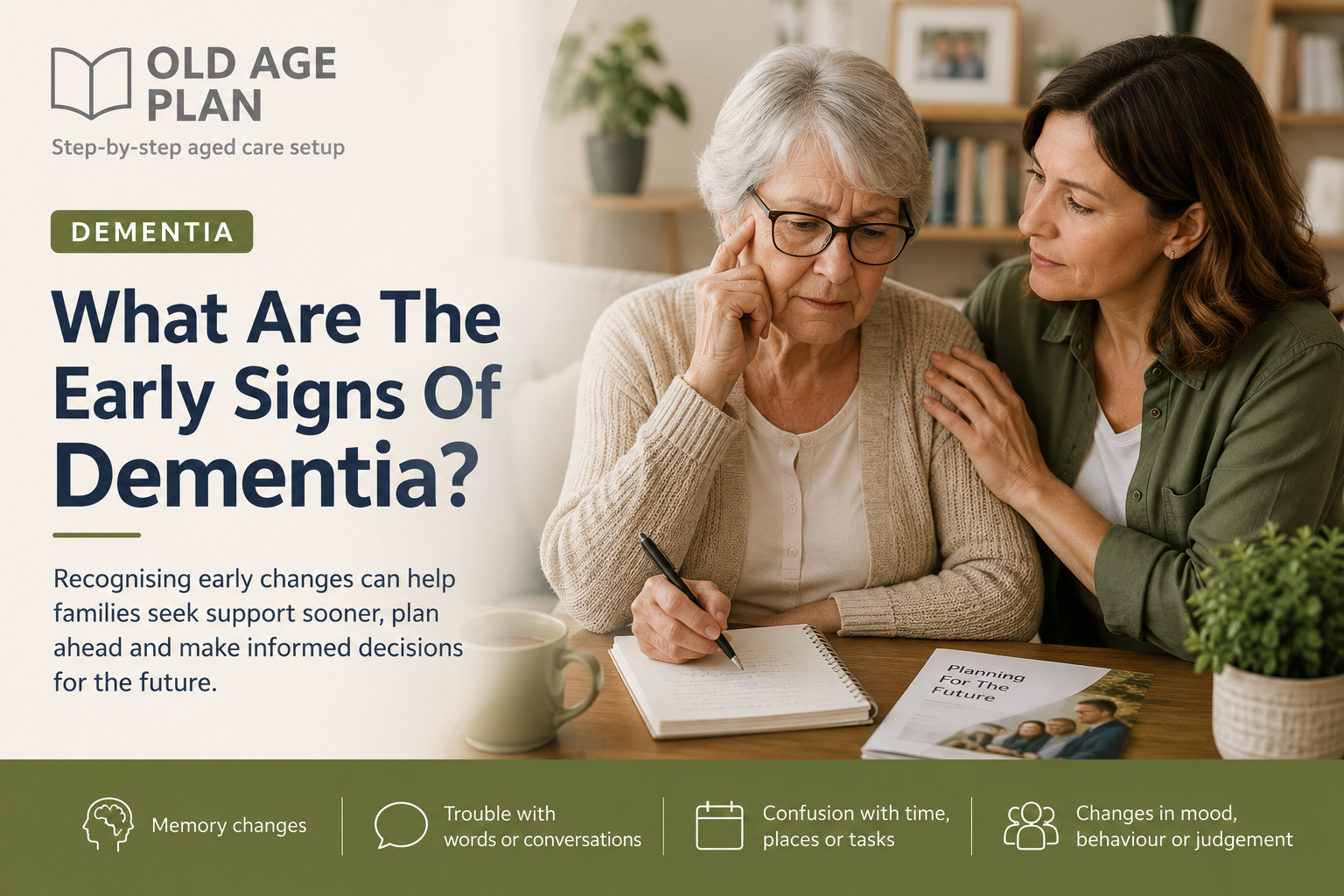

What Are The Early Signs Of Dementia?
What are the early signs of dementia? The early signs of dementia can include changes in memory, thinking, communication, behaviour and everyday tasks.
These changes may be mild at first.
They may also be easy to explain away.
A family may think it is stress.
They may think it is normal ageing.
They may think the person is tired, distracted or having a bad day.
However, when changes happen often or begin affecting daily life, it may be time to seek medical advice.
Short Answer
The early signs of dementia may include memory loss, confusion, trouble finding words, changes in mood, poor judgement and difficulty managing familiar tasks.
Not every memory problem is dementia.
However, ongoing changes should be discussed with a doctor.
Why Early Signs Can Be Easy To Miss
Dementia does not always begin with obvious memory loss.
Some people first show changes in confidence, judgement, language, mood or behaviour.
Others may continue managing many parts of daily life while small changes build slowly.
This can make early dementia hard for families to recognise.
Memory Loss That Affects Daily Life
Memory loss is one of the better-known early signs of dementia.
This is different from occasionally forgetting a name or misplacing keys.
Examples may include:
- forgetting recent conversations
- asking the same question often
- forgetting appointments
- forgetting recent events
- needing more reminders than usual
The key concern is whether memory changes are becoming regular or affecting daily life.
Trouble Doing Familiar Tasks
A person may begin struggling with tasks they used to manage easily.
This may include cooking, paying bills, using appliances, following a recipe or managing medications.
They may start a task and forget what they were doing.
They may also need more help with routines that were once automatic.
Confusion About Time Or Place
Another early sign can be confusion about dates, times or familiar places.
A person may lose track of the day.
They may become confused about appointments.
They may have trouble finding their way in familiar areas.
This can be especially concerning if it happens more than once.
Difficulty Finding Words
Dementia can affect communication.
A person may struggle to find the right word.
They may stop halfway through a sentence.
They may repeat themselves.
They may also find it harder to follow conversations, especially in groups.
Changes In Mood Or Behaviour
Early dementia can affect mood and behaviour.
A person may become more anxious, withdrawn, frustrated or suspicious.
They may lose interest in hobbies, social activities or family conversations.
These changes can be confusing for families, especially when the person seems physically well.
Poor Judgement Or Decision-Making
Dementia can affect judgement and decision-making.
Early changes may include:
- unusual spending decisions
- trouble managing money
- reduced awareness of risk
- difficulty solving everyday problems
- less attention to personal safety
These changes may raise concerns about finances, driving, medication or living safely at home.
Withdrawal From Work, Hobbies Or Social Life
Some people begin stepping back from activities they once enjoyed.
This may happen because conversations feel harder.
It may also happen because they feel embarrassed, overwhelmed or less confident.
Withdrawal can be an early warning sign when it appears alongside other changes.
Is It Dementia Or Normal Ageing?
Everyone forgets things from time to time.
That does not automatically mean dementia.
Normal ageing may include occasionally forgetting a name, walking into a room and forgetting why, or needing more time to remember something.
Dementia is different because the changes are more persistent and begin affecting everyday life.
When Should You See A Doctor?
You should speak with a GP if memory, thinking, behaviour or communication changes are becoming noticeable or affecting daily life.
It can help to write down examples before the appointment.
A doctor may check for dementia and other possible causes.
Some conditions can cause dementia-like symptoms, including infections, medication side effects, depression, sleep problems, vitamin deficiencies and thyroid problems.
You can read more here: What Is Mild Cognitive Impairment?
Why Early Assessment Matters
Early assessment can help families understand what is happening.
It may also give the person more time to take part in decisions about care, legal planning, finances and future support.
Early support can also help families plan calmly instead of waiting for a crisis.
What Families Can Do Next
If you are worried about early signs of dementia, start with a calm conversation and a medical appointment.
Try to focus on specific changes rather than blame.
Families may also begin learning about dementia, future planning and support options.
A checklist or planner may help organise concerns before speaking with a doctor.
Related Old Age Plan Articles
- What Is Dementia?
- What Causes Dementia?
- Is Dementia A Normal Part Of Ageing?
- How Is Dementia Diagnosed?
- Can Someone With Dementia Make Legal Decisions?
Sources
- Dementia Australia — Early Warning Signs Of Dementia
- Dementia Australia — About Dementia
- Healthdirect Australia — Dementia
- Better Health Channel — Dementia Early Signs
- Australian Institute Of Health And Welfare — Dementia In Australia
Key Takeaway
The early signs of dementia can include changes in memory, thinking, communication, behaviour and everyday tasks.
These changes may develop gradually and can sometimes be mistaken for normal ageing.
If symptoms are becoming more frequent or affecting daily life, it is important to seek medical advice.
Summary
The early signs of dementia can include memory loss, confusion, communication changes, poor judgement, mood changes and difficulty managing familiar tasks.
These signs may be mild at first.
However, when changes become regular or affect daily life, families should seek medical advice.