
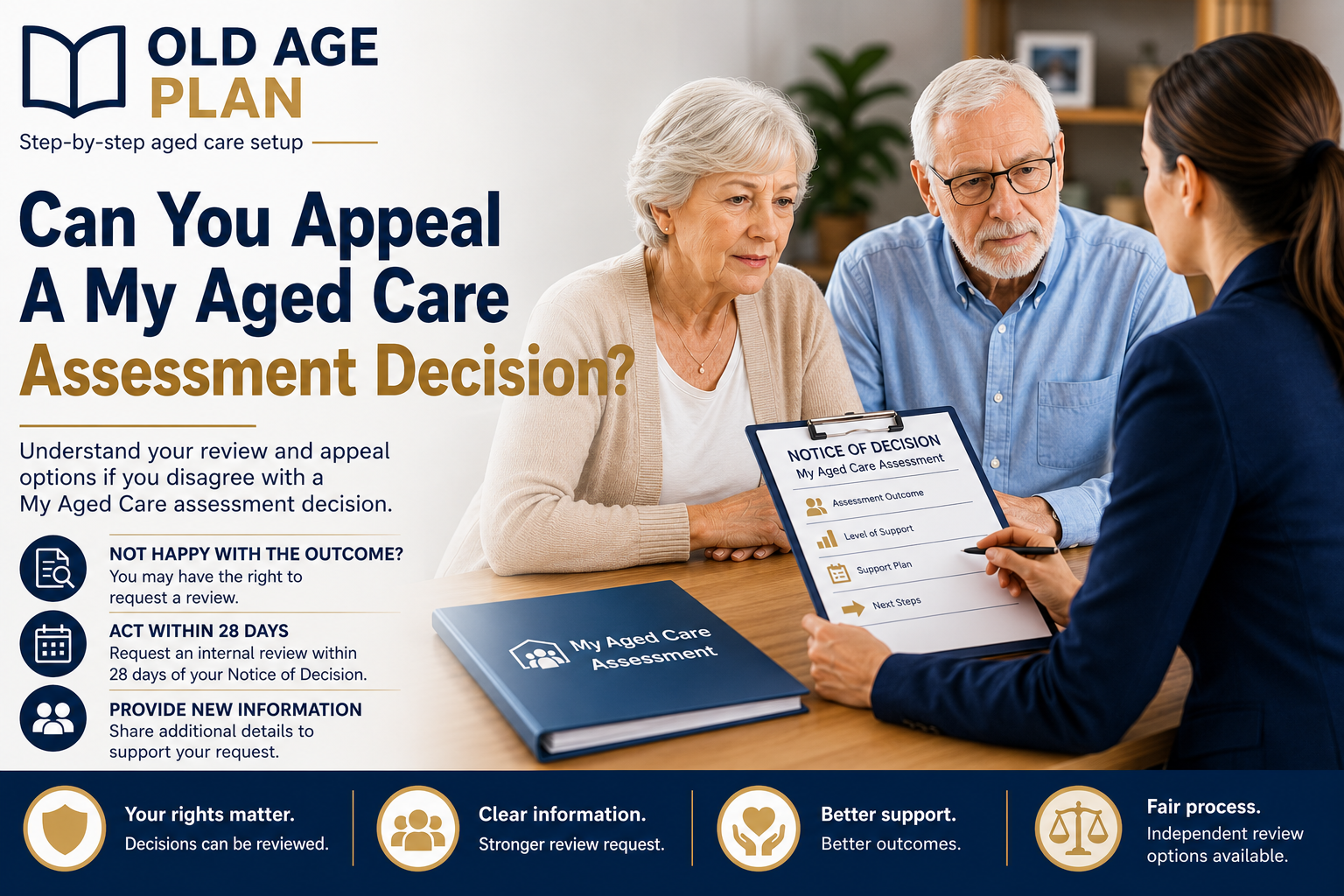

Can You Appeal A My Aged Care Assessment Decision?
If a My Aged Care assessment decision does not seem right, it can feel frustrating and confusing.
Families may know the older person is struggling with showering, meals, medication, mobility, memory, safety or carer pressure, yet the assessment outcome may not seem to reflect what is really happening at home.
The important point is that an assessment outcome is not always the final word. If you disagree with the decision in the Notice of Decision, you may have the right to request a review.
Short Answer
Yes. If you do not agree with a My Aged Care assessment decision in your Notice of Decision, you can request an internal review of the decision, usually within 28 days of receiving the notice. You can provide new information to support your request. If you still disagree after the internal review, an external review through the Administrative Review Tribunal may be available.
Key Takeaway
If a My Aged Care assessment decision seems too low, incomplete or inaccurate, do not ignore it. Check the Notice of Decision carefully, identify what was missed, gather supporting information and act within the review timeframe.
What Decision Are You Appealing?
Before challenging an outcome, it is important to understand what decision you are actually questioning.
After an assessment, the older person should receive a Notice of Decision. This letter outlines the assessment outcome and explains whether the person is eligible for government-subsidised aged care services.
If support is approved, the letter may also include a support plan or information about referrals and next steps.
Eligibility
You may disagree with whether the person was found eligible for the type of aged care support they need.
Level Of Support
You may believe the approved support does not match the person’s real care needs, safety risks or carer pressure.
Priority Or Classification
You may have concerns about the priority, classification or level of support recorded in the assessment outcome.
Missing Information
You may believe important details were not considered, such as bad days, hidden family support, falls, memory issues or recent decline.
Internal Review Comes First
If you disagree with the outcome in the Notice of Decision, My Aged Care explains that you can request an internal review of the decision.
An internal review means the Department checks whether the right decision was made based on the person’s situation, the information available and the law.
You can also provide new information to support the request.
OAP Reality Check: A review is not just saying “we disagree.” It is showing what the original decision may have missed, misunderstood or understated.
How Long Do You Have To Request A Review?
My Aged Care says you must ask for an internal review within 28 days of receiving the Notice of Decision.
This timeframe matters. If the outcome does not seem right, do not wait until family pressure becomes unmanageable or services fail to meet the person’s needs.
Read the Notice of Decision carefully and follow the review instructions included in the letter.
Check The Date
Work from the date the Notice of Decision was received, not from when the family finally had time to discuss it.
Read The Review Instructions
The Notice of Decision should include information about how to request a review.
Do Not Rely On Memory
Use written examples, records and supporting information where possible.
Act Before The Deadline
If you are unsure, contact My Aged Care and ask what review options apply.
How Do You Request An Internal Review?
My Aged Care says you can request an internal review by completing the Request for an Internal Review of a Decision form and submitting it by email or post.
You can also write a letter to the System Governor at the Department of Health, Disability and Ageing asking them to review the decision. The Notice of Decision should explain how to do this.
The review request should clearly explain which decision you disagree with and why.
What Information Should You Include?
The strongest review requests are usually specific.
General statements such as “Mum needs more help” may not explain the full situation. It is better to describe what happens day to day, what risks exist and what support is already being provided.
Daily Living Needs
Explain help needed with showering, dressing, toileting, meals, cleaning, shopping, transport or mobility.
Safety Risks
Include falls, unsafe cooking, medication mistakes, wandering, confusion, poor hygiene or inability to respond in an emergency.
Hidden Family Support
List what family or carers already do each week to keep the person safe and functioning.
Recent Changes
Explain hospital visits, sudden decline, worsening mobility, cognitive changes, carer breakdown or new care needs.
Why Assessment Outcomes Can Feel Too Low
An assessment outcome may feel wrong for several reasons.
Sometimes the older person minimised their needs. Sometimes family support was not fully explained. Sometimes the assessment captured a good day rather than the usual pattern. Sometimes important safety risks were not clear during the conversation.
The Person Understated Their Needs
Some older people say they are managing because they feel embarrassed, proud or worried about losing independence.
Family Support Was Invisible
If family is doing meals, transport, medication, cleaning and supervision, the person may appear more independent than they are.
The Assessment Happened On A Good Day
One calm appointment may not show bad days, evening confusion, fatigue, falls risk or fluctuating support needs.
Safety Risks Were Not Fully Explained
Risks such as wandering, unsafe cooking, missed medication or bathroom falls need clear examples.
Can You Provide New Information?
Yes. My Aged Care says new information can be provided to support an internal review request.
This is important because the review is an opportunity to correct missing or incomplete information.
Useful information may include notes from family, GP or health professional information, hospital discharge information, medication concerns, falls history, examples of personal care needs, carer stress or evidence that needs have changed.
What If Needs Have Changed Since The Assessment?
If care needs have changed since the original assessment, the issue may not only be whether the first decision was wrong.
The person may now need an updated support plan, reassessment or further discussion with My Aged Care.
This can happen after a fall, hospital stay, worsening confusion, increased personal care needs, carer illness, rapid decline or a change in living arrangements.
Original Decision Issue
The assessment outcome did not reflect the situation at the time it was made.
Changed Needs Issue
The person’s situation has changed since the assessment and now requires updated consideration.
Carer Pressure Issue
Family support has become unsustainable and the original plan no longer works in practice.
Safety Issue
The person is no longer safe under the current arrangement and needs urgent attention.
What Happens If You Still Disagree After The Internal Review?
If you do not agree with the outcome of the internal review, My Aged Care says you may ask the Administrative Review Tribunal for an external review.
The Tribunal is an independent body that can review certain Australian Government administrative decisions.
You generally cannot seek external review until the Department has completed the internal review.
Internal Review, Complaint Or Reassessment?
Families often use the word appeal to describe different problems.
But the right pathway depends on what has gone wrong.
Internal Review
Use this when you disagree with the decision in the Notice of Decision and want the decision reviewed.
Complaint
Use this when your concern is about the assessment experience, delays, communication or how the assessment was conducted.
Support Plan Review
Use this when the person is already receiving services and their needs, goals or support arrangements need updating.
Reassessment
Use this when care needs have changed significantly and the previous assessment no longer reflects the current situation.
What You May Really Be Trying To Decide
The surface question is:
Can you appeal a My Aged Care assessment decision?
But the deeper decision is often:
Was the real level of need properly recognised, and what should we do if it was not?
That is the real pressure point. Families are not usually looking for a technical review process. They are trying to work out whether the outcome is safe, accurate and strong enough for the person’s actual situation.
Decision Support: Before You Request A Review
Before requesting a review, organise the concern clearly.
Identify The Exact Problem
Is the issue eligibility, support level, priority, classification, missing information or changed needs?
Gather Specific Examples
Use real incidents, dates, care tasks and risks rather than general statements.
Make Hidden Support Visible
Explain what family and carers are already doing to keep the person safe.
Act Within The Timeframe
Internal review requests generally need to be made within 28 days of receiving the Notice of Decision.
Related Old Age Plan Articles
Next Steps With Old Age Plan
FAQ
Can you appeal a My Aged Care assessment decision?
Yes. If you disagree with the decision in your Notice of Decision, you can request an internal review of the decision.
How long do you have to request an internal review?
My Aged Care says you must ask for an internal review within 28 days of receiving your Notice of Decision.
Can you provide new information for the review?
Yes. You can provide new information to support your internal review request, including information about care needs, safety risks or changed circumstances.
What if you still disagree after the internal review?
You may be able to ask the Administrative Review Tribunal for an external review after the internal review has been completed.
Is a complaint the same as an appeal?
No. A review challenges the decision itself. A complaint may relate to the assessment experience, delays, communication or how the assessment was conducted.
Summary
You can request an internal review if you disagree with a My Aged Care assessment decision in your Notice of Decision. This is usually required within 28 days of receiving the notice, and you can provide new information to support your request.
The strongest next step is to identify exactly what was missed or misunderstood, gather specific examples, make hidden family support visible and act before the review timeframe passes.
Sources
Disclaimer
This article provides general information only and is not legal, financial, medical or aged care advice.
Assessment review processes, aged care laws, timeframes and service pathways may change. Your situation may also depend on the decision received, review rights, health needs, family support, legal authority and current My Aged Care procedures.
For current information, contact My Aged Care, read your Notice of Decision carefully, or speak with a qualified aged care, legal, health or financial professional where needed.