
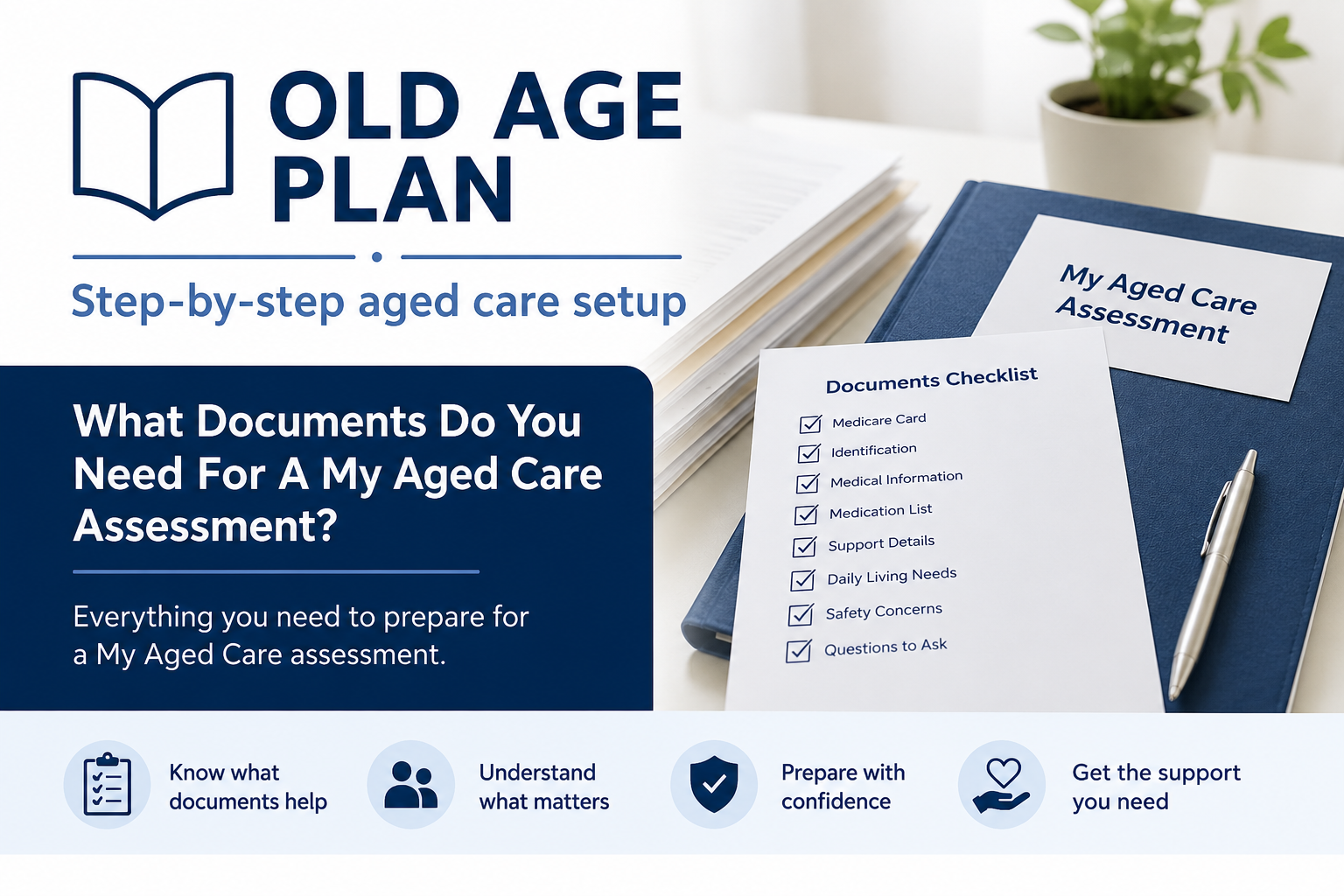

What Documents Do You Need For A My Aged Care Assessment?
If you are preparing for a My Aged Care assessment, it is easy to think the main job is collecting paperwork.
Medicare card. Identification. Medical letters. Medication details. Support information.
Those things matter. But the deeper issue is whether the assessment sees the real situation clearly enough. A person may appear to be managing because family members are filling gaps, preventing risks or quietly carrying the load.
For a My Aged Care assessment, have your Medicare card, another form of identification, any doctor referrals, GP or health professional contact details, current support information and details about aged care services you may want to discuss. It also helps to prepare clear examples of daily tasks, safety concerns and support needs.
Key Takeaway
The documents are only part of the preparation.
The real aim is to help the assessor understand what is happening at home: what has changed, what support is already being provided, and what risks may be hidden by family help or habit.
What To Have Ready
Use this as a high-level preparation guide, not a complete workbook.
Identification
My Aged Care says to have your Medicare card and one other form of identification, such as a driver licence, health care card, passport or DVA card.
Medical Information
Have any doctor referrals, relevant medical information and contact details for your GP or other health professionals available.
Current Support
Prepare information about any support already being received, including family help, paid services, community support or health services.
Services To Discuss
If there are aged care services you want to ask about, note them before the assessment so important questions are not missed.
Why These Documents Matter
My Aged Care explains that preparing for an assessment includes having identification, referrals, GP or health professional contact details, support information and aged care service information ready.
The Department of Health, Disability and Ageing also explains that the Integrated Assessment Tool helps assessors collect more complete information about an older person so recommendations and referrals can be tailored to current needs.
That means preparation is not just administrative. It helps the assessor understand the person’s needs in context.
What You May Really Be Trying To Avoid
The surface question is:
What documents do we need?
The real concern is often:
How do we stop the assessment from missing what is actually happening?
This is especially important when the person being assessed minimises difficulty, forgets examples, feels embarrassed, or only talks about good days.
What Paperwork Alone May Not Show
Documents can support the assessment, but they may not reveal the full support picture.
Family Support
If family members are shopping, cleaning, driving, managing medication or checking safety, that support should be visible.
Variable Needs
A calm assessment day may not show harder days. If needs change, the pattern matters.
Safety Concerns
Falls, missed medication, unsafe cooking, confusion or difficulty getting help may explain why support is needed.
Carer Pressure
If the current arrangement depends on a carer doing more than is sustainable, that is part of the real situation.
OAP Assessment Rule: the assessor cannot consider support needs that remain invisible.
What To Write Down Before The Assessment
Keep notes simple. Do not try to build a full assessment system inside the article or at the kitchen table.
Before the assessment, it may help to write down:
- what has changed recently
- what tasks are harder than before
- what support is already being provided
- what safety concerns have appeared
- what questions you want to ask
This is not about exaggerating. It is about making sure important information is not forgotten during the conversation.
Can Someone Support You During The Assessment?
Yes. My Aged Care explains that support people may be involved, including family members, trusted friends, partners, registered supporters or appointed decision-makers where appropriate.
This can be especially useful if the person being assessed has memory problems, anxiety, communication difficulty or tends to understate how much help they need.
Common Mistakes To Avoid
Only Preparing Medical Papers
Medical information helps, but aged care assessment also looks at daily support needs.
Forgetting Informal Care
Unpaid help from family or friends may be a major part of the support picture.
Describing Only Good Days
If the person’s needs vary, explain the pattern rather than only the easiest day.
Waiting Until The Assessment To Think
Important examples are easy to forget. A few notes beforehand can prevent understatement.
Frequently Asked Questions
Do I need my Medicare card for a My Aged Care assessment?
Yes. My Aged Care says to have your Medicare card ready. It also says to have one other form of identification, such as a driver licence, health care card, passport or DVA card.
Should I bring medical reports?
If you have referrals, doctor letters, hospital information or health professional details, keep them available. They can help explain medical and support needs.
What if I do not have many documents?
You can still prepare by writing down what has changed, what support is already being provided and what safety concerns have appeared.
Can family help during the assessment?
Yes. My Aged Care says support people may be involved, including family members, trusted friends, partners, registered supporters or appointed decision-makers where appropriate.
Should carer stress be mentioned?
Yes. If the current situation depends heavily on unpaid family support or a carer is becoming overwhelmed, that helps explain whether the arrangement is sustainable.
Should we mention bad days?
Yes. If support needs vary, explain the pattern. A good day should not hide recurring risks or difficulties.
Sources
- My Aged Care — Preparing for your assessment
- My Aged Care — How to get assessed
- My Aged Care — Apply for an assessment online
- My Aged Care — Registering a supporter
- Department of Health, Disability and Ageing — Assessment tools for the Single Assessment System
- Department of Health, Disability and Ageing — Integrated Assessment Tool User Guide
Disclaimer
This article provides general information only. It is not legal, medical, financial or aged care advice.
Aged care rules, assessment processes, funding arrangements and government programs may change. Personal circumstances also vary.
For current information, refer to My Aged Care, the Department of Health, Disability and Ageing, Services Australia and other official Australian Government resources. If you need advice about your own situation, speak with a qualified professional or contact My Aged Care directly.
Summary
For a My Aged Care assessment, prepare your Medicare card, another form of identification, referrals, GP or health professional contact details, current support information and any aged care service questions you want to discuss.
The documents matter, but they are not the whole picture. The assessment also needs to understand what is happening at home, what support is already being provided and what risks may otherwise remain hidden.
Good preparation helps prevent understatement. It gives the assessor a clearer view of the person’s real support needs.