
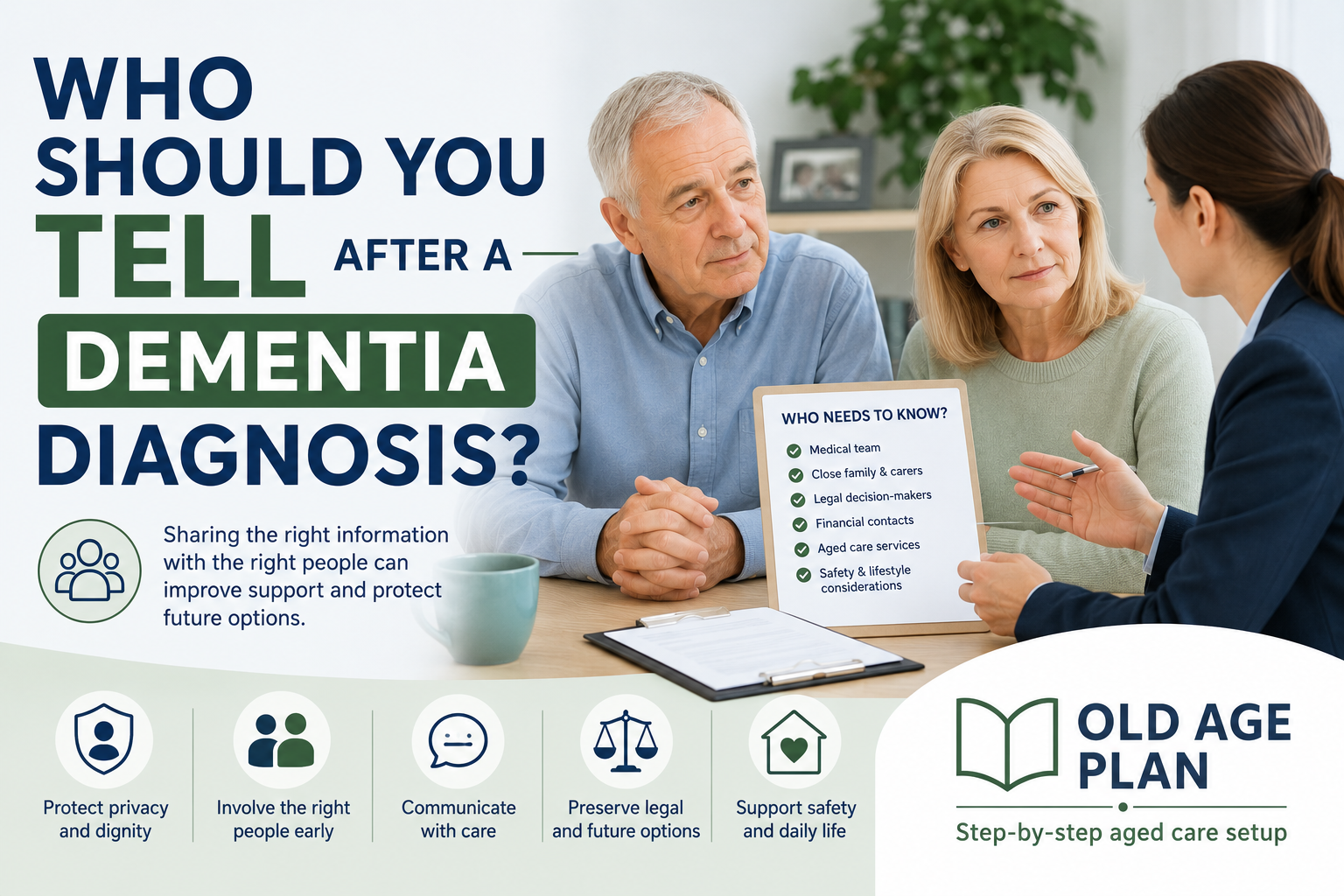

Who Should You Tell After A Dementia Diagnosis?
Who should you tell after a dementia diagnosis? The answer depends on who needs to know to support the person’s care, safety, legal planning and daily life.
A dementia diagnosis is personal information. It does not need to be shared with everyone immediately.
However, keeping it too private can also create problems if the right people are not informed early enough.
The goal is to share information carefully, with the right people, at the right time.
Short Answer
After a dementia diagnosis, you may need to tell key people involved in medical care, daily support, legal planning, financial management, safety and future care decisions.
This may include a GP, specialists, trusted family members, an attorney, guardian, carer, aged care services, employer, insurer or driving authority, depending on the situation.
The diagnosis should be shared respectfully and, where possible, with the person’s involvement and consent.
Key Takeaway
Not everyone needs to know about a dementia diagnosis at once.
The most important people to tell first are those who need the information to help protect safety, support decision-making, organise care or preserve future options.
Why Telling The Right People Matters
A dementia diagnosis can affect more than health care.
It may affect:
- medical treatment
- medicine safety
- driving
- money management
- legal documents
- home support
- work
- family decision-making
- future aged care planning
If nobody knows, important decisions may be delayed.
If too many people are told too quickly, the person may feel exposed or lose control over their own story.
A careful approach helps balance privacy with practical support.
Should The Person With Dementia Be Involved?
Where possible, yes.
A dementia diagnosis does not automatically mean the person cannot make decisions or decide who should be told.
Many people can still understand the diagnosis, express preferences and take part in conversations, especially in the early stage.
The person should usually be involved in deciding:
- who is told
- how much is shared
- when conversations happen
- who speaks on their behalf if needed
If decision-making has become unreliable, families may need professional advice about privacy, consent, legal authority and support roles.
Who Usually Needs To Know First?
The first people to tell are usually those directly involved in care, safety or decision-making.
This may include:
- the GP
- relevant specialists
- a trusted family member or support person
- the person appointed under an Enduring Power of Attorney
- the person appointed as guardian or medical decision-maker
- a main carer
- aged care assessment or support services
The question is not, “Who has a right to know everything?”
The better question is, “Who needs this information to help with the next decision?”
Medical And Health Professionals
Health professionals involved in the person’s care usually need accurate information about the diagnosis.
This may include:
- GPs
- specialists
- pharmacists
- hospital teams
- allied health providers
- community nurses
- mental health professionals
This helps reduce risk around medicines, appointments, treatment decisions and sudden health changes.
It may also help professionals distinguish dementia progression from other issues, such as delirium, infection, medication effects or depression.
Family Members And Support People
Some family members may need to know early.
Others may not need full details immediately.
Useful factors include:
- who provides practical support
- who attends appointments
- who manages money or paperwork
- who may be named in legal documents
- who may be affected by future care decisions
- who is likely to help rather than increase conflict
Sharing the diagnosis with family should not become gossip or panic.
It should help create better support, clearer roles and fewer misunderstandings.
Legal Decision-Makers
If the person has appointed an attorney, guardian or substitute decision-maker, they may need to know about the diagnosis.
This does not always mean they take over immediately.
Legal authority depends on the document, the decision involved and the person’s capacity for that specific decision.
A dementia diagnosis alone does not automatically transfer decision-making authority.
However, appointed decision-makers may need to understand the situation so they can act appropriately if their role becomes active later.
Financial Institutions Or Advisers
Money and dementia can become sensitive quickly.
Not every financial organisation needs to be told immediately.
However, disclosure may become relevant if there are concerns about:
- missed bills
- unusual withdrawals
- financial exploitation
- scams
- contract decisions
- authority under an Enduring Power of Attorney
- someone else helping with banking
If financial decisions are becoming unreliable, legal and financial advice may be needed before acting.
Driving And Safety Authorities
Dementia may affect driving safety.
Requirements may vary depending on the state or territory and the person’s licence conditions.
The person may need medical review, driving assessment or advice from their GP about whether they should continue driving.
If driving is still occurring after diagnosis, this should not be ignored.
The question is not only whether the person wants to keep driving.
The question is whether driving remains safe enough for them and others.
Workplaces, Insurers And Other Organisations
If the person is still working, running a business or holding responsibilities, workplace disclosure may become relevant.
This depends on:
- the person’s role
- safety risks
- legal duties
- insurance requirements
- whether adjustments are needed
- whether the person wants support at work
Insurance, superannuation or other organisations may also need information in certain situations.
These decisions should be handled carefully because they may have legal, financial or privacy consequences.
When You Should Be Careful About Telling People
Some disclosure can create more harm than help.
Be careful when telling people who may:
- pressure the person
- create family conflict
- use the information for control
- spread private details
- make decisions without proper authority
- dismiss the person’s voice too quickly
The diagnosis should not become permission for others to take over before that is necessary.
Privacy, dignity and autonomy still matter.
How Much Should You Share?
You do not always need to share everything.
The amount shared should match the person’s role.
For example:
- a GP may need full medical details
- a lawyer may need capacity-related information
- a close family member may need practical updates
- a neighbour may only need emergency contact details
- a service provider may only need information relevant to support
Sharing less with the wrong person can protect privacy.
Sharing enough with the right person can protect safety.
What You May Really Be Trying To Decide
If you are asking who to tell after a dementia diagnosis, you may really be trying to decide:
- Who needs to know now?
- Who can wait?
- Who may help?
- Who may make things harder?
- Who has legal authority?
- Who needs information for safety or care?
- How do we protect privacy without delaying support?
This is not just a communication question.
It is a decision about privacy, support, authority and timing.
Decision Support
Start with the next decision that needs to be made.
Then ask who needs to know in order for that decision to be handled properly.
If the next issue is medical treatment, health professionals may need to know.
If the issue is legal planning, a lawyer and appointed decision-makers may need to be involved.
If the issue is daily safety, carers and support people may need enough information to help.
If the issue is family conflict, it may be better to slow down and clarify evidence before wider disclosure.
The goal is not secrecy.
The goal is staged, respectful sharing that protects the person while improving practical support.
Related Old Age Plan Articles
- What Happens After A Dementia Diagnosis?
- What Questions Should You Ask After A Dementia Diagnosis?
- Should You Get A Second Opinion After A Dementia Diagnosis?
- Can Dementia Be Diagnosed Early?
- Can Someone With Dementia Make Legal Decisions?
- What Happens When Someone With Dementia Loses Capacity?
Next Steps With Old Age Plan
After a dementia diagnosis, it can help to organise who needs to know, what they need to know and which conversations should happen first.
Old Age Plan’s Free Tools can help you prepare for early conversations, record key concerns and keep track of important decisions.
You may also find it helpful to read related guides on diagnosis, capacity, legal planning and what happens after dementia is confirmed.
The goal is not to tell everyone immediately.
The goal is to involve the right people early enough to protect privacy, safety and future options.
Sources
- Healthdirect Australia — Dementia
- Healthdirect Australia — Dementia overview
- Dementia Australia — Diagnosis
- Dementia Australia — Living with dementia
- My Aged Care — Living with memory loss, dementia or depression
- Healthdirect Australia — Driving and dementia
Disclaimer
This article provides general information only. It is not medical, legal or financial advice.
Dementia symptoms, privacy issues, capacity questions and support needs can vary between individuals. Medical assessment should be provided by qualified health professionals, and legal or financial questions should be discussed with qualified professionals.
Laws, services, policies and procedures may change over time. You should seek advice from appropriate professionals and refer to official Australian Government, health, dementia, legal and road authority resources for current information.
For dementia-related information and support, you may wish to contact Dementia Australia, Healthdirect, My Aged Care, your GP, Legal Aid or your state or territory road authority.
Summary
After a dementia diagnosis, you do not need to tell everyone immediately. But the right people may need to know early enough to support care, safety, legal planning and future decisions.
The best approach is staged and respectful.
Share enough information with the people who need it, while protecting the person’s privacy, dignity and involvement wherever possible.