
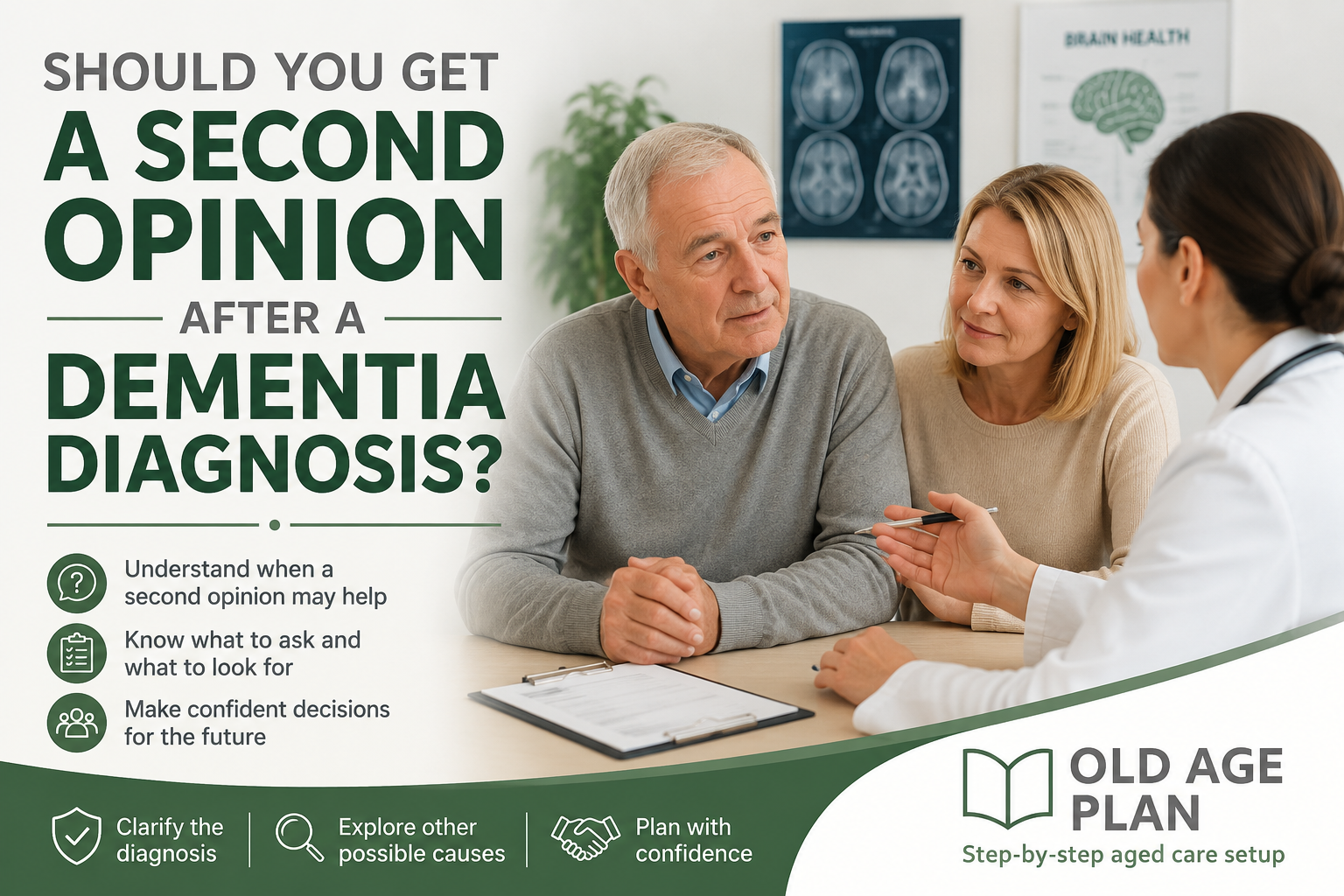

Should You Get A Second Opinion After A Dementia Diagnosis?
Should you get a second opinion after a dementia diagnosis? Sometimes, yes. A second opinion may be worth considering if the diagnosis feels unclear, symptoms do not match what the family is seeing, the assessment seemed rushed, or important causes of confusion may not have been fully explored.
A dementia diagnosis can affect care planning, legal decisions, family conversations, driving, finances and future support.
That does not mean every diagnosis needs to be questioned.
But if there is genuine uncertainty, it is reasonable to ask whether more information, further testing or specialist review may help.
Short Answer
You may want to get a second opinion after a dementia diagnosis if the diagnosis seems uncertain, symptoms changed suddenly, the person was unwell during assessment, family observations do not match the diagnosis, or reversible causes may not have been ruled out.
A second opinion does not mean the first doctor was wrong. It can simply help confirm the diagnosis, clarify the type of dementia, review other possible causes and support better planning.
Key Takeaway
A second opinion is most useful when it improves decision confidence.
If the diagnosis is clear and well explained, another opinion may not change much. But if uncertainty remains, seeking further medical advice may help families avoid acting too early, waiting too long or making major decisions on incomplete information.
Why A Second Opinion May Matter
Dementia is not always simple to diagnose, especially in the early stages.
Memory, confusion or behaviour changes may be caused or worsened by other issues, including:
- delirium
- infection
- depression
- anxiety
- medication side effects
- sleep problems
- thyroid problems
- vitamin deficiencies
- hearing or vision problems
- alcohol use
Some of these issues may be treatable. Others may need a different management plan.
This is why diagnosis should not rely only on a single conversation or one family member’s impression.
A good assessment usually looks at the person’s history, symptoms, daily function, cognitive testing, physical health and possible alternative causes.
When A Second Opinion May Be Worth Considering
A second opinion may be helpful when something about the diagnosis does not feel settled.
Examples include:
- the diagnosis was made very quickly
- the person was sick, distressed or unusually tired during assessment
- symptoms appeared suddenly
- family members have very different observations
- the person’s daily function seems better or worse than the diagnosis suggests
- there has been little explanation of the type of dementia
- reversible causes do not seem to have been checked
- the diagnosis will affect major legal, financial or care decisions
- the person or family does not understand what happens next
The issue is not whether the diagnosis is upsetting.
The issue is whether the diagnosis is reliable enough to guide the decisions that may follow.
When A Second Opinion May Not Be Necessary
A second opinion may be less useful when the diagnosis has already been carefully assessed and explained.
This may include situations where:
- symptoms have been tracked over time
- cognitive testing has been completed
- other medical causes have been considered
- specialist input has already occurred
- the diagnosis fits the person’s daily changes
- the family understands the next steps
In these situations, the better next step may be planning support rather than repeating the same diagnostic process.
However, if new symptoms appear or the person changes suddenly, further medical review may still be needed.
Who Can Provide A Second Opinion?
The right pathway depends on the situation.
A GP may be the starting point. They can review the diagnosis, check for new health issues, organise tests or refer to a specialist.
Depending on the symptoms, further review may involve:
- a geriatrician
- a neurologist
- a psychiatrist
- a memory clinic
- another GP
- an allied health or cognitive assessment service
The key is to match the review to the decision being made.
If the concern is medical diagnosis, a medical pathway is needed.
If the concern is capacity for legal documents, legal and medical advice may both be relevant.
If the concern is family disagreement, clearer medical evidence may help reduce conflict before decisions escalate.
What To Bring To A Second Opinion Appointment
A second opinion is more useful when the doctor receives clear information.
Families may want to bring:
- a summary of symptoms
- when changes started
- examples of memory or thinking concerns
- changes in daily tasks
- medicine lists
- recent test results
- hospital discharge summaries
- family observations
- questions about the diagnosis
This does not need to become a complex system.
The goal is simply to help the doctor see patterns more clearly.
Second Opinion And Family Disagreement
Sometimes the issue is not only the diagnosis.
It is disagreement about what the diagnosis means.
One family member may think action is urgent. Another may think everyone is overreacting. The person diagnosed may reject the diagnosis entirely.
In these situations, a second opinion may help align the conversation around evidence instead of opinion.
Useful questions may include:
- What evidence supports the diagnosis?
- What else has been ruled out?
- Is the diagnosis certain or still being monitored?
- What type of dementia is suspected?
- What decisions should be made now?
- What can safely wait?
The aim is not to win an argument.
The aim is to make sure decisions are based on the best available information.
Second Opinion And Legal Or Care Decisions
A dementia diagnosis may trigger wider decisions.
Families may start thinking about:
- Enduring Power of Attorney
- Enduring Guardianship
- Advance Care Directives
- wills
- driving
- home safety
- aged care support
- financial management
This is where diagnosis confidence matters.
If the diagnosis is uncertain, it may be risky to rush major decisions.
But if decision-making reliability is already changing, waiting too long may also reduce options.
The safest approach is often to clarify the diagnosis and then work out which decisions need attention first.
What You May Really Be Trying To Decide
If you are asking whether to get a second opinion after a dementia diagnosis, you may really be asking:
- Can we trust this diagnosis?
- Was something missed?
- Are symptoms caused by dementia or something else?
- Should we start legal planning now?
- Should we tell other family members?
- Are we acting too early?
- Are we waiting too long?
Those are reasonable questions.
A second opinion can help when the answer affects major decisions and the current information does not feel strong enough.
Decision Support
Consider a second opinion when uncertainty is affecting what happens next.
It may be especially useful if the diagnosis will influence legal authority, care planning, financial decisions or family agreement.
Before seeking another opinion, ask:
- What exactly feels unclear?
- Was the person assessed when medically stable?
- Have other causes been considered?
- Does the diagnosis match daily behaviour?
- What decision depends on this diagnosis?
- Would another opinion change what we do next?
If the answer is yes, further review may be worthwhile.
If the answer is no, the better step may be moving from diagnosis uncertainty into practical planning and support.
Related Old Age Plan Articles
- Can Dementia Be Misdiagnosed?
- How Is Dementia Diagnosed?
- What Happens After A Dementia Diagnosis?
- Can Dementia Be Diagnosed Early?
- What Tests Are Used To Check Memory Problems?
- What Is A Cognitive Assessment?
- Can Someone With Dementia Make Legal Decisions?
Next Steps With Old Age Plan
If the diagnosis feels uncertain, the next step is often to organise the questions and observations that need to be discussed with a GP or specialist.
Old Age Plan’s Free Tools can help you organise concerns, prepare for appointments and keep track of what needs clarification.
You may also find it useful to read related guides on dementia diagnosis, misdiagnosis and what happens after diagnosis so the next conversation is clearer.
The goal is not to challenge every diagnosis.
The goal is to make sure major care, legal or family decisions are not based on uncertainty that could have been clarified earlier.
Sources
- Healthdirect Australia — Dementia
- Healthdirect Australia — Dementia overview
- Dementia Australia — Early warning signs of dementia
- Dementia Australia — Diagnosis
- RACGP — Dementia
- My Aged Care — Living with memory loss, dementia or depression
Disclaimer
This article provides general information only. It is not medical, legal or financial advice.
Dementia symptoms, diagnosis and support needs can vary between individuals. Medical assessment should be provided by qualified health professionals.
Laws, services, policies and procedures may change over time. You should seek advice from appropriate professionals and refer to official Australian Government, health and dementia support resources for current information.
For dementia-related information and support, you may wish to contact Dementia Australia, Healthdirect, My Aged Care or your GP.
Summary
You may want to get a second opinion after a dementia diagnosis if the diagnosis feels unclear, symptoms changed suddenly, other causes may not have been checked or major decisions depend on the result.
A second opinion is not about rejecting the first diagnosis automatically. It is about improving confidence before care, legal or family decisions move forward.
If uncertainty remains, further medical advice may help clarify what is happening and what should happen next.