
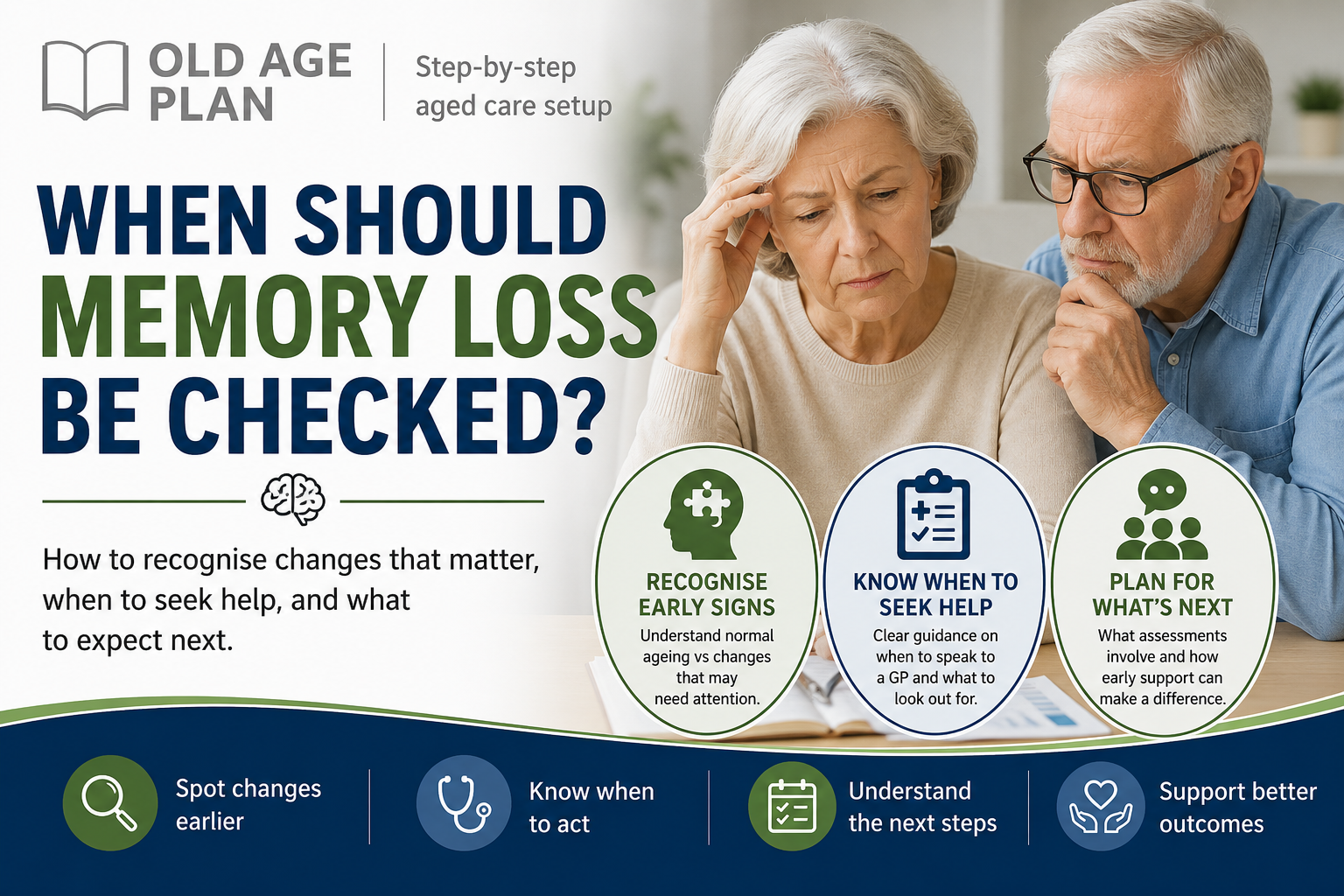

When Should Memory Loss Be Checked?
Memory changes can be difficult to judge, especially when they happen slowly.
When should memory loss be checked?
Memory loss should be checked when it becomes more frequent, affects daily life, causes confusion, leads to repeated questions, changes decision-making, or is noticed by family, friends or the person themselves.
Not every memory change means dementia. However, checking early can help identify possible causes, rule out treatable issues and preserve future planning options.
Short Answer
Memory loss should be checked if it is getting worse, happening more often, affecting normal routines, or making it harder to manage appointments, medicines, money, driving, conversations or familiar tasks.
It should also be checked if the change is sudden, unusual, linked with confusion, or appears after illness, infection, medication changes, dehydration or a hospital stay.
A GP is usually the best first step. They can review symptoms, medications, general health and whether further cognitive testing or specialist referral may be needed.
Key takeaway
Memory loss does not need to be severe before it is worth checking. The real question is whether the change is new, persistent, worsening or affecting daily life.
Why Memory Loss Can Be Hard To Judge
Everyone forgets things sometimes.
Misplacing keys, forgetting a name briefly or walking into a room and forgetting why can happen in normal life.
The concern usually starts when memory changes become more consistent or begin affecting how someone manages daily decisions.
This is where families often get stuck between two risks.
One risk is waiting too long and missing the chance to identify a treatable cause or plan early.
The other risk is acting too quickly and assuming every memory lapse means dementia.
Old Age Plan’s view is that the better question is not “Is this definitely dementia?”
The better question is:
Has the memory change become noticeable enough that it should be checked properly?
Signs Memory Loss Should Be Checked
Memory loss should usually be checked when it begins to affect everyday function.
This may include:
- asking the same question many times
- forgetting recent conversations
- missing appointments or regular commitments
- struggling to follow familiar routines
- becoming confused about dates, places or times
- having trouble managing medicines or bills
- getting lost in familiar places
- making unusual decisions with money, safety or care
- family or friends noticing a clear change
Dementia Australia lists repeated forgetfulness, difficulty remembering new information and increasing confusion as possible early warning signs of dementia.
However, these signs do not confirm dementia on their own.
They are signals that a proper health check may be worthwhile.
When Memory Loss Should Be Checked Urgently
Some changes should be checked quickly.
This is especially important when confusion appears suddenly.
Sudden confusion may be linked to delirium, infection, dehydration, medication changes, pain, hospital admission or another medical issue.
Unlike many dementia changes, delirium often develops quickly and can fluctuate during the day.
Urgent medical review may be needed if memory loss or confusion appears with:
- sudden disorientation
- new hallucinations or unusual beliefs
- fever or signs of infection
- recent falls or head injury
- major sleepiness or agitation
- new medication changes
- rapid change after surgery or hospital treatment
In these situations, it is safer not to assume the person is simply “getting worse with age”.
Normal Ageing Or Something More?
Some slower recall can happen with ageing.
For example, someone may take longer to remember a word or need more time to process information.
That is different from a pattern of memory problems that interferes with daily life.
A useful distinction is:
- Occasional forgetfulness: forgetting something briefly but remembering later.
- Concerning memory change: forgetting important information repeatedly and not recognising the gap.
- Functional impact: memory changes start affecting safety, finances, health, driving or care decisions.
The more memory changes affect daily function, the stronger the reason to arrange a check.
Why Early Checking Can Preserve Options
Early checking does not mean rushing into major decisions.
It can simply create better information.
A check may help identify whether memory changes are linked to:
- medication side effects
- sleep problems
- depression or anxiety
- infection or delirium
- vitamin or thyroid issues
- mild cognitive impairment
- dementia or another neurological condition
Getting checked early may also preserve planning options.
If memory changes continue, it may become harder later to complete legal, financial, care and health planning documents clearly.
This is not about removing control early.
It is about keeping options open while the person can still participate as much as possible.
What A GP May Do First
A GP may begin by asking about the memory changes, when they started and whether they are affecting daily life.
They may also review medicines, sleep, mood, physical health and recent illness.
They may suggest blood tests, memory screening, further cognitive assessment or referral to a specialist if needed.
Dementia Australia recommends speaking with a doctor about changes in memory, thinking, behaviour or mood. Taking a family member, a list of changes and a medication list can also help the appointment.
What You May Really Be Trying To Decide
Many families are not only asking when memory loss should be checked.
They are trying to decide whether the situation has crossed a line.
The real questions may be:
- Are we overreacting?
- Are we ignoring something important?
- Should we keep watching or book an appointment?
- Could this affect legal or care planning later?
- Is this still safe to manage informally?
A balanced approach is usually best.
You do not need to assume the worst.
You also do not need to wait until memory loss causes a crisis.
If the change is noticeable, persistent or affecting daily life, it is reasonable to arrange a check.
Decision Support Questions
Before deciding whether to book an appointment, it may help to ask:
- Has the memory change become more frequent?
- Is it affecting daily routines?
- Have other people noticed it?
- Is the person repeating questions or conversations?
- Has there been a sudden change?
- Are medicines, money, driving or safety now affected?
- Would waiting reduce future planning options?
If several of these apply, a GP appointment is usually a sensible next step.
Related Old Age Plan Articles
- What Are The Early Signs Of Dementia?
- What Is Mild Cognitive Impairment?
- What Is The Difference Between Mild Cognitive Impairment And Dementia?
- How Is Dementia Diagnosed?
- What Happens After A Dementia Diagnosis?
- Can Someone With Dementia Make Legal Decisions?
Sources
- Dementia Australia — Early warning signs of dementia
- Dementia Australia — Dementia testing and diagnosis
- healthdirect Australia — Dementia overview
- healthdirect Australia — Delirium
- Better Health Channel — Dementia
Disclaimer
This article provides general information only. It does not provide medical, legal or financial advice. If you are concerned about memory loss, confusion or changes in thinking, speak with a GP or qualified health professional. If symptoms appear suddenly or safety is at risk, seek urgent medical help.
Summary
Memory loss should be checked when it becomes frequent, persistent, worsening or begins to affect daily life.
Not every memory change means dementia, but early assessment can help identify possible causes and preserve future planning options.
The safest approach is to avoid both extremes: do not assume every lapse is serious, but do not wait until memory problems create a crisis.