
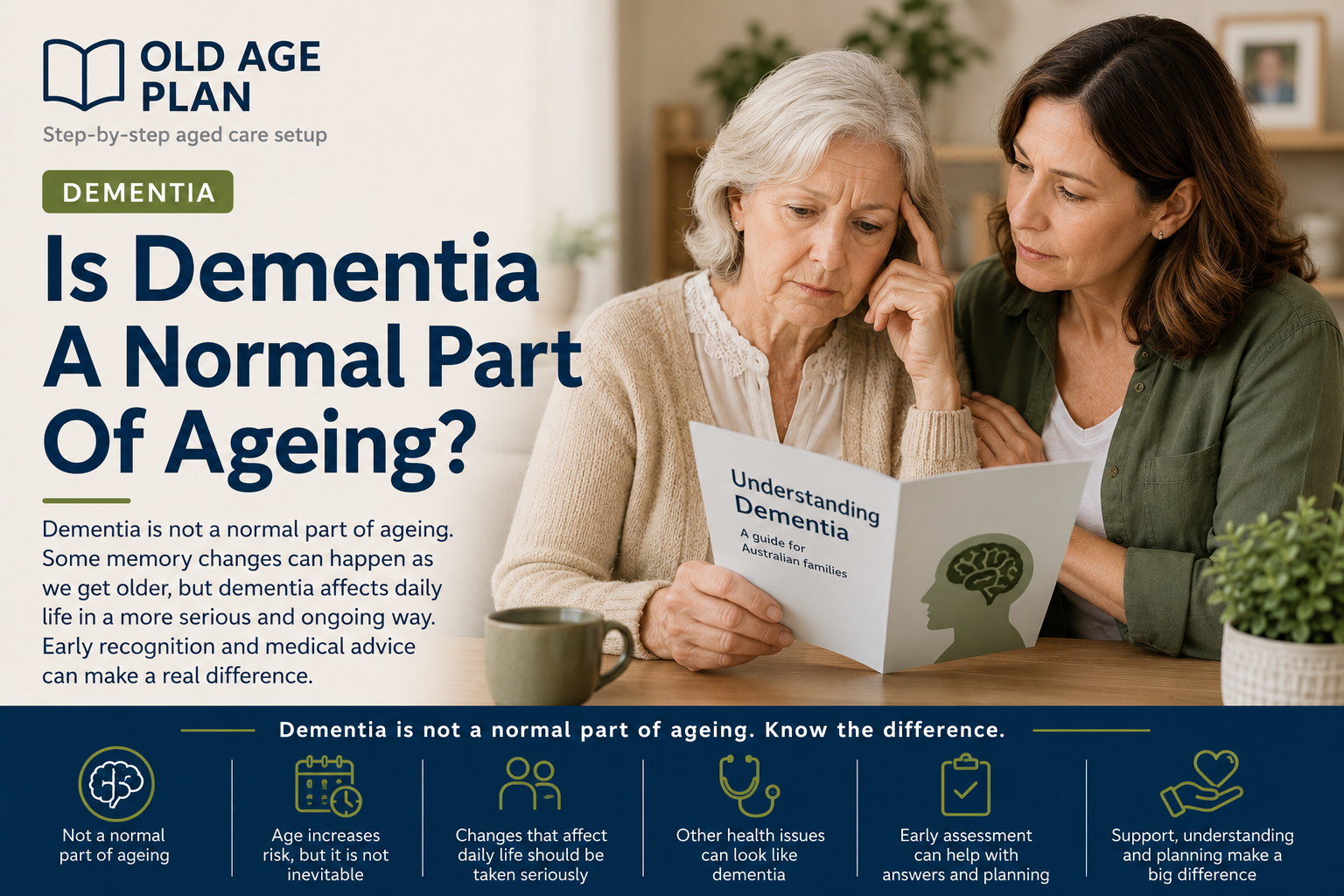

Is Dementia A Normal Part Of Ageing?
Is dementia a normal part of ageing? No, dementia is not a normal part of ageing.
Dementia is more common as people get older.
However, it is caused by diseases or changes that affect the brain.
This is different from normal age-related forgetfulness.
For families, this difference matters.
It can help people know when to seek medical advice instead of dismissing symptoms as “just getting old”.
Short Answer
Dementia is not a normal part of ageing.
Age is one of the biggest risk factors for dementia, but dementia is caused by changes in the brain that affect memory, thinking, behaviour and daily function.
Normal ageing may involve occasional forgetfulness.
Dementia usually causes ongoing changes that interfere with everyday life.
Key Takeaway
Dementia is not a normal part of ageing.
Some memory changes can happen as people get older, but dementia affects daily life in a more serious and ongoing way.
If memory, thinking, behaviour or communication changes are becoming frequent or affecting daily life, it is important to seek medical advice.
Why People Often Confuse Dementia With Ageing
Many people become more forgetful as they get older.
They may forget a name.
They may misplace their glasses.
They may take longer to remember a word.
These moments can be frustrating.
However, they do not always mean dementia.
Dementia is different because the changes are more persistent.
They may also affect a person’s ability to manage daily life.
What Normal Ageing May Look Like
Normal ageing can include small changes in memory and thinking.
For example, a person may:
- occasionally forget a name
- misplace items from time to time
- take longer to learn something new
- need reminders for some appointments
- forget why they entered a room, then remember later
These changes are usually occasional.
They do not normally stop the person from managing their usual daily life.
What Dementia May Look Like
Dementia may cause changes that are more noticeable and ongoing.
For example, a person may:
- forget recent conversations often
- ask the same question repeatedly
- become confused in familiar places
- struggle to manage money or bills
- forget how to complete familiar tasks
- have trouble following conversations
- show changes in mood, behaviour or judgement
- become less able to manage daily routines
The key difference is impact.
Dementia affects everyday life.
Age Increases Risk, But It Does Not Make Dementia Inevitable
Dementia becomes more common with age.
However, getting older does not mean someone will definitely develop dementia.
Many older Australians do not have dementia.
This is why it is important not to treat dementia symptoms as an unavoidable part of ageing.
Changes should be taken seriously when they affect daily life.
Can Younger People Get Dementia?
Yes.
Dementia can affect people under the age of 65.
This is often called younger onset dementia.
Although dementia is more common in older people, it can happen at younger ages.
This is another reason dementia should not be seen as normal ageing.
When Should Families Be Concerned?
Families should be concerned when changes become regular, noticeable or disruptive.
Warning signs may include:
- memory loss that affects daily life
- confusion about time or place
- difficulty completing familiar tasks
- problems with words or conversations
- poor judgement
- changes in mood or personality
- withdrawal from social activities
- increasing difficulty managing appointments, bills or medication
One small change does not always mean dementia.
However, repeated changes should be discussed with a doctor.
Other Conditions Can Look Like Dementia
Not every memory problem is dementia.
Some medical issues can cause dementia-like symptoms.
These may include infections, depression, medication side effects, sleep problems, thyroid issues, vitamin deficiencies or dehydration.
This is why a medical assessment is important.
A doctor can help investigate what may be causing the changes.
Why Early Medical Advice Matters
Early medical advice can help families understand what is happening.
It may also help identify other treatable causes of symptoms.
If dementia is diagnosed, early planning gives the person more opportunity to take part in decisions.
This may include decisions about care, finances, legal documents, home support and future wishes.
How Families Can Approach The Conversation
Talking about memory or thinking changes can be difficult.
It may help to keep the conversation calm and specific.
Instead of saying, “You are getting dementia,” it may be better to say, “I have noticed a few changes and I think it would be worth checking with the doctor.”
Families can focus on support rather than blame.
Writing down examples before a GP appointment may also help.
Related Old Age Plan Articles
- What Is Dementia?
- What Are The Early Signs Of Dementia?
- What Causes Dementia?
- How Is Dementia Diagnosed?
- What Is Mild Cognitive Impairment?
- Can Someone With Dementia Make Legal Decisions?
Sources
- Dementia Australia — About Dementia
- Healthdirect Australia — Dementia Overview
- Australian Government Department Of Health — About Dementia
- Australian Institute Of Health And Welfare — Dementia In Australia
Summary
Dementia is not a normal part of ageing.
Some forgetfulness can happen as people get older, but dementia causes ongoing changes that affect daily life.
Age increases the risk of dementia, but dementia is not inevitable.
If memory, thinking, behaviour or communication changes are becoming frequent or affecting daily life, families should seek medical advice.