
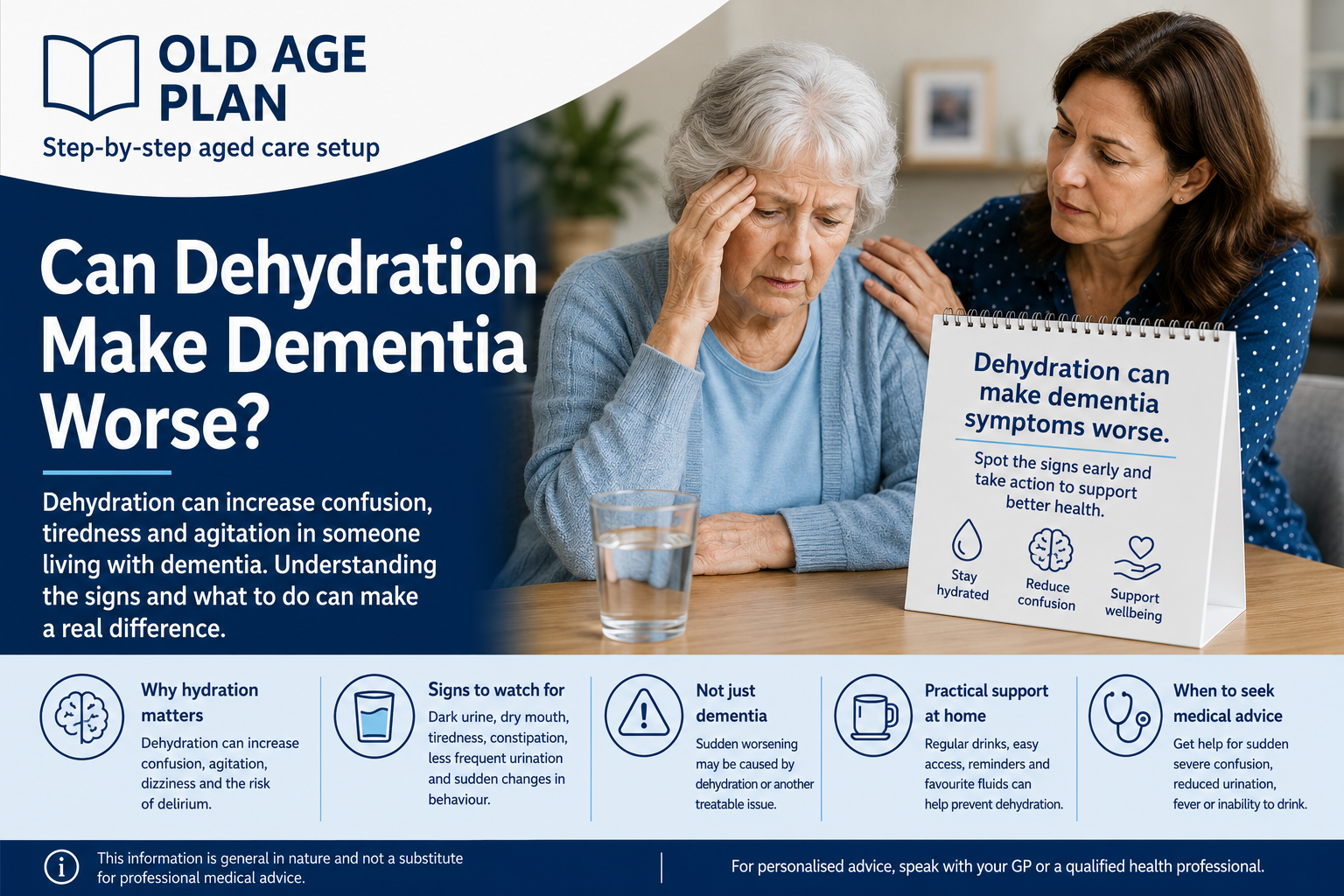

Can Dehydration Make Dementia Worse?
A person with dementia may suddenly seem more confused, sleepy, unsteady or withdrawn.
They may eat less, drink less, become more agitated, have darker urine, or seem much harder to communicate with than usual.
It can be easy to assume the dementia has suddenly progressed.
If you are asking can dehydration make dementia worse, you may also be trying to work out whether the change is dementia, dehydration, delirium or something that needs medical advice.
Short Answer
Yes, dehydration can make dementia symptoms worse.
Dehydration may increase confusion, tiredness, dizziness, falls, agitation, constipation and the risk of delirium.
This does not mean dehydration causes dementia itself.
It means dehydration can make thinking, behaviour, alertness and daily function worse, especially in older people and people already living with dementia.
Key takeaway: If a person with dementia suddenly seems worse, dehydration should be considered as one possible cause. The decision is not only whether dementia is progressing, but whether a treatable health issue may be making symptoms worse.
Why Dehydration Can Be Missed
Dehydration is easy to overlook.
A person may still have drinks nearby, but not actually drink them.
They may forget to drink, refuse fluids, dislike the taste, worry about toileting, or be unable to explain that they feel thirsty.
Some people may drink less because getting to the toilet has become harder.
Others may need reminders, encouragement or practical help.
This creates an information gap for families.
The question is not only:
Are drinks available?
It may be:
Is the person actually drinking enough across the day?
What Dehydration May Look Like In Someone With Dementia
Dehydration may not always look obvious.
In someone with dementia, it may first appear as a change in behaviour, alertness or function.
Possible signs may include:
- increased confusion
- more tiredness or sleepiness
- dizziness or unsteadiness
- more falls or near falls
- dry mouth or lips
- darker urine or passing urine less often
- headache
- constipation
- reduced appetite
- new agitation, restlessness or withdrawal
These signs can overlap with other conditions.
That is why sudden changes should not simply be written off as dementia progression.
Dehydration, Delirium And Sudden Confusion
Dehydration can contribute to delirium.
Delirium is a sudden change in thinking, attention, alertness or behaviour.
Dementia Australia notes that delirium can be brought on by illness, constipation, dehydration, infection, pain or drug effects.
This matters because delirium can look like dementia suddenly getting much worse.
The care decision is different if the person has delirium or another treatable issue.
Instead of assuming permanent decline, the first question may need to be:
Could dehydration, infection, medication, pain or another medical issue be causing this change?
When To Seek Medical Advice
Medical advice may be needed if dehydration is suspected, especially if the person is frail, very confused, drowsy, unsteady or unable to drink enough.
Seek urgent medical advice if there is:
- sudden severe confusion
- fainting, collapse or repeated falls
- very reduced urine output
- very dark urine
- fever or signs of infection
- new inability to stay awake or respond normally
- ongoing vomiting or diarrhoea
- inability or refusal to drink
This is not about panic.
It is about recognising when a change may need medical review rather than only more supervision at home.
Why Drinking Enough Can Become Harder With Dementia
Dementia can affect memory, judgement, communication and routine.
This can make hydration harder in practical ways.
A person may:
- forget they have not had a drink
- forget where drinks are kept
- not recognise thirst clearly
- struggle to use cups or bottles
- avoid drinking because of toileting worries
- become distracted before finishing a drink
- need help preparing drinks
- drink less during illness or hot weather
The important issue is not blame.
It is whether the person now needs a more reliable hydration routine than before.
What Families May Need To Review
If dehydration keeps becoming a concern, the support arrangement may need to change.
This does not always mean formal care is immediately required.
But it may mean hydration can no longer rely on memory alone.
Families may need to consider:
- whether the person remembers to drink
- whether drinks are easy to reach
- whether the person needs prompting
- whether toileting concerns are affecting fluid intake
- whether hot weather increases risk
- whether medication or illness affects hydration
- whether someone needs to check fluid intake regularly
The OAP question is:
Is hydration still self-managed, or has it quietly become a support need?
Can Better Hydration Improve Dementia Symptoms?
Sometimes, symptoms may improve if dehydration is corrected.
A person may become more alert, steadier, calmer or less confused.
However, this does not mean dementia itself has been reversed.
It may mean dehydration was making the dementia symptoms look worse.
This distinction matters.
Improvement after fluids or treatment should still lead to planning, not dismissal.
The useful question becomes:
How do we prevent the same problem from happening again?
Why This Matters For Care Decisions
Dehydration can turn a manageable day into a difficult or unsafe one.
It can also expose a larger issue.
If a person is no longer drinking enough without help, they may need more regular support across the day.
That may affect home care, family check-ins, meal routines, medication routines or My Aged Care assessment timing.
The decision is not simply:
Does the person need care?
It may be:
Which daily tasks can no longer be safely left to memory alone?
What You May Really Be Trying To Decide
If you are searching for whether dehydration can make dementia worse, the real question may be:
Is this sudden decline treatable, and what support needs to change now?
That is the right question to slow down and separate.
First, consider whether medical advice is needed.
Then look at whether hydration, meals, medication, toileting and daily routines are still working reliably.
The goal is not to turn one dehydration episode into a major care decision too quickly.
The goal is to understand what the episode reveals about current support needs.
Related Old Age Plan Articles
- What Is Dementia?
- Can Dementia Progress Suddenly?
- Can Dementia Improve?
- Can Dementia Symptoms Come And Go?
- Does Dementia Always Get Worse?
- How Fast Does Dementia Progress?
Sources
- Healthdirect Australia – Dehydration
- Healthdirect Australia – Delirium
- Dementia Australia – Delirium
- My Aged Care – Living with memory loss, dementia or depression
Disclaimer
This article provides general information only. It is not legal, medical or financial advice.
Dementia symptoms, dehydration risks, medical guidance, aged care services and government policies may change over time and individual circumstances can vary.
Always seek advice from qualified healthcare professionals and refer to official Australian Government, My Aged Care and Dementia Australia resources for current information.
Summary
Dehydration can make dementia symptoms worse.
It may increase confusion, tiredness, dizziness, falls, agitation, constipation and the risk of delirium.
A sudden change should not automatically be treated as dementia progression.
Families should consider whether dehydration or another treatable issue may be involved, seek medical advice when needed, and review whether hydration now requires more reliable support.