
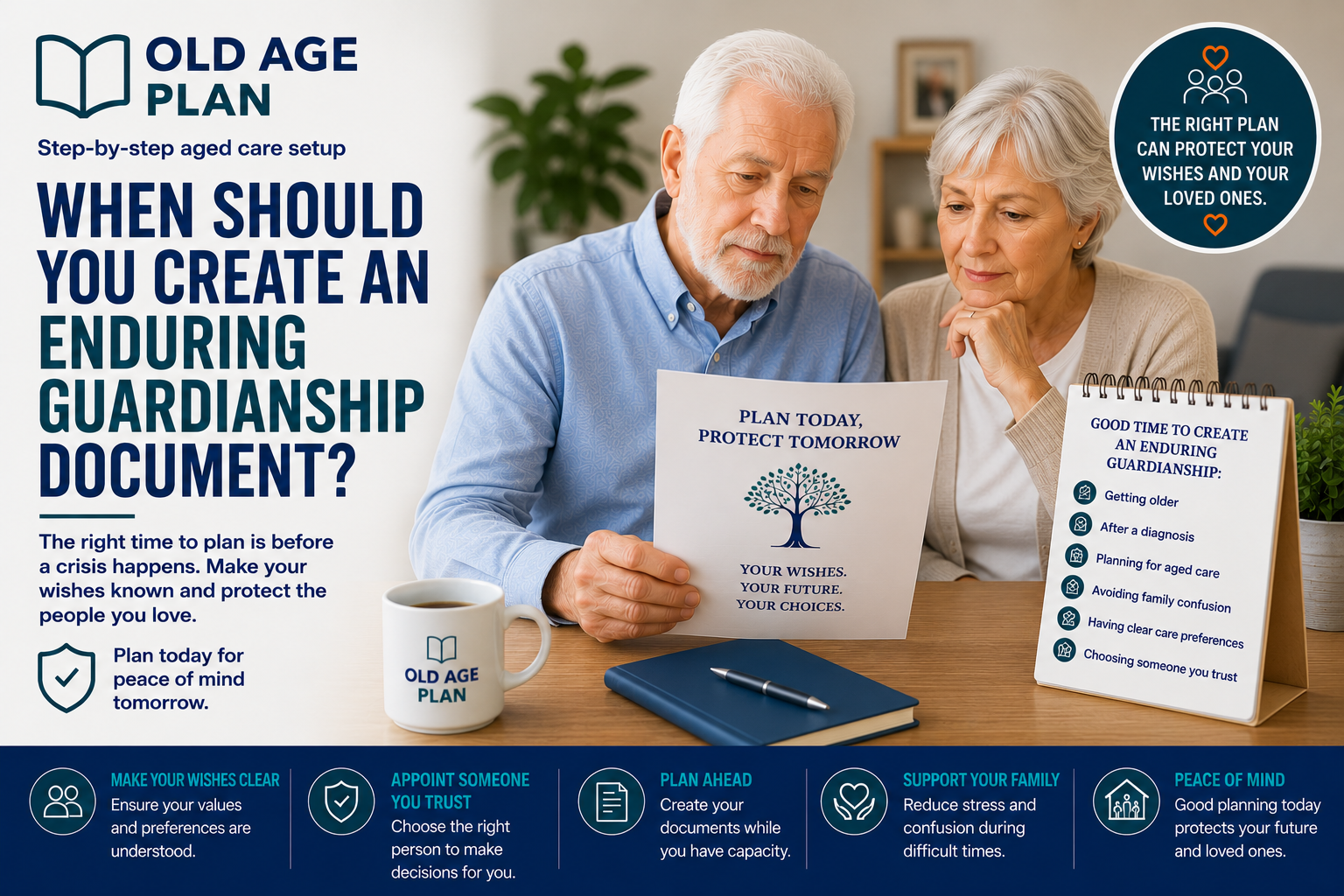

When Should You Create An Enduring Guardianship Document?
An Enduring Guardianship document is something many people leave until later.
The problem is that “later” can quickly become too late.
In simple terms, an Enduring Guardianship document allows you to choose someone you trust to make certain personal, lifestyle, health or medical decisions for you if you lose the ability to make those decisions yourself.
The exact name and rules can vary across Australian states and territories. In some places, similar future planning roles may be handled through other documents, such as an Enduring Power of Attorney, Advance Health Directive or medical treatment decision maker appointment.
The main idea is the same: you make the decision while you still have capacity, instead of leaving your family to sort it out during a crisis.
When Should You Create An Enduring Guardianship Document?
Many people should consider creating an Enduring Guardianship document before there is an urgent health, hospital or aged care crisis.
It is often worth thinking about when:
- You are getting older.
- You have been diagnosed with a serious illness.
- You are planning for aged care.
- You want to reduce future family confusion.
- You have strong wishes about your care, medical treatment or living arrangements.
- You want someone specific to speak for you if you cannot speak for yourself.
You do not need to wait until you are unwell. In fact, it is usually better to make these decisions while things are calm and you can clearly explain what you want.
Why Timing Matters
Future planning documents generally need to be made while you still have decision-making capacity.
That means you need to understand what the document does, who you are appointing and what authority you are giving them.
If a person waits until after a major illness, serious cognitive decline or sudden hospital event, it may be harder or impossible to put the right documents in place.
This is why guardianship planning is not just something for people who are already in aged care. It is something families should think about earlier.
You May Need One Before A Health Crisis
A health crisis can happen suddenly.
A fall, stroke, accident, dementia diagnosis or serious illness can leave a person unable to make or communicate decisions.
When this happens, families may be asked questions very quickly:
- Who should be contacted?
- Who can speak to doctors?
- Who understands the person’s wishes?
- Who should be involved in care decisions?
- Where should the person live if they cannot safely return home?
If no clear decision-maker has been appointed, this can place pressure on family members at the worst possible time.
An Enduring Guardianship document may help reduce confusion by making it clearer who should be involved in these decisions.
You May Need One When Planning For Aged Care
Aged care planning often brings up difficult decisions.
Families may need to discuss home care, residential care, hospital discharge, safety concerns, medical needs and future living arrangements.
If an older person later loses capacity, someone may need to help make decisions about care and support.
Creating the right future planning documents before aged care becomes urgent can make the process less stressful for everyone involved.
You May Need One After A Diagnosis
A diagnosis of dementia, Parkinson’s disease, stroke risk, serious illness or another progressive condition may be a strong reason to review future planning documents.
A diagnosis does not automatically mean a person has lost capacity.
Many people can still make their own decisions after a diagnosis, especially in the early stages.
That period can be an important time to discuss future wishes and organise documents before decision-making becomes harder.
You May Need One If Family Members Disagree
Some families work well together. Others do not.
If there is a history of conflict, poor communication or disagreement between family members, future planning becomes even more important.
An Enduring Guardianship document can help make your wishes clearer and reduce arguments about who should be making decisions.
It does not remove every possible disagreement, but it may reduce uncertainty.
You May Need One If You Have Strong Care Preferences
Some people have very clear views about their future care.
For example, they may have preferences about:
- Where they would prefer to live.
- Who they trust to speak with doctors.
- What kind of care they would want.
- What support they would accept at home.
- Who should be involved in major decisions.
If your views are important to you, it may be worth putting proper documents in place and discussing your wishes with the people closest to you.
You May Need One Before Moving Into Retirement Living Or Aged Care
Moving into retirement living, supported accommodation or residential aged care can be a major life change.
It may be a good time to review all future planning documents, including guardianship, Enduring Power of Attorney, wills and Advance Care Directives.
The goal is not to panic or rush. The goal is to make sure your documents still match your life.
Real-Life Example
John was in his late seventies and still living independently at home.
His daughter had started helping him with appointments, shopping and conversations about future care. John was healthy enough to make his own decisions, but he knew things could change over time.
Instead of waiting for a hospital visit or family crisis, John decided to speak with a solicitor about future planning.
He reviewed his will, Enduring Power of Attorney and guardianship arrangements. He also spoke with his daughter about what mattered to him if he ever needed more care.
Because he acted early, his family had a clearer understanding of his wishes before anything urgent happened.
What Happens If You Leave It Too Late?
If you leave guardianship planning too late, your family may have fewer options.
If you lose capacity before appointing someone, family members may need to work through state or territory processes to have decisions made.
This can take time and may add stress during an already difficult situation.
Planning earlier does not mean expecting the worst. It simply means making things easier for the people who may one day need to help you.
Frequently Asked Questions
Do I need to be elderly to create an Enduring Guardianship document?
No. These documents are often discussed in later life, but serious illness or accidents can happen at any age. The key issue is whether future decision-making planning is appropriate for your circumstances.
Should I create one before contacting My Aged Care?
Not always, but it may be worth thinking about future planning before aged care decisions become urgent. Aged care often involves health, lifestyle and accommodation decisions.
Can I create an Enduring Guardianship document after a dementia diagnosis?
Possibly, depending on whether the person still has decision-making capacity. A diagnosis alone does not automatically remove capacity, but legal advice may be needed.
Is Enduring Guardianship the same in every Australian state?
No. The names, forms and rules vary between states and territories. Some places use different documents or decision-maker roles.
Should I speak to my family before creating one?
It is often helpful. The document is important, but conversations can also reduce confusion and make your wishes easier to understand.
Sources
- My Aged Care – Australian Government
- Australian Government Department of Health – My Aged Care
- NSW Government – Enduring Guardianship Information
- Office of the Public Advocate Victoria
- Office of the Public Advocate South Australia
- Office of the Public Advocate Western Australia
- Legal Aid WA – Guardianship and Administration
Related Resources
- What Is Enduring Guardianship?
- Who Should You Appoint As Your Guardian?
- What Decisions Can An Enduring Guardian Make?
- What Happens If You Don’t Have An Enduring Guardian?
- Can You Change An Enduring Guardian?
- How Often Should You Review Your Guardianship Documents?
- Common Enduring Guardianship Mistakes
- What Is Estate Planning?
- Free Aged Care Tools
Disclaimer
This article provides general information only and is not legal advice. Guardianship and future planning laws vary between Australian states and territories. You should seek professional legal advice about your own circumstances before creating, changing or relying on legal documents.