
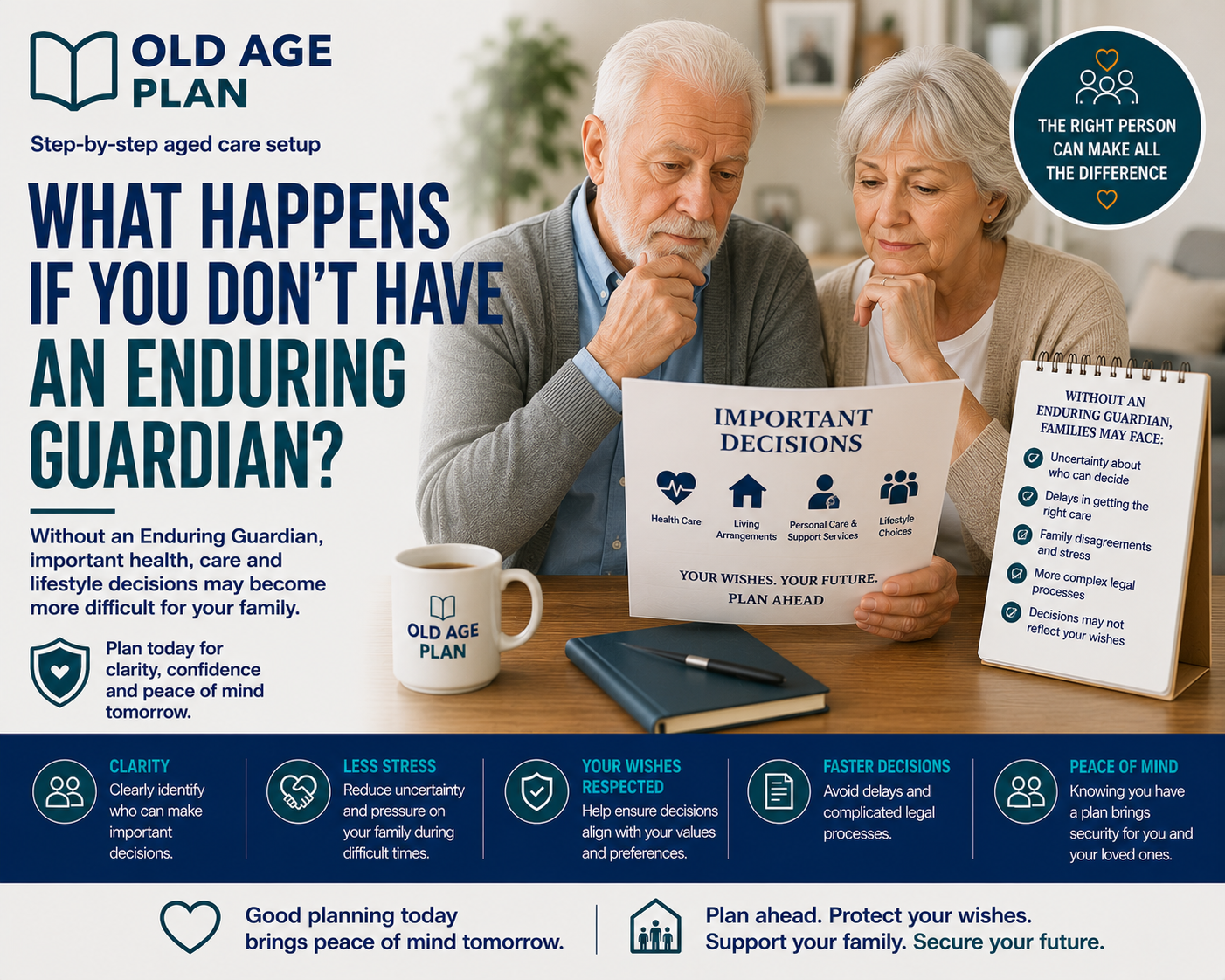

What Happens If You Don’t Have An Enduring Guardian?
Many people create a Will or Enduring Power of Attorney but never think about Enduring Guardianship.
However, an Enduring Guardian can be important if personal, health or lifestyle decisions need to be made and you are no longer able to make those decisions yourself.
If no Enduring Guardian has been appointed, families may face uncertainty about who can make certain decisions and what wishes should be followed.
What Is An Enduring Guardian?
An Enduring Guardian is someone appointed to make certain personal, health or lifestyle decisions if you lose decision-making capacity.
The role may involve decisions about health care, accommodation, personal care, support services or lifestyle matters, depending on the laws that apply and the powers included in the appointment.
Enduring Guardianship is different from an Enduring Power of Attorney, which usually relates to financial or legal decisions.
What Happens If No Guardian Is Appointed?
If no Enduring Guardian has been appointed and decisions need to be made, family members may be unsure who has authority to act.
The available options depend on the laws that apply in the relevant state or territory.
In some situations, a formal decision-maker may need to be appointed through the appropriate tribunal or authority.
Family Members May Disagree
When there is no clear appointment, family members may have different opinions about what should happen.
One person may believe home care is best, while another may believe residential care should be considered.
Others may disagree about medical treatment, lifestyle preferences or support services.
An Enduring Guardian appointment may help reduce uncertainty by identifying who should make certain decisions.
Health And Care Decisions May Become Harder
If a person loses capacity, important decisions may need to be made quickly.
These may include decisions about medical treatment, hospital discharge, aged care services, living arrangements or personal support.
Without clear authority or documented wishes, the process may become more stressful for families.
A Real-Life Example
Imagine an older parent develops advanced dementia and can no longer make decisions about their care.
The family needs to discuss living arrangements, support services and health care decisions.
Because no Enduring Guardian was appointed, family members are unsure who should make decisions and what authority they have.
This can create delays, disagreement and added stress during an already difficult time.
Does An EPOA Solve This?
Not always.
An Enduring Power of Attorney usually relates to financial, property or legal decisions.
It may not cover personal, health or lifestyle decisions.
This is why some people need both an Enduring Power of Attorney and an Enduring Guardianship arrangement.
Can An Advance Care Directive Help?
An Advance Care Directive can record future health care wishes, values and preferences.
This can help guide family members and health professionals.
However, an Advance Care Directive and Enduring Guardianship may perform different roles depending on the state or territory.
Do The Rules Differ Across Australia?
Yes.
Enduring Guardianship laws, terminology, forms and decision-making processes vary between Australian states and territories.
Some states use different documents or systems for personal, health and lifestyle decisions.
It is important to understand the rules that apply where you live and seek professional advice where appropriate.
Frequently Asked Questions
What happens if I don’t have an Enduring Guardian?
If personal, health or lifestyle decisions need to be made and you cannot make them yourself, family members may face uncertainty about who has authority to act.
Can my family automatically make decisions for me?
This depends on the decision, your circumstances and the laws that apply in your state or territory.
Is an Enduring Guardian the same as an attorney?
No. An Enduring Guardian usually relates to personal, health or lifestyle decisions, while an attorney often handles financial or legal matters.
Can not having a guardian delay decisions?
Sometimes. If there is uncertainty about who can make decisions, families may need to follow formal processes before decisions can be made.
Should I create an Enduring Guardianship document?
Many people consider it as part of broader future planning, especially where health, lifestyle or aged care decisions may become important.
Sources and Additional Information
Related Resources
- What Is Enduring Guardianship?
- Who Should You Appoint As Your Guardian?
- What Decisions Can An Enduring Guardian Make?
- Advance Care Directive vs Enduring Guardianship
- What Is An Enduring Power Of Attorney?
- What Is An Advance Care Directive?
- Free Aged Care Tools
Disclaimer: This article provides general information only and does not constitute legal, financial or professional advice. Guardianship laws vary between Australian states and territories.