
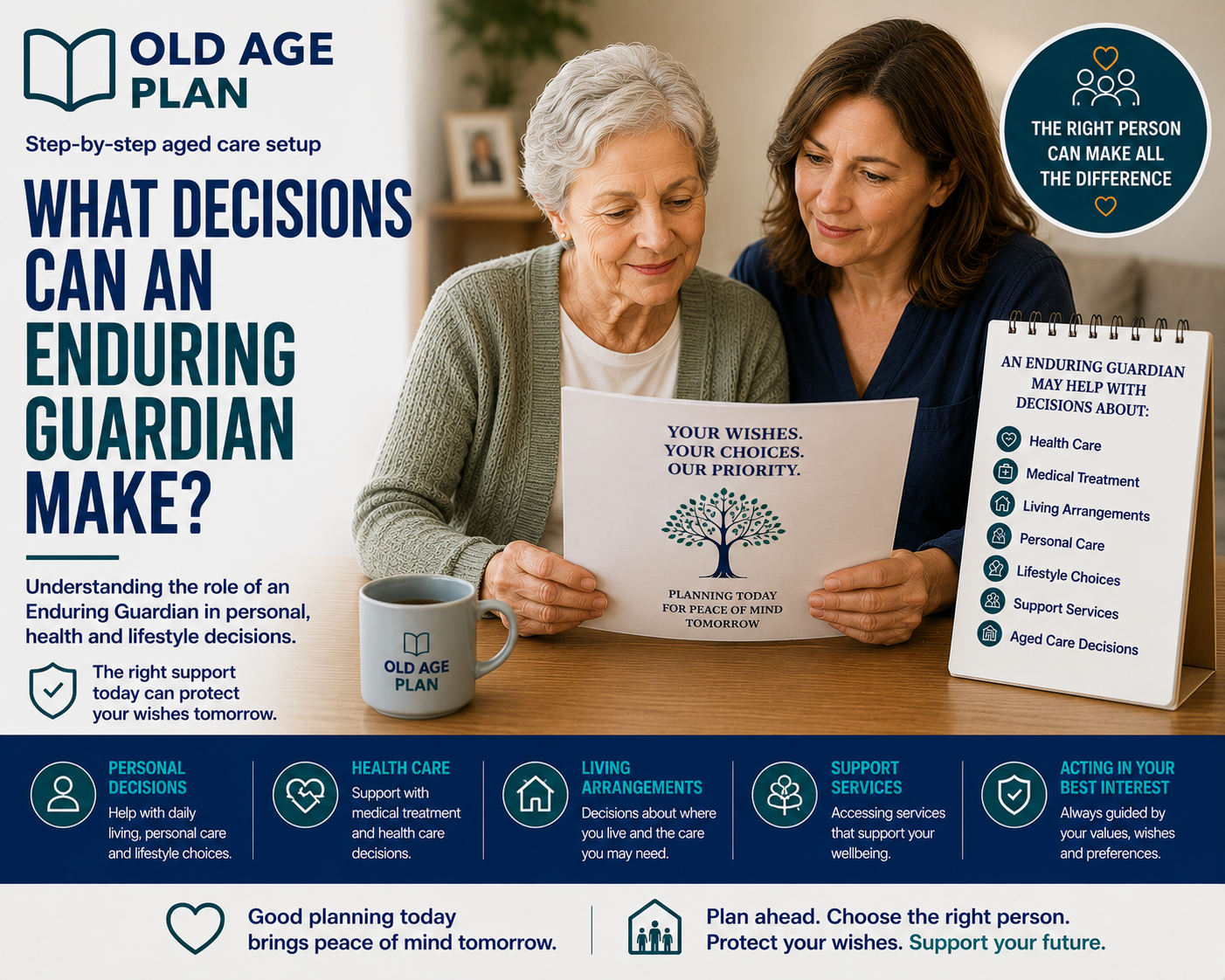

What Decisions Can An Enduring Guardian Make?
An Enduring Guardian may be appointed to make certain personal, health or lifestyle decisions if a person loses decision-making capacity.
The exact decisions an Enduring Guardian can make depend on the laws that apply in the relevant Australian state or territory and the powers included in the appointment document.
This is why it is important to understand the role before choosing someone.
What Is An Enduring Guardian?
An Enduring Guardian is a trusted person appointed to make certain decisions if you are no longer able to make those decisions yourself.
The role usually relates to personal, health, lifestyle or care decisions rather than financial decisions.
Financial or legal decisions are often handled through an Enduring Power of Attorney instead.
What Types Of Decisions May Be Included?
Depending on the laws that apply and the document itself, an Enduring Guardian may be involved in decisions about:
- Health care
- Medical and dental treatment
- Accommodation or living arrangements
- Personal care services
- Support services
- Lifestyle decisions
- Aged care arrangements
Health Care Decisions
An Enduring Guardian may be able to help make health care decisions if the person can no longer make those decisions independently.
This may include decisions about treatment options, care preferences and communication with health professionals.
Living Arrangements
In some situations, an Enduring Guardian may be involved in decisions about where a person lives.
This may become relevant if someone can no longer safely live at home or needs additional care and support.
Personal Care And Support Services
An Enduring Guardian may also be involved in decisions about personal care, daily support and services.
This can include decisions that affect day-to-day wellbeing, depending on the powers granted and the laws that apply.
What Can An Enduring Guardian Not Do?
An Enduring Guardian usually does not manage financial or legal affairs unless they also hold a separate legal appointment, such as an Enduring Power of Attorney.
They may not automatically have authority over bank accounts, property, bills or financial transactions.
This distinction is important for families to understand.
A Real-Life Example
Imagine an older parent loses decision-making capacity due to advanced dementia.
The family needs to discuss health care, living arrangements and aged care support.
If an Enduring Guardian has been appointed, that person may have clearer authority to help make certain personal and care-related decisions.
If no appointment exists, the family may face more uncertainty about who can make decisions.
How Is This Different From An Attorney?
An attorney appointed under an Enduring Power of Attorney commonly deals with financial, property or legal decisions.
An Enduring Guardian is usually connected to personal, health, lifestyle or care decisions.
Some families need both documents because they cover different areas.
Do The Rules Differ Across Australia?
Yes.
Enduring Guardianship laws, forms, terminology and decision-making powers vary between Australian states and territories.
Some jurisdictions use different names or documents for similar roles.
It is important to understand the rules that apply where you live and seek professional advice where appropriate.
Frequently Asked Questions
What decisions can an Enduring Guardian make?
An Enduring Guardian may make certain personal, health, lifestyle or care decisions, depending on the powers granted and the laws that apply.
Can an Enduring Guardian make financial decisions?
Usually no. Financial decisions are generally handled through an Enduring Power of Attorney, not Enduring Guardianship.
Can an Enduring Guardian decide where I live?
In some situations, yes. This depends on the powers included in the appointment and the laws in your state or territory.
Can an Enduring Guardian make medical decisions?
They may be able to make or assist with certain health care decisions if you lose decision-making capacity, depending on the applicable rules.
Is Enduring Guardianship the same as Power of Attorney?
No. Enduring Guardianship usually relates to personal and health decisions, while Power of Attorney generally relates to financial or legal matters.
Sources and Additional Information
Related Resources
- What Is Enduring Guardianship?
- Who Should You Appoint As Your Guardian?
- Advance Care Directive vs Enduring Guardianship
- What Is An Enduring Power Of Attorney?
- What Is An Advance Care Directive?
- Free Aged Care Tools
Disclaimer: This article provides general information only and does not constitute legal, financial or professional advice. Guardianship laws vary between Australian states and territories.