
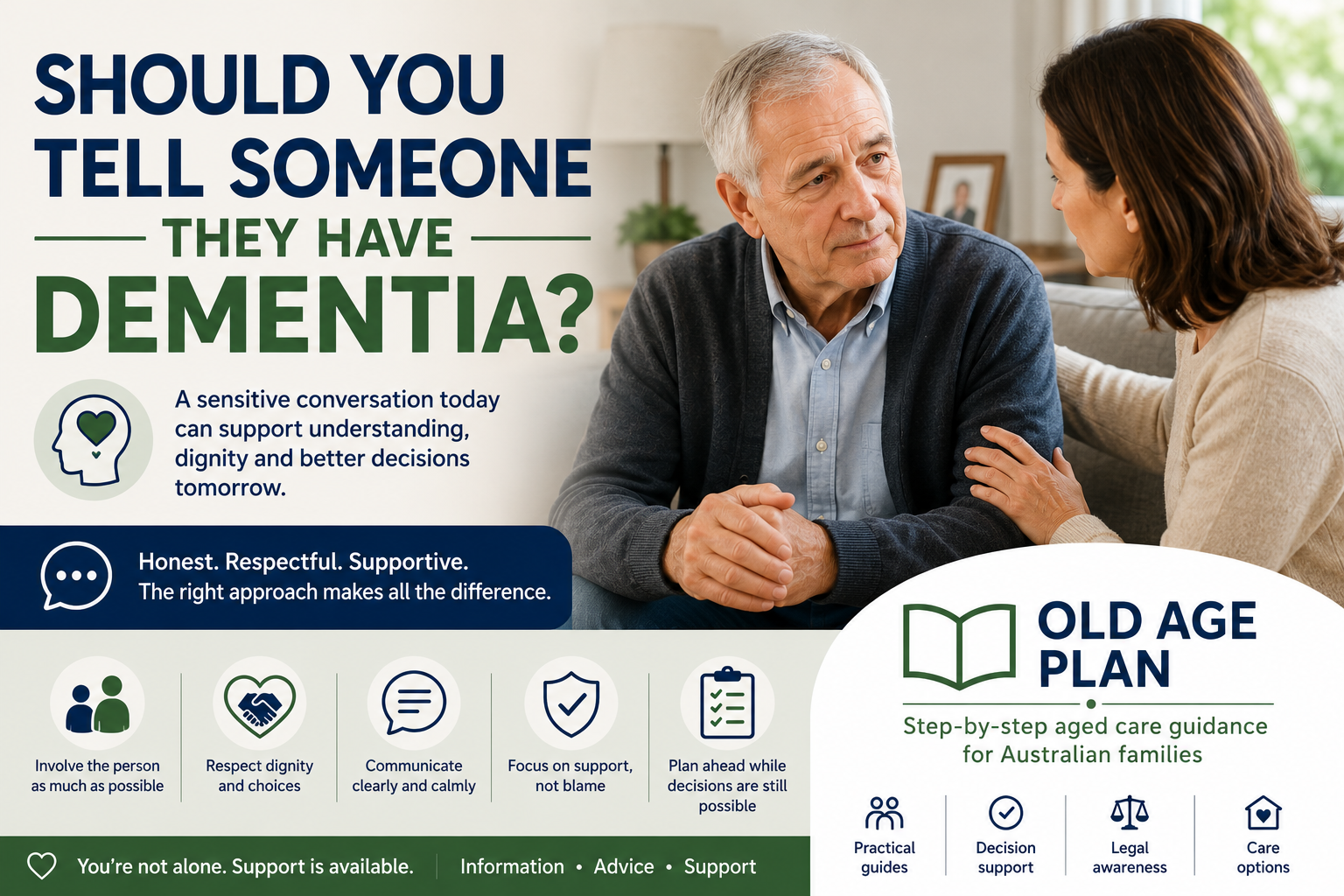

Should You Tell Someone They Have Dementia?
Should you tell someone they have dementia? In many cases, yes. A person should usually be involved in understanding their diagnosis and future decisions as much as they are able.
However, this can be a difficult conversation.
Some people may already know something is changing. Others may deny the diagnosis, become upset, forget the conversation or struggle to understand what it means.
The question is not only whether they should be told.
The better question is how to tell them in a way that respects their dignity, supports decision-making and avoids unnecessary harm.
Short Answer
Someone diagnosed with dementia should usually be told about the diagnosis in a careful, respectful and supportive way, especially if they can still understand the information and take part in decisions.
However, the timing, wording and level of detail may need to be adapted to the person’s needs, capacity, emotional response and safety. A GP, specialist or dementia support professional may help guide the conversation.
Key Takeaway
A dementia diagnosis should not automatically be hidden from the person.
But telling them should not be treated as a blunt one-time disclosure either. The goal is to support understanding, preserve autonomy and involve them in planning while they can still participate meaningfully.
Why This Question Is So Difficult
Families often ask this question because they are trying to balance two risks.
One risk is telling the person in a way that causes distress, fear or confusion.
The other risk is not telling them and removing their chance to participate in important decisions.
Those decisions may include:
- medical care
- legal documents
- financial planning
- driving
- home safety
- aged care support
- family communication
- future wishes
If the person is not told, they may be excluded from decisions that still belong to them.
If they are told poorly, the conversation may increase confusion or conflict.
This is why the approach matters.
Does A Person Have A Right To Know?
In general, people should be given information about their own health in a way they can understand.
A dementia diagnosis does not automatically remove a person’s right to be involved in decisions about their life.
Many people in the early stages of dementia can still:
- understand the diagnosis
- ask questions
- express preferences
- make some decisions
- take part in planning
- choose who should support them
This does not mean every conversation must include every detail at once.
It means the person should not be unnecessarily excluded simply because the diagnosis is difficult.
When Telling Them May Be Important
Telling the person may be especially important when they can still use the information to make decisions.
This may include situations where they need to:
- understand treatment or support options
- review legal documents
- appoint trusted decision-makers
- talk about driving or safety
- make financial arrangements
- share wishes with family
- plan future care preferences
Early involvement can help preserve options.
Waiting too long may mean the person has less ability to explain what they want or give instructions for legal and care planning.
When The Conversation May Need Extra Care
Some situations need a more careful approach.
This may include when the person:
- does not believe anything is wrong
- becomes distressed by medical information
- forgets the diagnosis quickly
- misunderstands what dementia means
- has depression, anxiety or other mental health concerns
- is at risk of reacting unsafely
- has family conflict around the diagnosis
These situations do not automatically mean the diagnosis should be hidden.
They mean the conversation may need support from a GP, specialist, counsellor, dementia adviser or trusted person.
Should Family Tell Them Or Should A Doctor?
Often, the diagnosis should be explained by the doctor or specialist involved in the assessment.
This allows the person to ask medical questions and hear the information from someone qualified to explain it.
Family members may still play an important role.
They may help by:
- attending appointments with consent
- asking practical questions
- helping the person remember information
- supporting follow-up conversations
- watching for distress or confusion
If the diagnosis has already been given but the person did not understand or remember it, families may need advice about how to discuss it again.
What If They Deny The Diagnosis?
Denial or lack of awareness can happen.
The person may reject the diagnosis, minimise symptoms or say the doctor is wrong.
This can be frustrating for family, but arguing usually does not help.
It may be better to focus on practical needs rather than forcing agreement with the label.
For example, instead of repeatedly saying, “You have dementia,” the conversation may focus on:
- getting help with appointments
- making medicines easier to manage
- reviewing driving safety
- organising paperwork
- planning support at home
The goal is not to win a debate about the diagnosis.
The goal is to keep decisions moving safely and respectfully.
What If They Forget They Have Been Told?
Some people may forget the diagnosis after being told.
This creates a difficult question: should the family keep telling them again?
The answer depends on the person, the situation and the purpose of the conversation.
If repeating the diagnosis causes repeated distress and does not improve decision-making, it may be better to focus on the support needed now.
If the person needs to understand the diagnosis to make a specific decision, a careful explanation may still be needed.
This is where professional guidance can help.
How To Approach The Conversation
The conversation should usually be calm, private and respectful.
It may help to:
- choose a quiet time
- use simple language
- avoid overwhelming detail
- allow time for questions
- focus on support, not blame
- avoid arguing if they disagree
- offer reassurance that they are not alone
- follow up later if needed
The wording should match the person’s ability to understand.
Some people may want direct information. Others may need shorter, gentler explanations over time.
Decision-Making Capacity Still Matters
A dementia diagnosis does not automatically mean the person cannot make decisions.
They may still be able to make many choices, especially with time, clear explanations and support.
The key question is whether their decision-making is still reliable enough for the specific decision being made.
For example, they may still be able to decide who they trust to attend appointments, but may struggle with a complex financial or legal decision.
This is why telling the person is closely linked to capacity, autonomy and timing.
If they can still understand enough to participate, they should usually be included.
What If Family Members Disagree About Telling Them?
Families may disagree about whether the person should be told.
One person may believe honesty is essential. Another may worry it will cause distress.
Instead of arguing only about disclosure, it may help to ask:
- What does the person already understand?
- What decisions need to be made soon?
- What information do they need for those decisions?
- What harm could come from telling them?
- What harm could come from not telling them?
- Who is best placed to explain it?
This helps move the conversation from opinion to evidence and practical need.
What You May Really Be Trying To Decide
If you are asking whether to tell someone they have dementia, you may really be trying to decide:
- Will telling them help or harm?
- Do they still understand enough to be involved?
- Are we protecting them or excluding them?
- What decisions do they need to make now?
- Who should explain the diagnosis?
- How do we handle denial or distress?
- Are we waiting too long to involve them?
This is not only a communication issue.
It is a question about dignity, autonomy, support and timing.
Decision Support
Before deciding how to tell someone they have dementia, start with the purpose of the conversation.
If the person needs to make or participate in important decisions, they usually need enough information to understand what is happening.
If the person becomes distressed and cannot retain the information, the conversation may need to focus more on immediate support and less on repeating the diagnosis label.
If family members disagree, professional guidance may help clarify the safest approach.
The goal is not brutal honesty or protective silence.
The goal is respectful communication that preserves dignity, supports decision-making and reduces avoidable harm.
Related Old Age Plan Articles
- Who Should You Tell After A Dementia Diagnosis?
- What Happens After A Dementia Diagnosis?
- What Questions Should You Ask After A Dementia Diagnosis?
- Can Someone With Dementia Make Legal Decisions?
- What Happens When Someone With Dementia Loses Capacity?
- Can Dementia Be Misdiagnosed?
Next Steps With Old Age Plan
If you are unsure whether or how to tell someone about a dementia diagnosis, it may help to organise what needs to be discussed before the next conversation.
Old Age Plan’s Free Tools can help you prepare questions, record concerns and think through who needs to be involved next.
You may also find it helpful to read related guides on diagnosis, capacity and family communication before deciding how to approach the conversation.
The goal is not to force one perfect conversation.
The goal is to support the person with respect while making sure important decisions are not delayed or made without them unnecessarily.
Sources
- Healthdirect Australia — Dementia
- Healthdirect Australia — Dementia overview
- Dementia Australia — Diagnosis
- Dementia Australia — Living with dementia
- My Aged Care — Living with memory loss, dementia or depression
Disclaimer
This article provides general information only. It is not medical, legal or financial advice.
Dementia symptoms, diagnosis, capacity and communication needs can vary between individuals. Medical assessment and diagnosis should be provided by qualified health professionals, and legal or capacity-related questions should be discussed with qualified professionals.
Laws, services, policies and procedures may change over time. You should seek advice from appropriate professionals and refer to official Australian Government, health, dementia and legal resources for current information.
For dementia-related information and support, you may wish to contact Dementia Australia, Healthdirect, My Aged Care, your GP or Legal Aid.
Summary
Someone with dementia should usually be told about their diagnosis in a careful and respectful way, especially if they can still understand the information and take part in decisions.
The conversation may need to be adapted if the person is distressed, denies the diagnosis or forgets what has been said.
The safest approach is to balance honesty, dignity, support and timing so the person is not excluded from decisions unnecessarily.