
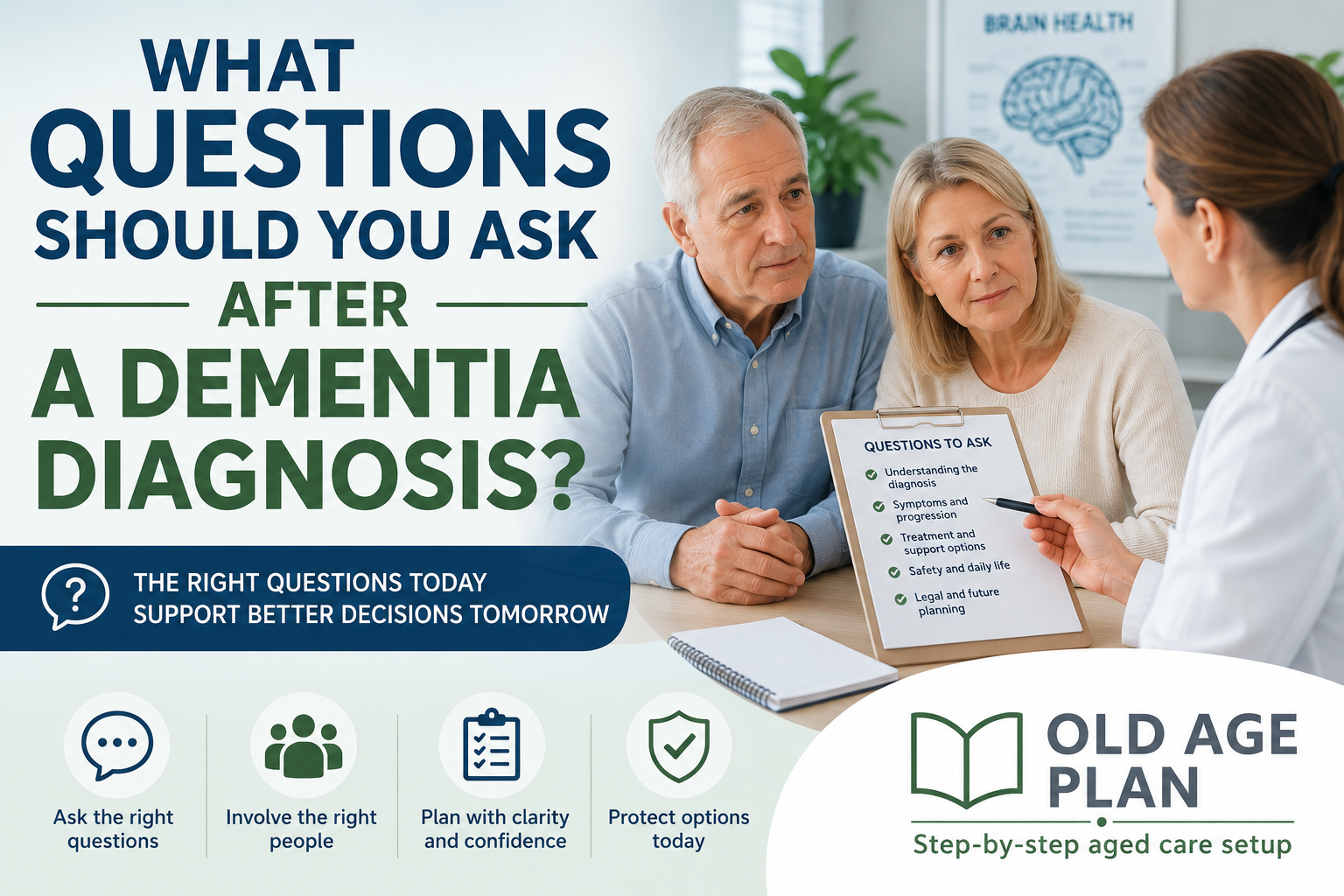

What Questions Should You Ask After A Dementia Diagnosis?
What questions should you ask after a dementia diagnosis? The most useful questions are the ones that help you understand the diagnosis, what may happen next, what support may be needed and which decisions should not be delayed.
A dementia diagnosis can raise a lot of uncertainty.
Families may leave an appointment with a diagnosis but still feel unsure about the practical meaning of it.
The goal is not to ask every possible question at once.
The goal is to ask the questions that improve clarity before important medical, legal, care and family decisions begin.
Short Answer
After a dementia diagnosis, useful questions include what type of dementia is suspected, how certain the diagnosis is, what symptoms to expect, what treatments or supports may help, whether other causes have been ruled out and what decisions should be made soon.
You may also need to ask who should be involved next, whether legal documents should be reviewed and what changes may affect safety, driving, medicines, money or care needs.
Key Takeaway
The best questions after a dementia diagnosis are not only medical questions.
They should also help you understand what decisions may follow, which professionals should be involved and what can safely wait.
Why Questions Matter After Diagnosis
A diagnosis can explain what may be happening, but it does not automatically explain what to do next.
Families may need to understand:
- how confident the diagnosis is
- whether the type of dementia is clear
- what symptoms may change over time
- whether treatment or support may help
- what risks need attention
- which decisions should be made while the person can still participate
Without clear questions, families can end up reacting to problems as they appear.
With better questions, they can preserve options and plan more calmly.
Questions About The Diagnosis Itself
The first group of questions should clarify what the diagnosis means.
You may want to ask:
- What type of dementia is suspected?
- How certain is the diagnosis?
- What evidence supports the diagnosis?
- Were other possible causes considered?
- Could symptoms be affected by medicines, infection, depression, delirium or other health issues?
- Is further testing or specialist review needed?
These questions matter because different causes and types of dementia may affect treatment, support and planning.
If the diagnosis is uncertain, it may be better to clarify it before making major decisions.
Questions About Symptoms And Progression
Families often want to know what may happen next.
No doctor can predict every detail, but you can ask questions that help you prepare.
- What symptoms are most likely to change?
- What changes should we watch for?
- How quickly might symptoms progress?
- What changes would need urgent medical review?
- How can we tell the difference between gradual decline and sudden confusion?
This helps families avoid two common mistakes.
One is assuming every change is dementia.
The other is missing a sudden change that may need medical attention.
Questions About Treatment And Support
Dementia may not be curable, but treatment, support and planning may still make a difference.
You may want to ask:
- Are any medicines suitable?
- What are the possible benefits and side effects?
- Are there non-medication supports that may help?
- Should we review current medicines?
- Would exercise, routine, sleep or social support help?
- Should we be referred to dementia support services?
The aim is to understand what may help now, not only what may happen later.
Questions About Safety And Daily Life
A dementia diagnosis may affect daily routines before full-time care is needed.
Useful questions may include:
- Is it still safe to drive?
- Are there medicine safety concerns?
- Should cooking, appliances or home safety be reviewed?
- Are there risks with money, scams or contracts?
- Should someone help manage appointments?
- What signs suggest more support is needed at home?
These questions are not about removing independence too early.
They are about recognising where support may protect the person while preserving as much independence as possible.
Questions About Decision-Making Capacity
A dementia diagnosis does not automatically mean someone cannot make decisions.
However, it may raise questions about whether some decisions are becoming less reliable.
You may want to ask:
- Can the person still make their own medical decisions?
- Are there concerns about understanding consequences?
- Are decisions stable over time?
- Is the person vulnerable to pressure or confusion?
- Should capacity be assessed for any specific decision?
The key issue is not whether the person is slower to decide.
The more useful question is whether their decisions are still reliable enough for the specific decision being made.
Questions About Legal And Future Planning
After diagnosis, legal planning may become more time-sensitive.
You may want to ask:
- Should legal documents be reviewed now?
- Is there an Enduring Power of Attorney in place?
- Is there an Advance Care Directive?
- Is there an Enduring Guardian or equivalent appointment?
- Should a lawyer be involved while the person can still give instructions?
- What decisions may become harder if planning is delayed?
Doctors do not replace legal advice.
But medical information can help families understand whether legal planning should be prioritised.
Questions About Who Should Be Involved
Different questions belong to different people or services.
A GP or specialist may help with diagnosis, symptoms and medical management.
A lawyer may help with legal documents.
My Aged Care may help with aged care assessment and services.
Dementia support organisations may help with education and support.
You may want to ask:
- Who should coordinate care from here?
- Should we involve a specialist?
- Should we contact My Aged Care?
- Should family members attend future appointments?
- Who should receive information about the diagnosis?
- What supports are available for carers?
Clarifying who does what can reduce confusion and prevent families from expecting one professional to answer every type of question.
Questions About Family Communication
A diagnosis can create family disagreement, especially when people have different views about what is happening.
Useful questions may include:
- Who needs to know about the diagnosis?
- How much should be shared?
- Should the person diagnosed be part of family conversations?
- How can we avoid making decisions without them?
- What information would help family members understand the situation?
The goal is not to turn the diagnosis into a family meeting too soon.
The goal is to make sure the right people have enough information to support better decisions.
What You May Really Be Trying To Decide
If you are asking what questions to ask after a dementia diagnosis, you may really be trying to decide:
- What does this diagnosis actually change?
- What needs action now?
- What can safely wait?
- Who should be involved?
- What legal or care decisions may become urgent?
- How do we avoid missing something important?
These are practical decision questions, not just medical questions.
A good next step is to separate questions into medical, legal, care and family categories so the right person can answer each one.
Decision Support
After a dementia diagnosis, the most important questions are the ones linked to decisions.
Start with the questions that affect immediate risk, diagnosis confidence and future options.
For example:
- If the diagnosis is uncertain, ask what else should be checked.
- If safety is changing, ask what needs attention now.
- If legal documents are incomplete, ask whether timing matters.
- If family members disagree, ask what evidence would help clarify the situation.
- If care needs are increasing, ask what support pathway should begin.
The aim is not to complete every decision immediately.
The aim is to stop important decisions from being missed while there is still time to make them well.
Related Old Age Plan Articles
- What Happens After A Dementia Diagnosis?
- How Is Dementia Diagnosed?
- Can Dementia Be Misdiagnosed?
- Should You Get A Second Opinion After A Dementia Diagnosis?
- Can Dementia Be Diagnosed Early?
- Can Someone With Dementia Make Legal Decisions?
- What Happens When Someone With Dementia Loses Capacity?
Next Steps With Old Age Plan
After a dementia diagnosis, it can help to organise the main questions before the next GP, specialist or family conversation.
Old Age Plan’s Free Tools can help you prepare questions, record concerns and keep track of what needs clarification.
You may also find it helpful to continue with related guides on diagnosis, capacity and what happens after dementia is confirmed.
The goal is not to turn one appointment into every decision.
The goal is to make sure the right questions are asked early enough to preserve options and reduce confusion.
Sources
- Healthdirect Australia — Dementia
- Healthdirect Australia — Dementia overview
- Dementia Australia — Diagnosis
- Dementia Australia — Early warning signs of dementia
- My Aged Care — Living with memory loss, dementia or depression
- RACGP — Dementia
Disclaimer
This article provides general information only. It is not medical, legal or financial advice.
Dementia symptoms, diagnosis, capacity and support needs can vary between individuals. Medical assessment should be provided by qualified health professionals, and legal questions should be discussed with a qualified legal professional.
Laws, services, policies and procedures may change over time. You should seek advice from appropriate professionals and refer to official Australian Government, health and dementia support resources for current information.
For dementia-related information and support, you may wish to contact Dementia Australia, Healthdirect, My Aged Care or your GP.
Summary
After a dementia diagnosis, the most useful questions help clarify the diagnosis, symptoms, treatment options, safety concerns, legal planning and support pathways.
Good questions can help families understand what needs attention now and what can safely wait.
The aim is not to solve everything in one appointment. The aim is to ask the questions that protect future options and support clearer decisions.