
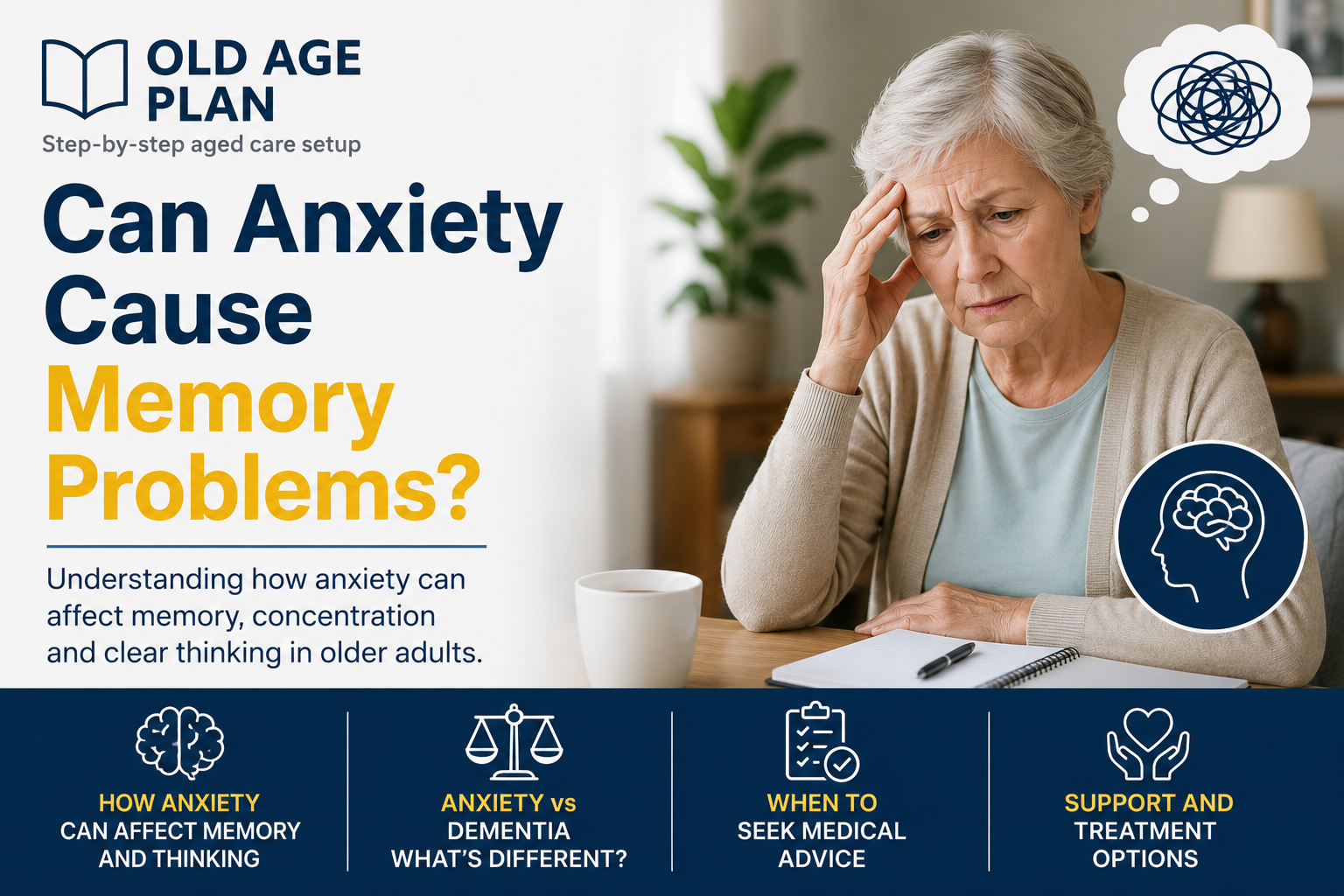

Can Anxiety Cause Memory Problems?
Anxiety can affect memory, concentration and clear thinking, especially when worry becomes constant or difficult to switch off.
Can anxiety cause memory problems?
Yes. Anxiety can make it harder to focus, take in new information, remember details and feel mentally organised.
However, memory problems should not automatically be dismissed as anxiety. In older adults, anxiety, depression, medication effects, delirium, mild cognitive impairment and dementia can sometimes overlap.
Short Answer
Anxiety can cause memory problems because it can affect attention, sleep, concentration and the ability to process information clearly.
When someone is anxious, their mind may be focused on worry or threat instead of the task, conversation or information in front of them.
If memory problems are new, persistent, worsening or affecting daily life, it is sensible to speak with a GP rather than guessing the cause.
Key Takeaway
Key takeaway: Anxiety can affect memory, but it should not be used as a shortcut explanation. The safer decision is to check whether anxiety, health issues, medication, cognitive change or more than one factor may be involved.
How Anxiety Can Affect Memory
Memory depends heavily on attention.
If someone is distracted by worry, fear or repeated “what if” thoughts, they may not fully take in information in the first place.
Later, it can look as though they forgot something.
In reality, the information may never have been properly registered.
Anxiety can also affect sleep, appetite, energy and confidence. Each of these can make thinking feel slower or less reliable.
This can be especially confusing for families because anxiety-related memory problems may look similar to early cognitive decline.
Common Memory Problems Linked With Anxiety
Anxiety may contribute to:
- forgetting details from conversations
- difficulty concentrating
- losing track of tasks
- feeling mentally scattered
- rechecking things repeatedly
- difficulty making decisions
- trouble sleeping and feeling foggy the next day
- becoming overwhelmed by simple choices
- avoiding appointments, paperwork or phone calls
These changes can be frustrating for the person and worrying for family members.
For many families, the hardest part is not the symptom itself.
It is the uncertainty.
They are often trying to work out whether this is temporary stress, worsening mental health, early cognitive decline, or the beginning of something bigger.
The key issue is whether the pattern is temporary, linked with anxiety triggers, or becoming broader and more persistent over time.
Can Anxiety Look Like Dementia?
Anxiety can sometimes look like dementia from the outside.
A person may repeat questions, seem distracted, avoid decisions or struggle to follow conversations.
However, anxiety and dementia are not the same thing.
Anxiety often affects attention and concentration. Dementia more commonly involves ongoing changes in memory, thinking, reasoning, communication and daily function.
That said, families should be careful.
Anxiety can occur on its own.
It can also happen alongside dementia or mild cognitive impairment.
So the question should not be:
“Is this anxiety or dementia?”
A better question is:
“What is changing, how often is it happening, and does it need proper assessment?”
When Anxiety-Related Memory Problems Should Be Checked
Memory problems should be checked when they are new, persistent, worsening or affecting daily life.
This is especially important if memory changes affect:
- medication management
- appointments
- money or bills
- driving
- personal care
- meal preparation
- safety at home
- legal, financial or care decisions
It is also worth arranging a check if other people notice a clear change.
Family members may sometimes see patterns the person does not notice themselves.
Why It Is Risky To Guess
Guessing can create problems in both directions.
If memory problems are dismissed as anxiety, a person may miss assessment for dementia, medication side effects, delirium or another health issue.
If anxiety-related memory problems are assumed to be dementia, the person may feel unnecessarily labelled or lose confidence too quickly.
Old Age Plan’s decision-support approach is to avoid both extremes.
The goal is not to panic.
The goal is to gather enough information to decide what should happen next.
What A GP May Consider
A GP may ask when the anxiety and memory problems started, whether they are linked with particular situations and whether daily function has changed.
They may also review sleep, mood, medication, alcohol use, pain, physical health, recent illness and major life changes.
Depending on the situation, they may suggest blood tests, mental health support, medication review, cognitive screening or referral to another health professional.
This does not mean dementia is assumed.
It means the cause of the memory problem is being checked properly.
What You May Really Be Trying To Decide
Many people asking this question are not only asking about anxiety.
They are trying to work out whether the memory problems are serious enough to act on.
The real questions may be:
- Is anxiety enough to explain this?
- Could something else be happening?
- Are we overreacting?
- Are we waiting too long?
- Should we book a GP appointment?
- Could this affect future planning?
If the memory problems are occasional and clearly linked with short-term worry, monitoring may be reasonable.
If they are persistent, worsening or affecting daily life, getting checked is the safer decision.
Decision Support Questions
Before deciding what to do next, it may help to ask:
- Did the memory problems begin around a period of worry, stress or major change?
- Are the problems worse when the person feels anxious?
- Are they sleeping poorly?
- Are they avoiding tasks they used to manage?
- Are they repeating questions or losing track of conversations?
- Have medicines recently changed?
- Are safety, money, driving or care decisions affected?
If several of these apply, a GP review can help separate anxiety from other possible causes.
Related Old Age Plan Articles
- Can Depression Cause Dementia-Like Symptoms?
- When Should Memory Loss Be Checked?
- When Should You See A Doctor About Memory Problems?
- What Are The Early Signs Of Dementia?
- What Is Mild Cognitive Impairment?
- How Is Dementia Diagnosed?
Sources
- healthdirect Australia — Anxiety
- healthdirect Australia — Memory loss
- Better Health Channel — Anxiety disorders
- Dementia Australia — Early warning signs of dementia
- Dementia Australia — Dementia testing and diagnosis
Disclaimer
This article provides general information only. It is not medical, legal or financial advice. Anxiety, memory problems and cognitive changes can have different causes, and individual circumstances vary. If you are concerned about memory, mood, confusion or changes in thinking, speak with a GP or qualified health professional. If symptoms appear suddenly or safety is at risk, seek urgent medical help.
Summary
Anxiety can cause memory problems by affecting attention, sleep, concentration and the ability to process information clearly.
However, anxiety should not automatically be assumed to be the only cause, especially if memory changes are persistent, worsening or affecting daily life.
A GP review can help clarify whether anxiety, medication, health issues, mild cognitive impairment, dementia or another factor may be involved.