

Can Dementia Be Treated?
After a dementia diagnosis, one of the first questions families often ask is whether anything can be done.
You may be trying to understand whether dementia can be slowed, whether medicines may help, or whether support can make daily life easier.
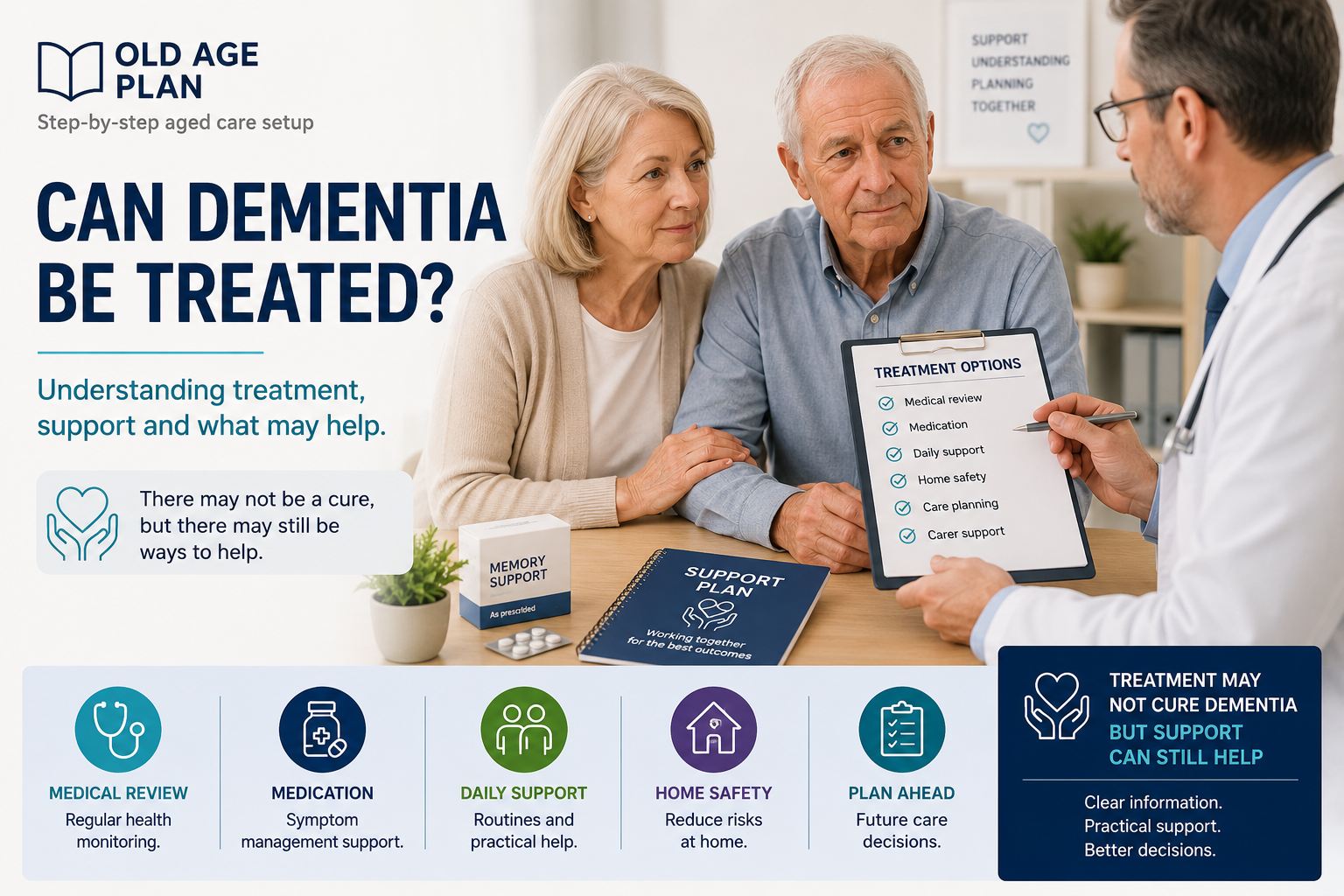
If you are wondering can dementia be treated, the answer is that dementia usually cannot be cured, but some treatments, supports and care strategies may help manage symptoms and support quality of life.
The right approach depends on the type of dementia, the person’s symptoms, their health, their living situation and what support is already in place.
Short Answer
Dementia can often be managed, but most forms of dementia cannot currently be cured.
Treatment may include medicines, medical reviews, lifestyle support, therapy, home support, routines, carer support and planning for future care needs.
The goal is usually to support daily life, manage symptoms, reduce risks and help the person remain as independent and comfortable as possible.
Key Takeaway
Dementia treatment is usually about management rather than cure.
Some medicines may help some people, but support, routines, safety planning and carer support can also make a meaningful difference.
Families should speak with a doctor about what treatment and support options may suit the person’s situation.
Why Dementia Treatment Matters
Dementia affects memory, thinking, behaviour and daily function.
Treatment and support may help the person manage symptoms, stay involved in daily life and reduce avoidable risks.
Dementia Australia explains that there are many different treatments and ways to manage dementia, even though there is no known cure yet.
This is important because families may assume that “no cure” means “nothing can be done”.
That is not true.
There may still be useful steps that improve comfort, safety, communication, routine and support.
When Families Usually Start Asking Questions
Families often start asking about treatment after a diagnosis, or when symptoms begin affecting daily life.
The real questions may include:
- Is there medicine that can help?
- Can dementia be slowed down?
- Can symptoms improve?
- What should we ask the doctor?
- What support is actually useful?
- How do we help the person stay safe at home?
- Should we be planning for future care now?
These are practical questions.
They are not only about medical treatment.
They are also about how daily life may need to be supported.
Is There A Cure For Dementia?
There is currently no known cure for most forms of dementia.
However, treatment and support may still help.
Some treatments may aim to manage symptoms.
Others may support daily routines, safety, communication, wellbeing and carer support.
Because dementia can have different causes, families should ask the doctor what type of dementia has been diagnosed and what options may be suitable.
Can Medicines Help Dementia?
Some medicines may help manage symptoms for some people with dementia.
They do not cure dementia.
They may help with thinking, memory or daily function in some cases, depending on the type and stage of dementia.
Healthdirect Australia notes that dementia treatment may include medicines and support to help with symptoms and daily life.
A doctor can explain:
- whether medicine may be suitable
- what benefits may be realistic
- what side effects should be watched for
- how often medicines should be reviewed
- whether other health conditions may affect treatment
Families should not start, stop or change medicines without medical advice.
Managing Other Health Conditions
Managing other health conditions can be an important part of dementia care.
This may include reviewing blood pressure, diabetes, heart health, sleep, hearing, vision, mood and medicines.
Some health issues can make confusion, memory problems or daily function worse.
A regular GP review may help identify problems that can be treated or managed.
Supportive Therapies And Daily Strategies
Dementia treatment is not only about medication.
Supportive strategies may also help the person manage daily life.
These may include:
- clear routines
- memory prompts
- simplified tasks
- calm communication
- safe home setup
- regular activity
- social connection
- support with meals, transport or personal care
The right support depends on the person’s needs.
What helps one person may not help another.
Allied Health And Practical Support
Some people may benefit from allied health support.
This may include occupational therapy, physiotherapy, speech pathology, dietetics, psychology or other services.
These supports may help with movement, communication, swallowing, daily routines, home safety or maintaining function.
A GP or specialist can suggest what may be appropriate.
Support For Behaviour Changes
Dementia can sometimes affect behaviour, mood, sleep, communication or judgement.
This can be difficult for families to understand.
My Aged Care explains that there are often things carers can do to help manage or reduce behaviour changes, and Dementia Support Australia provides 24-hour advice and support.
Behaviour changes may sometimes be linked to pain, infection, medication, tiredness, environment, communication difficulties or unmet needs.
Medical advice can help identify possible causes.
Can Lifestyle Changes Help?
Lifestyle changes cannot cure dementia.
However, healthy routines may support overall wellbeing.
This may include:
- regular physical activity where safe
- healthy meals
- good sleep routines
- social connection
- meaningful activities
- managing alcohol intake
- reviewing hearing and vision
- managing other health conditions
Any changes should suit the person’s ability, preferences and medical advice.
Can Dementia Be Slowed Down?
This depends on the type of dementia and the person’s situation.
Some treatments may help manage symptoms or slow decline for some people.
However, families should be careful with promises that sound too certain.
Dementia affects people differently.
The best approach is to ask the doctor what is realistic for the specific diagnosis.
Home Support And Aged Care Services
As dementia progresses, some people may need more help at home.
This may include support with cleaning, meals, personal care, transport, medication prompts, respite or home modifications.
Healthdirect Australia refers families to Dementia Australia and My Aged Care for support and government-funded aged care information.
Families may consider contacting My Aged Care if support at home is becoming harder to manage without help.
Carer Support Matters Too
Dementia care often involves family members, partners, adult children or friends.
Support for carers can make a real difference.
Carer support may include:
- education
- respite
- support groups
- counselling
- practical advice
- help understanding services
Dementia care is easier to manage when families understand what support may be available and when to ask for help.
What Should Families Ask The Doctor?
Families may want to ask:
- What type of dementia has been diagnosed?
- Are medicines suitable?
- What benefits should we realistically expect?
- What side effects should we watch for?
- Are other health issues affecting symptoms?
- Should we see a specialist or allied health professional?
- What support services should we contact?
- When should treatment or support be reviewed?
Writing these questions down before the appointment may help.
Decision Support
If you are trying to decide what treatment or support may be needed, consider:
- What symptoms are causing the most difficulty now?
- Is the person safe at home?
- Are medicines being reviewed regularly?
- Are daily routines becoming harder?
- Does the carer need support or respite?
- Would My Aged Care, Dementia Australia or Dementia Support Australia be useful?
- What decision needs attention first?
The goal is not to find one perfect answer.
The goal is to match support to the person’s current needs.
What Could Happen Next?
After discussing treatment, the doctor may suggest medication, further assessment, allied health support, lifestyle changes, carer support or follow-up reviews.
Families may also begin looking at home support, safety planning and future care decisions.
Over time, treatment and support may need to be reviewed as needs change.
What You May Really Be Trying To Decide
If you are searching for whether dementia can be treated, you may not only be looking for a medical answer.
You may also be trying to decide:
- whether anything can help now
- whether medicine is worth asking about
- whether symptoms can be managed at home
- whether support services should be contacted
- whether care planning should begin
- what the next practical step should be
Those are reasonable decisions to think through.
A doctor can help with medical options, while support services may help families understand practical care options.
Related Old Age Plan Articles
- What Happens After A Dementia Diagnosis?
- How Is Dementia Diagnosed?
- What Is Dementia?
- What Types Of Dementia Are There?
- Can Dementia Be Prevented?
- How Do You Support Someone With Dementia?
- When Should You Contact My Aged Care?
Sources
- Dementia Australia — Treatment And Management Of Dementia
- Healthdirect Australia — Dementia
- Australian Government Department Of Health — Dementia Diagnosis, Management And Support
- My Aged Care — Caring For Someone Living With Dementia
- Healthdirect Australia — Living With Dementia
Summary
Dementia can usually be managed, but most forms of dementia cannot currently be cured.
Treatment may include medicines, medical reviews, supportive therapies, daily routines, home support, carer support and future planning.
The best treatment approach depends on the type of dementia, the person’s symptoms and what support is needed in daily life.
Families should speak with a doctor about suitable options and review support needs over time.