

What Happens After A Dementia Diagnosis?
A dementia diagnosis can raise a lot of practical questions.
You may be trying to understand what happens next, what support may be needed, and which decisions should be made sooner rather than later.
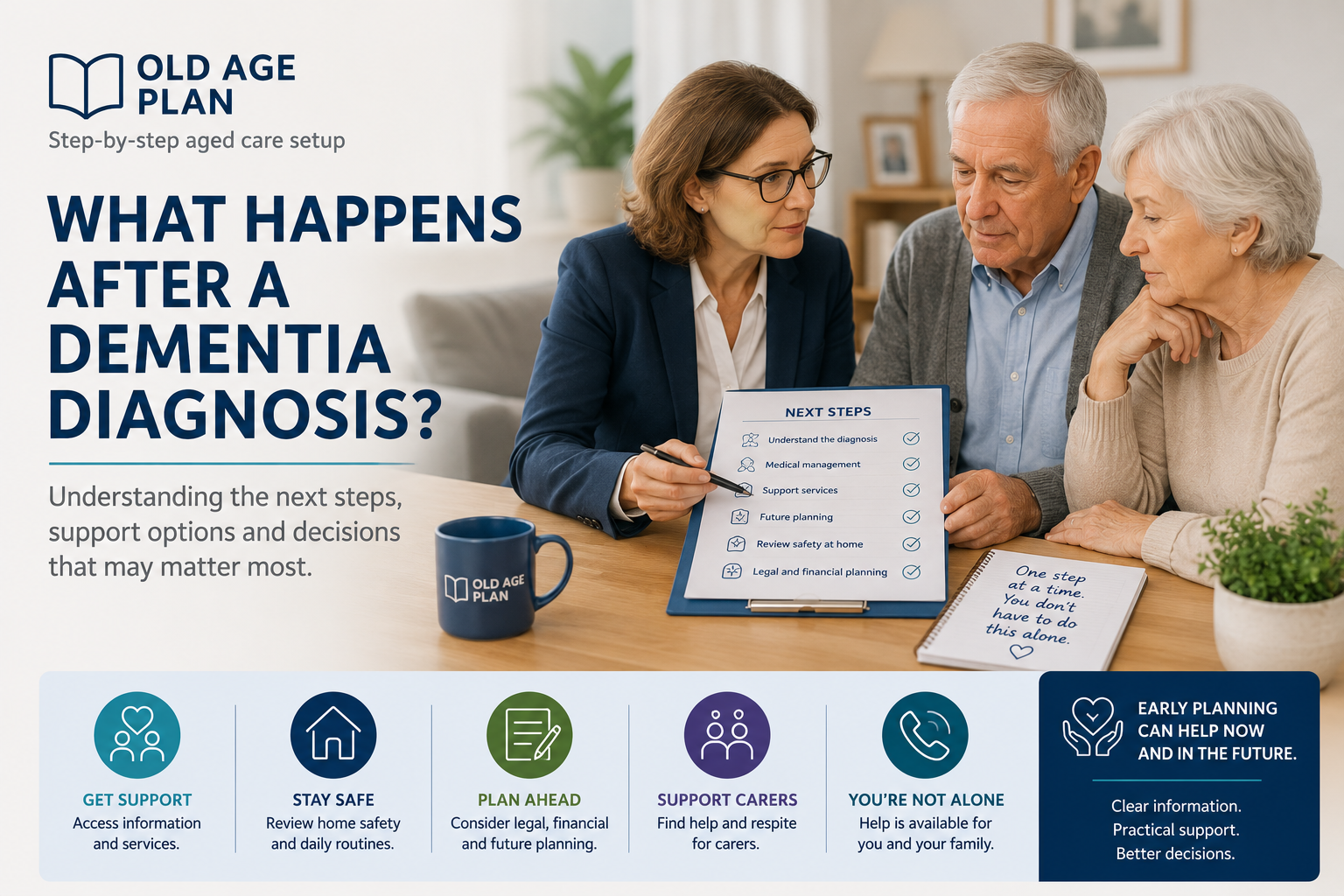
If you are wondering what happens after a dementia diagnosis, the next steps usually involve understanding the diagnosis, speaking with health professionals, exploring support options, reviewing safety and starting future planning.
Not everything needs to be decided at once.
However, early planning can help the person with dementia stay involved in decisions for as long as possible.
Short Answer
After a dementia diagnosis, families usually need to understand the type of dementia, talk with doctors about treatment and support, consider home safety, review legal and financial planning, and explore services such as Dementia Australia, My Aged Care and carer support.
The exact next steps will depend on the person’s symptoms, stage of dementia, living situation and support needs.
Key Takeaway
After a dementia diagnosis, the main goal is to understand what support, planning and medical follow-up may be needed.
Some decisions can wait, but others are easier to make early while the person can still take part.
Families may benefit from taking one step at a time instead of trying to solve everything immediately.
Why The First Steps Matter
A diagnosis can help explain changes in memory, thinking, behaviour or daily function.
It can also open the door to support, medical management and future planning.
The Australian Institute of Health and Welfare notes that early diagnosis can allow timely access to information, advice, medical management and support services, as well as planning for care, living arrangements and legal and financial affairs.
This does not mean every decision is urgent.
It means families have an opportunity to plan before decisions become harder.
When Families Usually Start Asking Questions
Families often start asking bigger questions once the diagnosis is confirmed.
These questions may include:
- What does the diagnosis actually mean?
- What type of dementia is it?
- How quickly might things change?
- Can the person still live at home?
- What support is available?
- What legal documents need to be reviewed?
- Should we contact My Aged Care?
- What should we do first?
These are sensible questions.
The diagnosis is not just medical information.
It may affect care, safety, money, documents, family roles and future decisions.
Understand The Diagnosis
One of the first steps is understanding what the doctor has diagnosed.
Families may want to ask:
- What type of dementia is suspected?
- How certain is the diagnosis?
- Are more tests needed?
- What symptoms should we watch for?
- Are there medicines or treatments that may help?
- When should the diagnosis be reviewed?
Different types of dementia can affect people in different ways.
Understanding the likely type can help families make better decisions about support and planning.
Ask About Treatment And Medical Management
There is currently no cure for most forms of dementia.
However, treatment and support may still help manage symptoms and support quality of life.
The Australian Government Department of Health explains that dementia management aims to maintain quality of life and improve a person’s ability to complete everyday tasks.
Medical management may involve:
- reviewing medicines
- managing other health conditions
- discussing symptom management
- checking mood, sleep, hearing and vision
- talking about lifestyle and daily routines
- planning future medical reviews
The doctor can explain what may be suitable for the person’s situation.
Contact Dementia Support Services
Dementia-specific support can help people understand the diagnosis and what may come next.
Dementia Australia offers post-diagnostic support for people diagnosed with dementia, people assessed with mild cognitive impairment, families and carers.
Healthdirect also lists the National Dementia Helpline as a support option for people living with dementia and their families.
Support may help with:
- understanding dementia
- finding education resources
- talking through next steps
- connecting with services
- supporting family members and carers
- planning daily routines
Think About Home Safety
Dementia can affect memory, judgement, attention and daily function.
This may create safety concerns over time.
Families may need to think about:
- medication routines
- cooking and appliance safety
- falls risk
- driving
- wandering or getting lost
- emergency contacts
- financial safety
- living alone
Not every concern will apply immediately.
However, it can help to notice where support may already be needed.
Review Legal And Financial Planning
After a dementia diagnosis, legal and financial planning may become more important.
This is because dementia can affect decision-making capacity over time.
Families may need to review whether documents are already in place, such as:
- Enduring Power Of Attorney
- Enduring Guardianship
- Advance Care Directive
- Will
- superannuation nominations
- important account and contact information
Whether a person can make or change legal documents depends on their decision-making capacity at the time.
Families should seek appropriate legal advice if there are questions about capacity, documents or disputes.
Consider My Aged Care And Home Support
If the person needs help at home, My Aged Care may become relevant.
My Aged Care explains that government-subsidised aged care services may help people who need support around the house or who are considering aged care homes.
Support at home may include help with cleaning, personal care, meals, transport, respite or home modifications, depending on assessment and eligibility.
My Aged Care also provides information for people living with memory loss, dementia or depression, including dementia support through the National Dementia Support Program.
Support For Carers
Dementia can also affect the people providing support.
My Aged Care notes that services are available for carers of people living with dementia, including support groups and respite care.
Carer support may include:
- education
- respite
- support groups
- counselling
- practical advice
- help understanding services
Support for carers can help families continue caring safely and realistically.
What Decisions May Need To Happen Early?
Some decisions are easier to make earlier.
These may include:
- who should attend medical appointments
- who should be emergency contact
- whether legal documents need review
- whether home support is needed
- whether medication routines are safe
- whether driving needs discussion
- how family members will share updates
Early decisions do not need to be perfect.
They simply need to make the next stage clearer and safer.
What Decisions Can Usually Wait?
Not every decision needs to be made immediately after diagnosis.
Depending on the situation, families may not need to rush decisions about residential aged care, selling property or major care changes.
However, these decisions may become relevant later.
The important thing is to understand what is needed now and what may need planning for the future.
Decision Support
If you are trying to work out what to do after a dementia diagnosis, consider these questions:
- What did the doctor say about the type and stage of dementia?
- What changes are already affecting daily life?
- Is the person safe at home right now?
- Are legal and financial documents already in place?
- Is anyone helping with medication, appointments or bills?
- Would contacting Dementia Australia, My Aged Care or Carer Gateway help?
- What decision needs attention first?
The goal is not to solve everything in one day.
The goal is to identify the next sensible step.
What Could Happen Next?
After diagnosis, the next stage may include medical follow-up, support services, family discussions and practical planning.
Some families may continue with small changes at home.
Others may need more formal support.
Over time, care needs may change.
Reviewing the situation regularly can help families adjust support as needed.
What You May Really Be Trying To Decide
If you are searching for what happens after a dementia diagnosis, you may not only be looking for medical information.
You may also be trying to decide:
- what needs to happen first
- what support may be needed now
- what decisions can wait
- whether legal documents need attention
- whether the person can keep living safely at home
- who should help manage the next steps
Those are practical decisions.
The most important thing is not to solve everything at once.
It is to understand what needs attention now, what can wait, and what support may help make the next step clearer.
Related Old Age Plan Articles
- How Is Dementia Diagnosed?
- What Is Dementia?
- What Are The Early Signs Of Dementia?
- What Types Of Dementia Are There?
- Can Dementia Be Treated?
- Can Someone With Dementia Make Legal Decisions?
- When Should You Contact My Aged Care?
Sources
- Dementia Australia — What Next After Your Diagnosis?
- Dementia Australia — Post-Diagnostic Support
- Healthdirect Australia — Living With Dementia
- Australian Government Department Of Health — Diagnosis, Management And Support
- My Aged Care — Living With Memory Loss, Dementia Or Depression
- My Aged Care — Caring For Someone Living With Dementia
Summary
After a dementia diagnosis, families usually need to understand the diagnosis, speak with doctors about treatment and support, review safety, consider legal and financial planning, and explore support services.
Not every decision needs to happen immediately.
However, early planning can help the person with dementia stay involved in decisions while they can.
The most useful first step is often to understand what support is needed now and what decisions may follow next.