
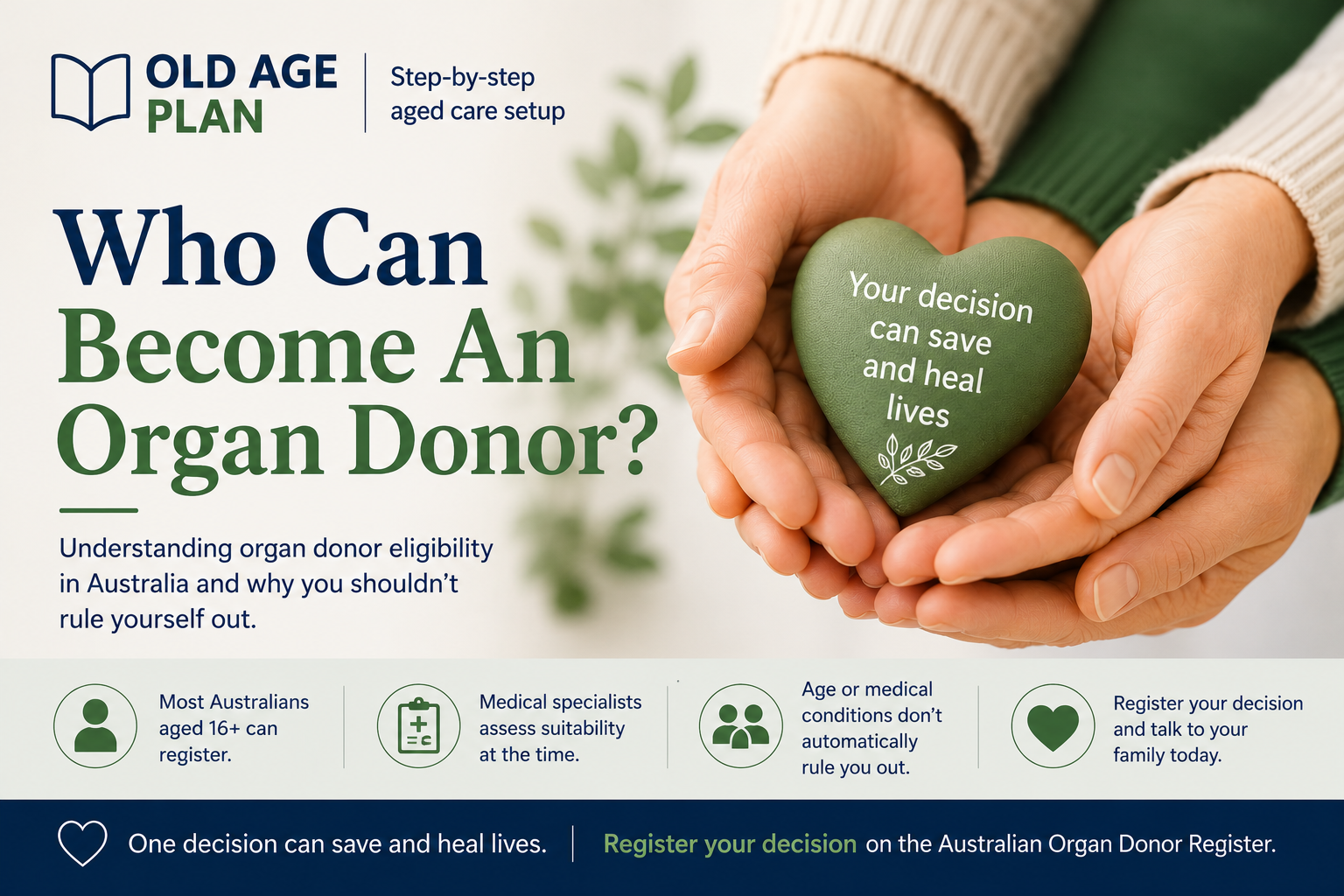

Who Can Become An Organ Donor?
Who can become an organ donor? In Australia, most people can register their decision to become an organ and tissue donor.
Many people assume they are too old, too unhealthy or have too many medical conditions to donate.
In many cases, that assumption is wrong.
Medical specialists assess donation suitability if donation becomes possible.
This article explains who can become an organ donor and why people should not automatically rule themselves out.
Short Answer
Most Australians aged 16 and over can register their organ and tissue donation decision.
Whether donation is actually possible depends on medical assessment at the time.
Age alone does not automatically prevent donation.
Many people with medical conditions can still register their decision.
Who Can Register As An Organ Donor?
In Australia, people aged 16 years and over can register their organ and tissue donation decision on the Australian Organ Donor Register.
Registration allows people to record their wishes.
It also helps families understand what the person wanted if donation is ever discussed.
You can read more here: What Is Organ Donation?
Does Registering Mean Donation Will Definitely Happen?
No.
Registering your decision does not guarantee donation will happen.
Donation depends on:
- How and where the person dies
- Medical suitability
- The condition of organs or tissues
- Whether donation can safely proceed
- Consent requirements
However, registration is still important because it records your wishes.
Can Older People Become Organ Donors?
Yes.
Older people can still register as organ and tissue donors.
There is no age limit for registering a donation decision in Australia.
Medical specialists assess suitability at the time.
You can read more here: Can Older People Donate Organs?
Can People With Medical Conditions Become Donors?
Many people with medical conditions can still register.
Having a health condition does not automatically mean donation is impossible.
Medical teams assess each situation individually.
You can read more here: Can People With Medical Conditions Donate Organs?
Why People Should Not Rule Themselves Out
One of the most common misconceptions about organ donation is believing you are not eligible.
Many people assume they are too old.
Others believe their health history automatically prevents donation.
However, donation suitability is determined by medical specialists, not by the individual or their family.
This is why many organisations encourage people not to rule themselves out.
Why Family Conversations Matter
Registering your decision is important.
However, talking with your family is equally important.
If your family already understands your wishes, they are less likely to be left guessing during a difficult time.
The register records your decision.
The conversation helps your family understand that decision.
Common Misunderstandings About Eligibility
Common misunderstandings include:
- Thinking older people cannot donate
- Thinking medical conditions automatically prevent donation
- Thinking registration guarantees donation
- Thinking family discussions are unnecessary
- Thinking donation is only for young healthy people
These misunderstandings can stop people from recording their wishes.
What Should Families Understand?
Families do not need to decide whether a person is medically suitable to donate.
That assessment is performed by specialist medical teams.
The most important thing families can do is understand the person’s wishes.
A checklist may help families organise important information.
However, the most important step is having the conversation before it is needed.
Real-Life Example
Peter was in his late seventies and assumed he was too old to become a donor.
After learning there was no age limit for registration, he decided to record his wishes and tell his family.
Even though suitability would still need to be assessed later, his family now understood what he wanted.
FAQs About Organ Donor Eligibility
Who can become an organ donor?
Most Australians aged 16 and over can register their organ and tissue donation decision.
Is there an age limit for becoming an organ donor?
No. There is no age limit for registering as an organ and tissue donor in Australia.
Can people with medical conditions become organ donors?
Many people with medical conditions can still register. Medical specialists assess suitability if donation becomes possible.
Should I register even if I am unsure?
People should consider recording their wishes and discussing them with family. Medical suitability is assessed later if needed.
Does registration guarantee donation?
No. Donation depends on medical suitability and circumstances at the time.
Final Thoughts
Most people can register their decision to become an organ and tissue donor.
Age and medical history do not automatically rule someone out.
The most important step is recording your wishes and discussing them with your family.
Clear conversations can make a difficult time easier for the people you love.
Sources
- DonateLife — Organ and Tissue Donation Information
- DonateLife — Who Can Be A Donor?
- Services Australia — Australian Organ Donor Register
- Healthdirect — Organ And Tissue Donation
Related Articles
- What Is Organ Donation?
- How Does Organ Donation Work?
- What Is Tissue Donation?
- What Is The Difference Between Organ And Tissue Donation?
- Can Older People Donate Organs?
- Can People With Medical Conditions Donate Organs?
Disclaimer
This article provides general information only. It is not legal, medical or financial advice.
Organ donation laws, policies and procedures may change over time and individual circumstances can vary.
Always seek advice from qualified healthcare professionals and refer to official Australian Government and DonateLife resources for current information.