
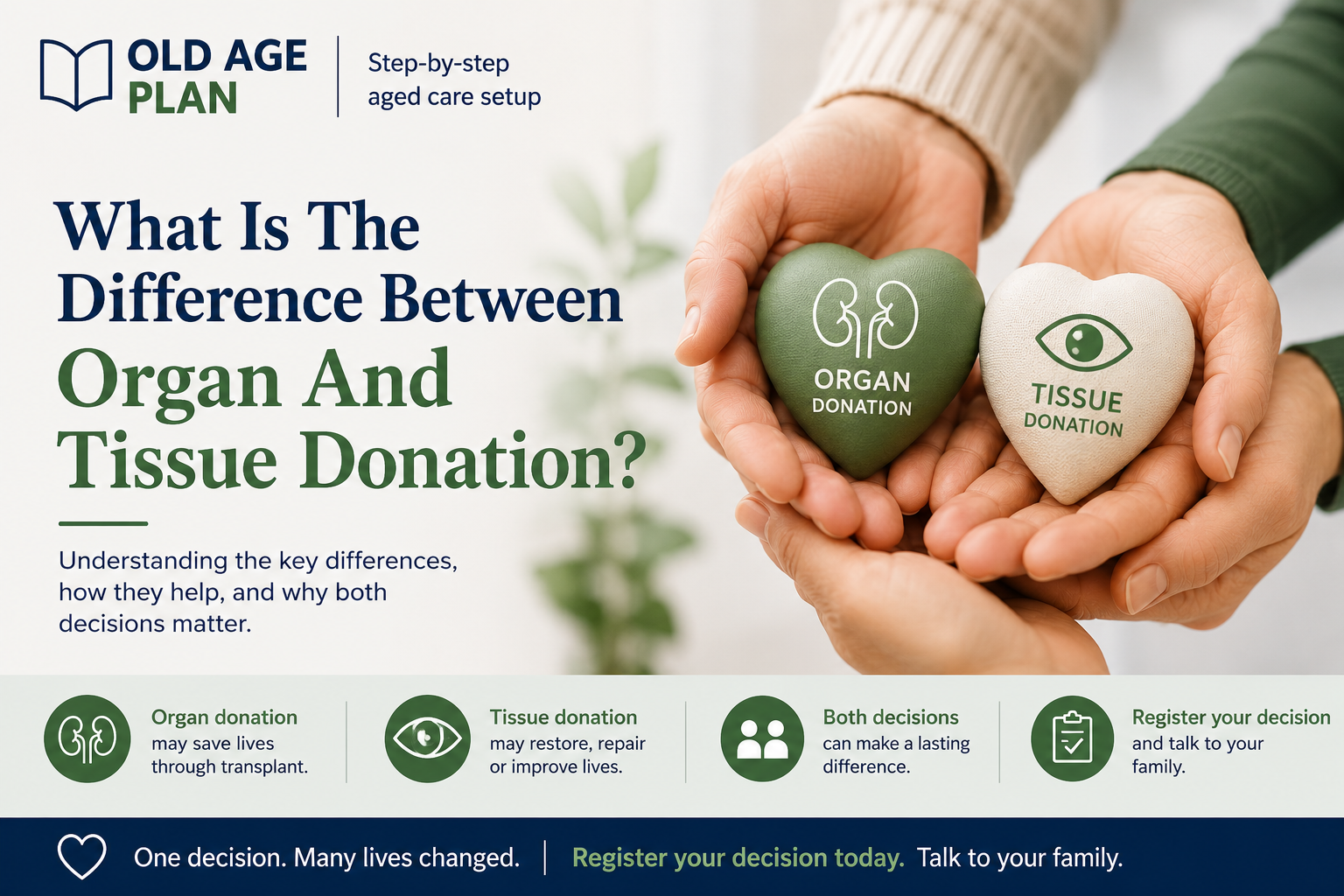

What Is The Difference Between Organ And Tissue Donation?
What is the difference between organ and tissue donation? Organ donation usually involves major organs, while tissue donation involves body tissues that may help repair, restore or improve another person’s health.
They are connected.
However, they are not exactly the same.
In Australia, people can record their organ and tissue donation decision on the Australian Organ Donor Register.
This article explains the difference in plain English.
Short Answer
The main difference is what is donated.
Organ donation may include organs such as kidneys, heart, lungs, liver or pancreas.
Tissue donation may include eye tissue, heart valves, skin, bone or tendons.
Both can help other people, but they may happen in different medical circumstances.
Organ Donation vs Tissue Donation
Organ donation and tissue donation both involve giving part of the body after death to help someone else.
However, they help people in different ways.
Organ donation may save a person’s life.
Tissue donation may restore, repair or improve a person’s health.
You can read more here: What Is Organ Donation?
You can also read: What Is Tissue Donation?
What Is Organ Donation?
Organ donation is when organs are donated for transplant.
Organs that may be donated can include:
- Kidneys
- Heart
- Lungs
- Liver
- Pancreas
- Intestine
Organ donation usually happens in hospital.
It is only considered after every effort has been made to save the person’s life.
If donation may be possible, specialist staff check the person’s recorded decision and speak with the family.
You can read more here: How Does Organ Donation Work?
What Is Tissue Donation?
Tissue donation is when body tissues are donated to help another person.
Tissues that may be donated can include:
- Eye tissue
- Heart valves
- Skin
- Bone
- Tendons
Tissue donation may help restore sight, repair injury, support surgery or help people recover from serious medical conditions.
In some cases, tissue donation may be possible even when organ donation is not.
Why Tissue Donation May Be Possible When Organ Donation Is Not
Organ donation can only happen in certain medical circumstances.
Not every death allows organs to be donated.
The person usually needs to die in hospital in circumstances where organs can be medically assessed and safely retrieved.
Tissue donation may sometimes be possible in different circumstances.
This does not mean tissue donation will always happen.
It still depends on medical suitability, timing, health history and consent.
Do You Register Separately For Organ And Tissue Donation?
In Australia, people aged 16 and over can register their organ and tissue donation decision on the Australian Organ Donor Register.
This register records your donation decision.
It helps your family and donation staff understand what you wanted.
Registration is important.
However, it is also important to tell your family.
Does Registering Guarantee Donation Will Happen?
No.
Registering your decision does not guarantee organ or tissue donation will happen.
Donation depends on:
- How and where the person dies
- Whether donation is medically possible
- The condition of organs or tissues
- Medical suitability
- Consent requirements
- Whether donation can safely proceed
However, registration still matters.
It gives families clear evidence of the person’s wishes.
Does Family Consent Still Matter?
Yes.
Family involvement is important in Australia.
Families may be asked to confirm the person’s wishes before donation proceeds.
This can be much easier if the person had already spoken about donation.
The register records the decision.
The family conversation helps support that decision.
Can Older People Donate Organs Or Tissue?
Older people can still register as organ and tissue donors.
Age alone does not automatically rule someone out.
Suitability is assessed by medical specialists if donation becomes possible.
You can read more here: Can Older People Donate Organs?
Can People With Medical Conditions Donate Organs Or Tissue?
Some people with medical conditions may still be able to donate.
It depends on the condition, treatment history and whether donation is safe and suitable.
Families do not need to decide this alone.
Specialist medical teams assess suitability at the time.
You can read more here: Can People With Medical Conditions Donate Organs?
Common Misunderstandings About Organ And Tissue Donation
Organ and tissue donation can be confusing because the terms are often used together.
Common misunderstandings include:
- Thinking organ donation and tissue donation are exactly the same
- Thinking tissue donation is less important
- Thinking older people cannot donate
- Thinking medical conditions always rule someone out
- Thinking registration guarantees donation
- Thinking family conversations are not needed
These misunderstandings can stop people from recording or discussing their wishes.
What Should Families Understand?
Families do not need to understand every medical detail.
However, it helps to understand the basic difference.
Organ donation usually involves major organs that may save lives.
Tissue donation usually involves tissues that may repair, restore or improve lives.
Both decisions are important.
A checklist may help families understand what questions to ask.
However, the most important step is talking about donation before a crisis happens.
Real-Life Example
Helen thought donation only meant donating organs.
She later learned that tissue donation could also help people by restoring sight, repairing injury or supporting surgery.
After learning the difference, she registered her decision and told her family.
That meant her family would not be left guessing if donation was ever discussed.
FAQs About Organ And Tissue Donation
What is the difference between organ and tissue donation?
Organ donation involves major organs such as kidneys, heart, lungs or liver. Tissue donation involves tissues such as eye tissue, heart valves, skin, bone or tendons.
Is tissue donation less important than organ donation?
No. Tissue donation can make a major difference by restoring, repairing or improving another person’s health.
Can tissue donation happen if organ donation cannot?
Sometimes. Tissue donation may be possible in some circumstances where organ donation is not.
Do I need to register separately for tissue donation?
In Australia, people can record their organ and tissue donation decision on the Australian Organ Donor Register.
Should I tell my family about organ and tissue donation?
Yes. Telling your family helps them understand your wishes if donation is ever discussed.
Final Thoughts
Organ donation and tissue donation are connected, but they are not the same.
Organ donation may save lives through transplantation.
Tissue donation may restore, repair or improve lives.
Both can be generous decisions.
The most helpful step is to record your decision and talk with your family.
Clear wishes can make a difficult time easier for the people you love.
Related Articles
- What Is Organ Donation?
- How Does Organ Donation Work?
- What Is Tissue Donation?
- Who Can Become An Organ Donor?
- Can Older People Donate Organs?
- Can People With Medical Conditions Donate Organs?
Sources
- DonateLife — Organ and Tissue Donation Information
- DonateLife — Tissue Donation
- Services Australia — Australian Organ Donor Register
- Healthdirect — Organ And Tissue Donation
Disclaimer
This article provides general information only. It is not legal, medical or financial advice.
Organ and tissue donation laws, policies and procedures may change over time and individual circumstances can vary.
Always seek advice from qualified healthcare professionals and refer to official Australian Government and DonateLife resources for current information. “`