
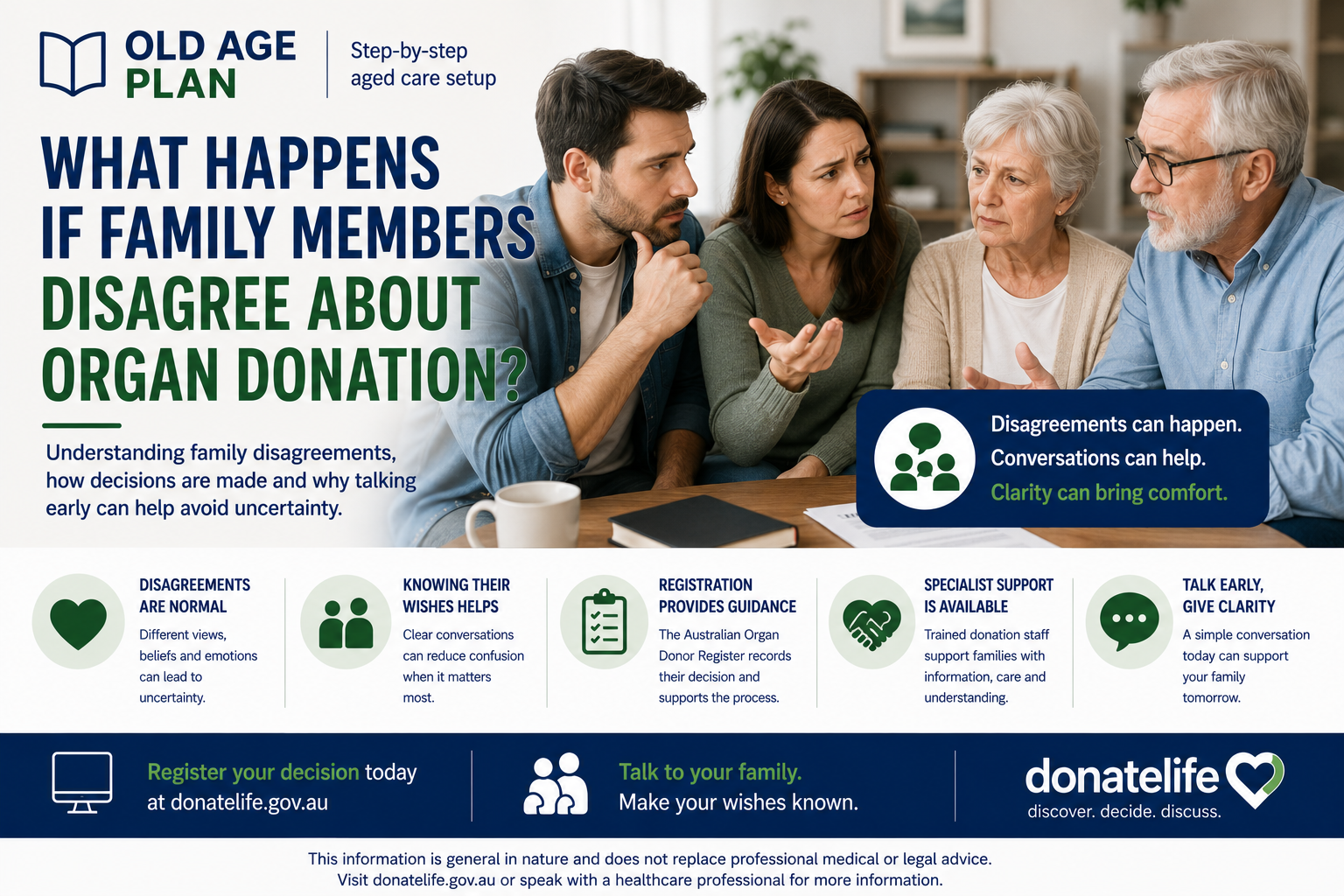

What Happens If Family Members Disagree About Organ Donation?
What happens if family members disagree about organ donation? Disagreements can sometimes occur when a family is facing grief, shock and difficult decisions.
Not every family member will always have the same understanding of what a loved one wanted.
This can create uncertainty during an already emotional time.
This article explains why disagreements may happen and why discussing organ donation wishes early can be important.
Short Answer
Family disagreements about organ donation can happen when relatives have different views, beliefs or understandings of a person’s wishes.
Specialist donation staff support families through these discussions and help clarify the person’s recorded decision and known wishes.
This is one reason why many organisations encourage people to register their decision and discuss it with family.
Why Family Disagreements Sometimes Happen
Every family is different.
People may have different beliefs, experiences and opinions about organ donation.
Some family members may support donation.
Others may have concerns or questions.
In some situations, family members may simply be unsure what their loved one wanted.
Grief can also affect how people communicate and make decisions.
What If Nobody Knows The Person’s Wishes?
Disagreements are often more likely when the person’s wishes have never been discussed.
If family members are left guessing, they may each have a different view about what the person would have wanted.
This can make an already difficult situation even harder.
That is why early conversations are often encouraged.
You can read more here: Should You Tell Your Family You Want To Be An Organ Donor?
What If The Person Registered As A Donor?
If donation may be possible, specialist donation staff may check whether the person recorded a decision on the Australian Organ Donor Register.
This information helps clarify the person’s wishes.
It can provide valuable guidance during discussions with family members.
However, family conversations remain an important part of the process.
You can read more here: Can Family Override Organ Donation Wishes?
How Specialist Donation Staff Help Families
Organ donation discussions are handled by trained professionals.
These staff understand that families may be experiencing grief and uncertainty.
They provide information, answer questions and help families understand the donation process.
Their role is not simply medical.
They also help support families through a difficult time.
Why Talking About Donation Before A Crisis Matters
Many family disagreements can be reduced when people clearly communicate their wishes beforehand.
A conversation today may prevent confusion tomorrow.
Family members are often more confident when they already know what their loved one wanted.
Even a short discussion can provide valuable clarity.
Can Different Family Members Have Different Opinions?
Yes.
Family members may react differently to the same situation.
Some may focus on honouring the person’s wishes.
Others may struggle with the idea of donation because of grief, personal beliefs or uncertainty.
This does not necessarily mean anyone is acting with bad intentions.
People often process difficult situations in different ways.
Why Registration And Conversation Work Together
Registration is important because it records a person’s donation decision.
Conversation is important because it helps family members understand that decision.
One supports the other.
When both steps have been taken, families may have greater clarity if donation is ever discussed.
What Should Families Focus On?
Families do not need to become experts in organ donation.
However, it helps to understand what their loved one wanted.
Knowing the person’s wishes may help guide discussions during a difficult time.
A checklist may help families organise important future planning information.
However, the most valuable step is often having the conversation before it is needed.
Common Misunderstandings About Family Disagreements
Common misunderstandings include:
- Thinking families always agree about donation
- Thinking registration removes the need for conversations
- Thinking family members automatically know a person’s wishes
- Thinking disagreements only happen in large families
- Thinking organ donation discussions are purely medical decisions
- Thinking it is too early to discuss donation wishes
These misunderstandings can prevent important conversations from happening.
Real-Life Example
David had registered as an organ donor many years earlier.
However, he had never discussed the decision with his family.
When organ donation was later raised in hospital, some relatives believed he strongly supported donation while others were surprised by the possibility.
The differing views created uncertainty during an already emotional time.
The situation highlighted why both registration and family conversations can be important.
FAQs About Family Disagreements And Organ Donation
What happens if family members disagree about organ donation?
Specialist donation staff help support families, provide information and discuss the person’s known wishes and recorded decision.
Why do disagreements happen?
Disagreements may happen because family members have different beliefs, opinions or understandings of what the person wanted.
Does registering as a donor help?
Yes. Registration records a person’s decision and may help guide discussions if donation becomes possible.
Can talking about donation reduce disagreements?
In many cases, clear conversations can help family members better understand a person’s wishes.
Should families discuss donation before a crisis?
Yes. Many organisations encourage people to discuss donation wishes before they are ever needed.
Key Takeaway
Family disagreements about organ donation are often linked to uncertainty about a person’s wishes.
Registering a donation decision and discussing it with family may help provide greater clarity if organ donation is ever considered.
While disagreements can still occur, knowing what a loved one wanted may help guide conversations during a difficult time.
Final Thoughts
Family disagreements about organ donation can happen when people are grieving and uncertain about a loved one’s wishes.
While registration is important, conversations are equally important.
Talking about donation before a crisis may help reduce confusion and provide clarity.
For many families, understanding what their loved one wanted can make a difficult time a little easier.
Related Articles
- What Is Organ Donation?
- How Does Organ Donation Work?
- Can Family Override Organ Donation Wishes?
- Should You Tell Your Family You Want To Be An Organ Donor?
- Who Can Become An Organ Donor?
- Can Older People Donate Organs?
Sources
- DonateLife — Organ and Tissue Donation Information
- DonateLife — Talk To Your Family About Donation
- Services Australia — Australian Organ Donor Register
- Healthdirect — Organ And Tissue Donation
Disclaimer
This article provides general information only. It is not legal, medical or financial advice.
Organ donation laws, policies and procedures may change over time and individual circumstances can vary.
Always seek advice from qualified healthcare professionals and refer to official Australian Government and DonateLife resources for current information.