
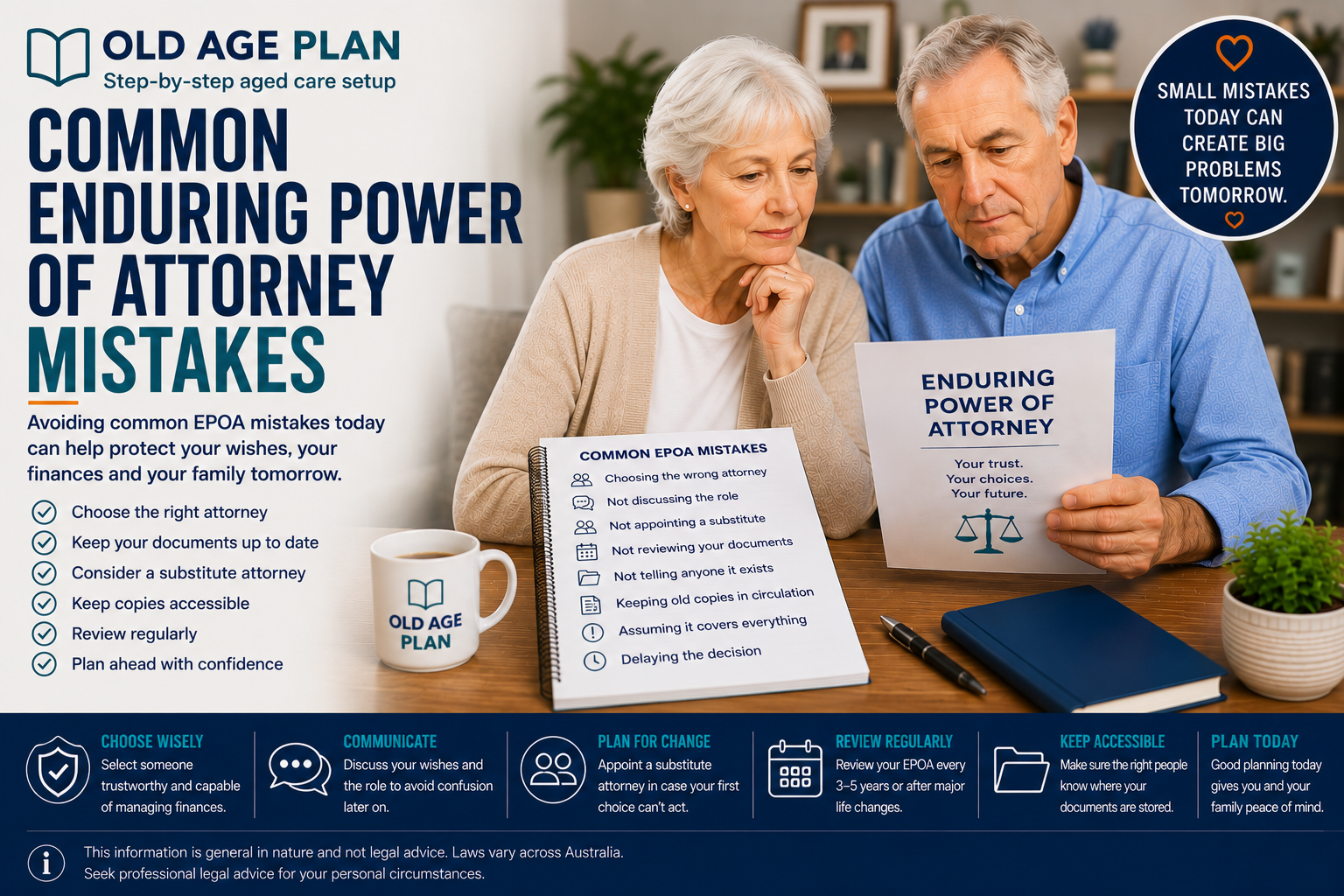

Common Enduring Power Of Attorney Mistakes
An Enduring Power of Attorney (EPOA) can be one of the most important legal documents a person creates.
It allows someone you trust to manage certain financial and legal matters on your behalf if you lose the ability to make those decisions yourself.
However, simply creating an EPOA does not automatically mean your future planning is complete.
Many Australians make avoidable mistakes that can create confusion, family disagreements or practical difficulties later.
Understanding these common mistakes may help you make more informed decisions when creating and reviewing your arrangements.
In this guide, we explore some of the most common Enduring Power of Attorney mistakes and why regular reviews can be important.
Choosing The Wrong Attorney
One of the most common mistakes is choosing someone simply because they are a family member rather than because they are the right person for the role.
An attorney may one day be responsible for important financial and legal decisions.
Many people choose someone who:
- Is trustworthy.
- Can manage money responsibly.
- Communicates clearly.
- Understands their responsibilities.
- Will act in the person’s best interests.
The role should not be treated as an automatic family appointment.
Not Discussing The Role
Some people appoint an attorney without having a conversation about the responsibilities involved.
This can create confusion later if the person is unaware they have been appointed or does not fully understand the role.
Clear communication can help ensure everyone understands expectations from the beginning.
Not Appointing A Substitute Attorney
Life circumstances can change unexpectedly.
An attorney may become unwell, move away, lose capacity or become unable to act for other reasons.
Failing to consider a backup arrangement may create difficulties if the original attorney is unavailable when needed.
Failing To Review The Document
An EPOA should not simply be signed and forgotten.
Relationships, finances, health circumstances and family situations can change over time.
Many Australians review important planning documents every three to five years or after major life events.
Regular reviews help ensure arrangements remain appropriate.
Not Telling Anyone The Document Exists
Even the best planning document may be difficult to use if nobody knows where it is stored.
Many people choose to tell their attorney where the document is located and ensure trusted people know how to access it if needed.
Accessibility can be just as important as the document itself.
Keeping Outdated Copies In Circulation
If changes are made to an EPOA, old copies can sometimes create confusion.
It is generally important to ensure relevant people know which version is current and whether previous arrangements have been replaced.
Assuming An EPOA Covers Every Decision
Many people mistakenly believe an Enduring Power of Attorney gives someone authority over every aspect of their life.
In reality, different planning documents often cover different areas.
For example:
- An EPOA generally deals with financial and legal matters.
- An Enduring Guardian generally deals with personal and lifestyle decisions.
- An Advance Care Directive may record health and treatment preferences.
Understanding the differences can help create a more complete future planning strategy.
Not Reviewing Other Planning Documents At The Same Time
An EPOA works best when considered alongside other planning documents.
Many people review:
- Their will.
- Their Enduring Guardianship documents.
- Their Advance Care Directive.
- Superannuation beneficiary nominations.
- Other estate planning arrangements.
Reviewing documents together can help ensure they continue to work effectively.
Delaying The Decision For Too Long
Some people assume they can organise an EPOA later.
Unfortunately, illness, injury or loss of capacity can occur unexpectedly.
Planning before a crisis occurs often provides more options and greater certainty.
Real-Life Example
David created an Enduring Power of Attorney many years ago and appointed a trusted family member as his attorney.
Over time, circumstances changed and that family member moved interstate.
David never reviewed the document and had not appointed a substitute attorney.
When his health situation changed, his family discovered the arrangements no longer reflected his current circumstances.
A simple review several years earlier could have identified the issue and provided an opportunity to update the document.
How To Avoid Common EPOA Mistakes
Good future planning does not require complicated systems.
Many problems can be reduced by:
- Choosing the right attorney.
- Communicating clearly.
- Reviewing documents regularly.
- Considering backup arrangements.
- Keeping documents accessible.
- Reviewing planning documents together.
A planning workbook or structured resource may help organise this information, but the key goal is ensuring your arrangements continue to reflect your wishes.
Frequently Asked Questions
What is the biggest EPOA mistake?
Many people would consider choosing the wrong attorney or failing to review the document regularly among the most common mistakes.
Should I appoint a substitute attorney?
Many Australians choose to appoint a substitute attorney in case their primary attorney becomes unable to act.
How often should I review my EPOA?
Many people review important planning documents every three to five years or after major life changes.
Should my attorney have a copy of the document?
Many people choose to provide a copy or explain where the document is stored.
Does an EPOA replace an Enduring Guardian?
No. These documents generally deal with different types of decisions.
Sources
- Moneysmart – Australian Securities and Investments Commission (ASIC)
- Office of the Public Advocate Victoria
- Office of the Public Advocate South Australia
- Legal Aid NSW
- Queensland Government – Power of Attorney Information
Related Resources
- What Is An Enduring Power Of Attorney?
- Who Should You Appoint As Your Attorney?
- What Decisions Can An Enduring Power Of Attorney Make?
- Can Family Override An Attorney?
- Who Should Receive A Copy Of Your EPOA?
- What Happens If Your Attorney Cannot Act?
- What Is Estate Planning?
- Free Aged Care Tools
Disclaimer
This article provides general information only and is not legal advice. Enduring Power of Attorney laws vary between Australian states and territories. Professional legal advice should be obtained before creating, changing or relying on legal documents.