
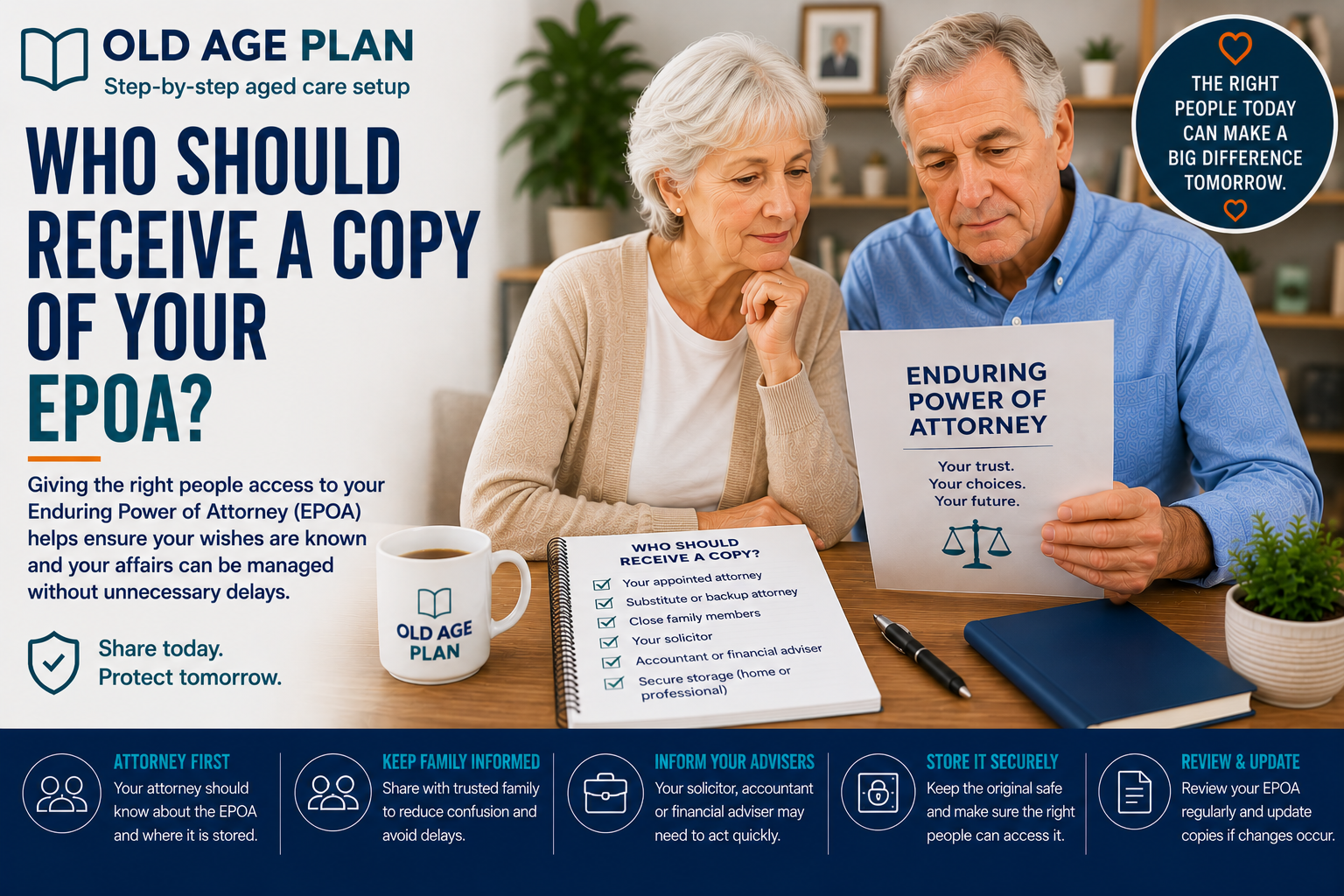

Who Should Receive A Copy Of Your EPOA?
Creating an Enduring Power of Attorney (EPOA) is an important step in future planning.
However, simply signing the document is not always enough.
If the right people do not know the document exists or cannot access it when needed, delays and confusion may occur during already stressful situations.
This leads many Australians to ask:
Who should receive a copy of your Enduring Power of Attorney?
While every situation is different, sharing your EPOA with the right people can help ensure your wishes are understood and important financial matters can be managed if required.
In this guide, we explain who may benefit from having a copy of your EPOA and why document accessibility can be an important part of future planning.
Why Sharing Your EPOA Matters
An Enduring Power of Attorney is designed to allow someone you trust to manage certain financial and legal matters on your behalf.
If the document cannot be located when it is needed, your chosen attorney may experience delays trying to assist with important responsibilities.
Sharing copies with appropriate people can help ensure your arrangements are easier to access if circumstances change.
Your Appointed Attorney
Your attorney is usually one of the most important people who should know about the document.
Many people choose to provide their attorney with a copy of the EPOA or ensure they know where the original is stored.
This can help them understand:
- That they have been appointed.
- What responsibilities they may have.
- Where the document is located.
- Who they may need to communicate with if the document is ever required.
It can also provide an opportunity to discuss expectations before the role is ever needed.
Your Substitute Or Backup Attorney
If you have appointed a substitute or backup attorney, it may also be useful for them to have access to the document.
Life circumstances can change and a backup attorney may need to step into the role in the future.
Keeping them informed can help reduce confusion if that situation arises.
Close Family Members
Some people choose to share copies with close family members or at least tell them where the document is stored.
This can help:
- Reduce misunderstandings.
- Avoid unnecessary delays.
- Improve family awareness of your wishes.
- Reduce confusion during difficult times.
Every family situation is different, so the approach that works best for one family may not be suitable for another.
Your Solicitor
Many Australians choose to store important planning documents with their solicitor.
If a solicitor assisted with preparing the document, they may also retain a copy according to their own record-keeping practices.
Knowing where your solicitor stores documents can make them easier to locate later.
Your Accountant Or Financial Adviser
Depending on your circumstances, certain professional advisers may benefit from knowing that an EPOA exists.
This can be particularly relevant if they are involved in long-term financial planning or managing complex financial affairs.
Not everyone chooses to share copies, but making trusted advisers aware of the document may sometimes be helpful.
Where Should The Original Be Stored?
The original document should generally be stored somewhere secure but accessible.
The exact location will vary between households, but important considerations include:
- Protection from damage.
- Protection from loss.
- Accessibility when needed.
- Ensuring trusted people know where it is located.
A secure document storage system can help reduce future stress.
Should You Keep Digital Copies?
Many people choose to keep digital copies of important planning documents.
Digital storage may provide an additional backup if physical copies become difficult to access.
However, digital records should still be stored securely and shared carefully.
What Happens If Nobody Can Find The Document?
If an EPOA cannot be located when it is needed, delays may occur while people attempt to determine whether a valid document exists and where it may be stored.
This can create additional stress for family members and those trying to assist.
Making sure the right people know where your documents are kept can help avoid these situations.
Real-Life Example
Helen created an Enduring Power of Attorney several years before developing significant health issues.
She provided a copy to her appointed attorney, informed her daughter where the original was stored and ensured her solicitor also had a copy.
When her circumstances changed, her family already knew where the documents were located.
This helped avoid unnecessary delays and provided greater confidence that her arrangements could be followed.
Frequently Asked Questions
Should my attorney have a copy of my EPOA?
Many people choose to provide a copy to their attorney or ensure they know where the original document is stored.
Should family members receive a copy?
Some people choose to share copies with close family members, while others simply explain where the document is located.
Can I keep my EPOA at home?
Many people store important planning documents at home, provided they are kept securely and trusted people know where they can be found.
Should I keep a digital copy?
Many Australians choose to keep digital copies as an additional backup, provided they are stored securely.
What if I change my EPOA later?
If changes are made, it is important to ensure outdated copies are not accidentally relied upon in the future.
Sources
- Moneysmart – Australian Securities and Investments Commission (ASIC)
- Office of the Public Advocate Victoria
- Office of the Public Advocate South Australia
- Legal Aid NSW
- Queensland Government – Power of Attorney Information
Related Resources
- What Is An Enduring Power Of Attorney?
- Who Should You Appoint As Your Attorney?
- Can Family Override An Attorney?
- Can You Change An Enduring Power Of Attorney?
- How Often Should You Review Your EPOA?
- What Decisions Can An Enduring Power Of Attorney Make?
- What Is Estate Planning?
- Free Aged Care Tools
Disclaimer
This article provides general information only and is not legal advice. Enduring Power of Attorney laws vary between Australian states and territories. Professional legal advice should be obtained before creating, changing or relying on legal documents.