
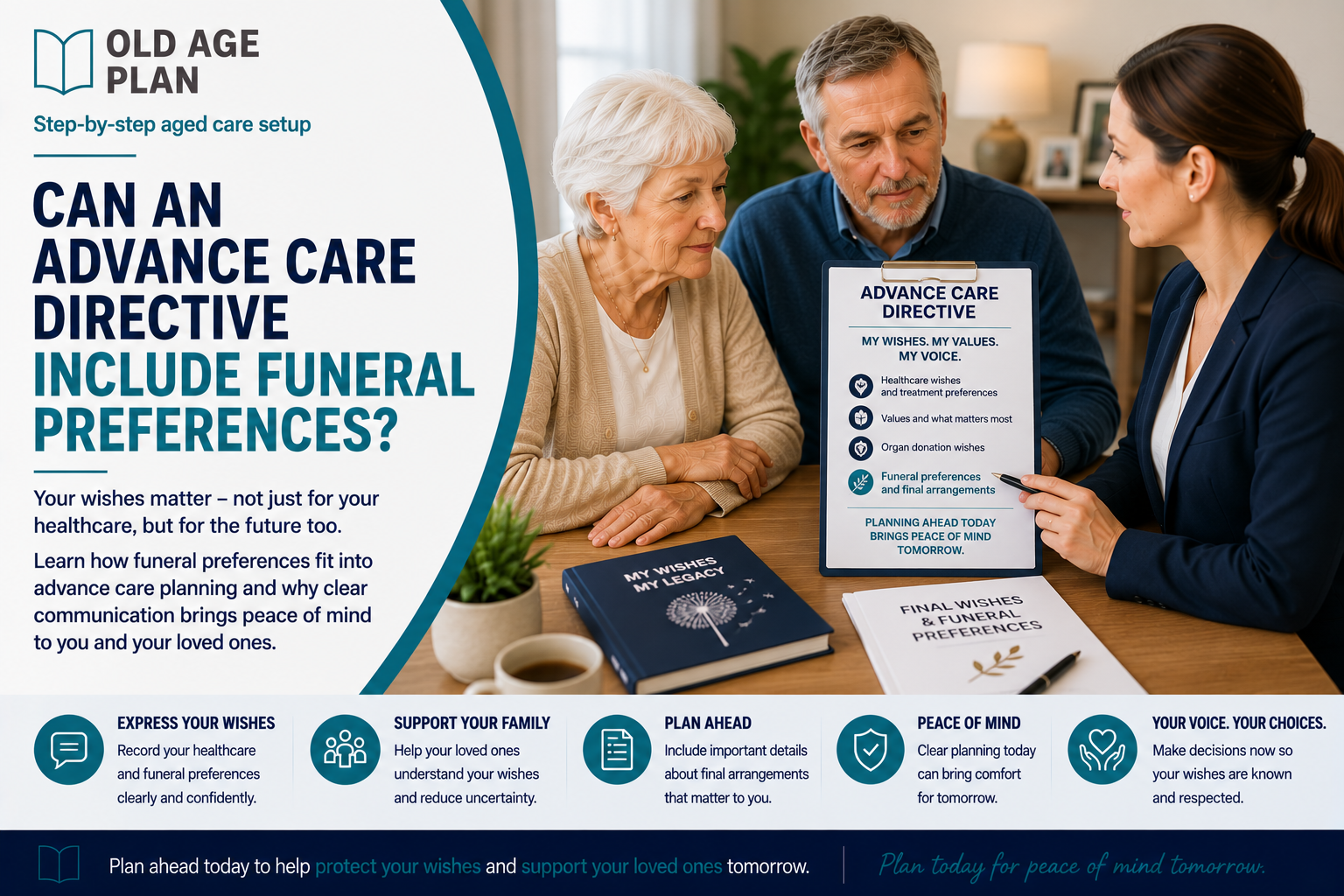

Can An Advance Care Directive Include Funeral Preferences?
An Advance Care Directive is designed to communicate your wishes about future healthcare and medical treatment.
Many people use it to record personal values, treatment preferences and important decisions about future care.
During the planning process, another question often arises.
Can an Advance Care Directive include funeral preferences?
Many people want their loved ones to understand not only their healthcare wishes but also their preferences for what happens after death.
However, Advance Care Directives and funeral planning generally serve different purposes.
Understanding the difference can help families create a more complete future planning strategy.
Short Answer
Some people choose to record funeral preferences alongside other future planning documents.
However, Advance Care Directives are generally focused on healthcare decisions made while a person is still alive.
Funeral wishes are often recorded separately to help family members understand personal preferences after death.
What Is The Purpose Of An Advance Care Directive?
An Advance Care Directive is primarily intended to communicate healthcare wishes.
It may include:
- Treatment preferences
- Healthcare values
- Quality of life considerations
- Religious or cultural wishes related to healthcare
- Guidance for future medical decisions
The document is generally designed to assist when a person is unable to make or communicate healthcare decisions themselves.
What Are Funeral Preferences?
Funeral preferences relate to arrangements made after death.
Examples may include:
- Burial or cremation preferences
- Religious or cultural ceremonies
- Funeral service requests
- Location preferences
- Personal messages or instructions
- Music or memorial preferences
These decisions are usually separate from healthcare planning.
Why Do People Confuse The Two?
Both topics involve future planning.
Both encourage conversations with family.
Both help communicate personal wishes.
Because they are often discussed together, people sometimes assume they belong in the same document.
In reality, they generally address different stages of planning.
Can Funeral Wishes Still Be Recorded?
Absolutely.
Many people choose to record funeral preferences in separate documents or personal planning records.
The important goal is ensuring family members understand your wishes.
Clear communication can reduce stress and uncertainty during a difficult time.
Should You Tell Your Family?
Yes.
Even if funeral wishes are recorded in writing, conversations remain important.
Family members are often responsible for making arrangements.
If they already understand your preferences, decisions may be easier.
What About A Will?
Some people record funeral wishes alongside estate planning documents.
However, practical challenges can arise because a Will may not be located or reviewed until after funeral arrangements have already begun.
This is one reason many people communicate their wishes directly to family members while they are still alive.
Can Funeral Preferences Be Part Of A Broader Future Planning Folder?
Many people create a collection of important planning documents.
This may include:
- Advance Care Directives
- Enduring Guardianship documents
- Powers of Attorney
- Wills
- Funeral preferences
- Important personal information
Keeping these documents organised can help family members when important decisions need to be made.
Why Communication Matters
The best document in the world may not help if nobody knows it exists.
Future planning works best when documents are supported by conversations.
Discussing healthcare wishes and funeral preferences openly can help reduce uncertainty for loved ones.
Common Mistakes To Avoid
Assuming Family Knows Your Wishes
Important conversations should happen clearly and directly.
Keeping Funeral Preferences Hidden
Documents are only useful if people know where to find them.
Confusing Healthcare Planning With Funeral Planning
The two areas often serve different purposes.
Never Reviewing Your Plans
Your preferences may change over time.
Relying On Verbal Conversations Alone
Written records may help reduce misunderstandings.
Real-Life Example
Margaret completed an Advance Care Directive to record her healthcare wishes.
During the same planning process, she also documented her funeral preferences in a separate personal planning file.
She discussed both topics with her children and explained where the documents were stored.
Years later, her family felt more confident making decisions because they understood her wishes in advance.
Frequently Asked Questions
Can an Advance Care Directive include funeral preferences?
Advance Care Directives generally focus on healthcare decisions, while funeral preferences are often recorded separately.
Should funeral wishes be written down?
Many people find it helpful to record funeral preferences and discuss them with family.
Can funeral preferences be included with estate planning documents?
Some people choose to keep funeral wishes alongside other planning documents.
Should family members know my funeral preferences?
Yes. Open conversations can help reduce uncertainty later.
Can I change my funeral wishes?
Many people review and update personal planning documents over time.
Why is communication important?
Clear communication helps ensure loved ones understand your wishes when decisions need to be made.
Sources
- Advance Care Planning Australia
- Healthdirect Australia
- My Aged Care
- Services Australia
- NSW Trustee & Guardian
- Office of the Public Advocate Victoria
Related Resources
- What Is An Advance Care Directive?
- What Is A Will?
- What Is Estate Planning?
- Can An Advance Care Directive Include Organ Donation Wishes?
- Who Should Receive A Copy Of Your Advance Care Directive?
- Where Should You Store An Advance Care Directive?
- What Is Enduring Guardianship?
- Free Aged Care Tools
Disclaimer
This article provides general information only. It is not legal, medical or financial advice. Funeral planning, estate planning and Advance Care Directive requirements vary depending on individual circumstances. Always seek professional advice relevant to your situation.