
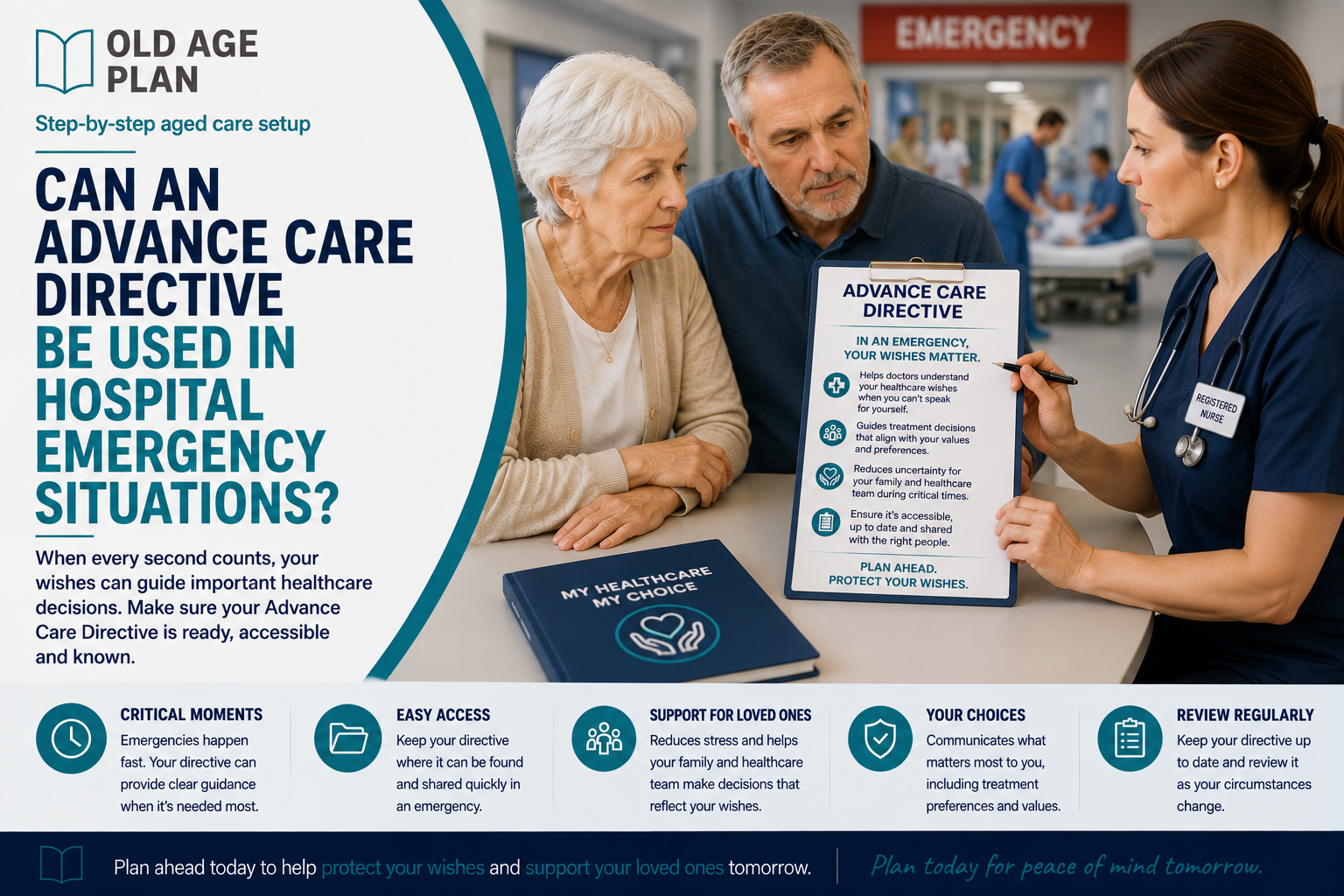

Can An Advance Care Directive Be Used In Hospital Emergency Situations?
Medical emergencies often happen unexpectedly.
Families may suddenly find themselves making important healthcare decisions during stressful and emotional circumstances.
This is one reason many Australians complete an Advance Care Directive.
It leads to an important question.
Can an Advance Care Directive be used in hospital emergency situations?
In many situations, yes.
An Advance Care Directive may help healthcare providers understand a person’s wishes if they are unable to communicate for themselves.
However, how the document is used depends on the circumstances involved and the laws that apply in the relevant state or territory.
Short Answer
An Advance Care Directive may be an important source of information during a hospital emergency.
If the document is available and relevant to the situation, it may help guide healthcare discussions and future treatment decisions.
The exact legal effect depends on the circumstances and applicable laws.
Why Emergencies Create Challenges
Medical emergencies often require decisions to be made quickly.
Healthcare providers may need to assess the person’s condition, available treatment options and immediate healthcare needs.
If the person cannot communicate, understanding their wishes becomes especially important.
This is where advance care planning may help.
What Information Can An Advance Care Directive Provide?
An Advance Care Directive may include information about:
- Healthcare wishes
- Treatment preferences
- Personal values
- Quality of life priorities
- Religious or cultural considerations
- Substitute decision-makers
This information may assist healthcare teams during difficult situations.
Does The Hospital Need To Have A Copy?
For a document to be useful, healthcare providers generally need to know it exists and be able to access it.
If the directive cannot be found during an emergency, healthcare providers may have limited information about the person’s wishes.
This is why storage and accessibility are important parts of advance care planning.
What If You Arrive By Ambulance?
Medical emergencies do not always begin in a hospital.
Some people are transported to hospital by ambulance before family members arrive.
If an Advance Care Directive exists, it may be helpful if family members, substitute decision-makers or healthcare providers know where it is stored.
The sooner healthcare providers become aware that the document exists, the easier it may be to access relevant information during treatment discussions.
Who Might Provide The Document?
Depending on the situation, a copy may be provided by:
- Family members
- A substitute decision-maker
- A GP
- An aged care provider
- My Health Record, where applicable
Knowing where the document is stored can save valuable time.
Can Family Members Help During An Emergency?
Families are often an important source of information.
They may help healthcare providers understand the person’s wishes, values and preferences.
If an Advance Care Directive exists, family members may also help locate the document quickly.
Can A Substitute Decision-Maker Be Contacted?
If a substitute decision-maker has been appointed, healthcare providers may seek to involve them when appropriate.
They may be able to explain the person’s wishes, values and previously expressed healthcare preferences.
This can be particularly helpful when urgent decisions are required and the person cannot communicate for themselves.
What If The Directive Is Unclear?
Sometimes questions arise about how a document applies to a particular situation.
Healthcare providers may need additional information from family members, substitute decision-makers or other healthcare professionals.
This is one reason why clear wording and regular reviews are important.
Can An Emergency Happen Before The Directive Is Found?
Yes.
Emergencies can develop rapidly.
If healthcare providers are unaware that a directive exists, they may need to make decisions based on the information available at the time.
This highlights the importance of ensuring the right people know where the document is kept.
Why Communication Matters
An Advance Care Directive works best when it forms part of a broader conversation.
Family members, decision-makers and healthcare providers should understand your wishes before a crisis occurs.
Good communication may reduce uncertainty during emergencies.
Should You Review Your Directive Regularly?
Many people review advance care planning documents after significant life or health changes.
Regular reviews can help ensure the document continues to reflect current wishes and priorities.
Updated documents may also be easier for healthcare providers to interpret.
Common Mistakes To Avoid
Keeping The Document Hidden
A document cannot help if nobody knows where it is.
Never Telling Family Members
Important people should know the document exists.
Failing To Update The Directive
Your wishes may change over time.
Assuming Hospitals Already Have A Copy
Always confirm how healthcare documents are recorded.
Using Unclear Language
Clear wording may reduce future uncertainty.
Real-Life Example
John suffered a serious medical emergency and was admitted to hospital unable to communicate.
His daughter informed hospital staff that he had completed an Advance Care Directive several years earlier.
Because the family knew where the document was stored, a copy was quickly provided to the healthcare team.
The directive helped inform discussions about John’s healthcare wishes and provided valuable guidance during a difficult period.
Frequently Asked Questions
Can an Advance Care Directive be used during a hospital emergency?
In many situations, yes. It may help healthcare providers understand your wishes if you cannot communicate them yourself.
What happens if nobody knows I have an Advance Care Directive?
If healthcare providers are unaware that a directive exists, they may need to make decisions using the information available at the time. This is why accessibility and communication are important.
Does the hospital need a copy?
The document is generally most useful when healthcare providers can access it.
Should family members know where it is stored?
Yes. Family members may help locate the document quickly during an emergency.
Can My Health Record help?
Some advance care planning documents may be uploaded to My Health Record where applicable.
What if the directive is unclear?
Additional discussions may be needed to understand how the document applies to the situation.
Should I review my directive regularly?
Many people review planning documents after significant health or life changes.
Sources
- Advance Care Planning Australia
- Healthdirect Australia – Advance Care Planning And Directive
- My Aged Care
- Australian Digital Health Agency
- ELDAC – End Of Life Directions For Aged Care
- Australian Government Department Of Health
Related Resources
- Hospital And Advance Care Directives
- Where Should You Store An Advance Care Directive?
- Who Should Receive A Copy Of Your Advance Care Directive?
- Can An Advance Care Directive Be Used In A Residential Aged Care Home?
- Can Doctors Ignore An Advance Care Directive?
- Who Makes Medical Decisions If Your Advance Care Directive Is Unclear?
- What Is An Advance Care Directive?
- Free Aged Care Tools
Disclaimer
This article provides general information only. It is not legal, medical or financial advice. Advance Care Directive laws, hospital procedures and healthcare decision-making requirements vary across Australian states and territories. Always seek professional advice relevant to your circumstances.