
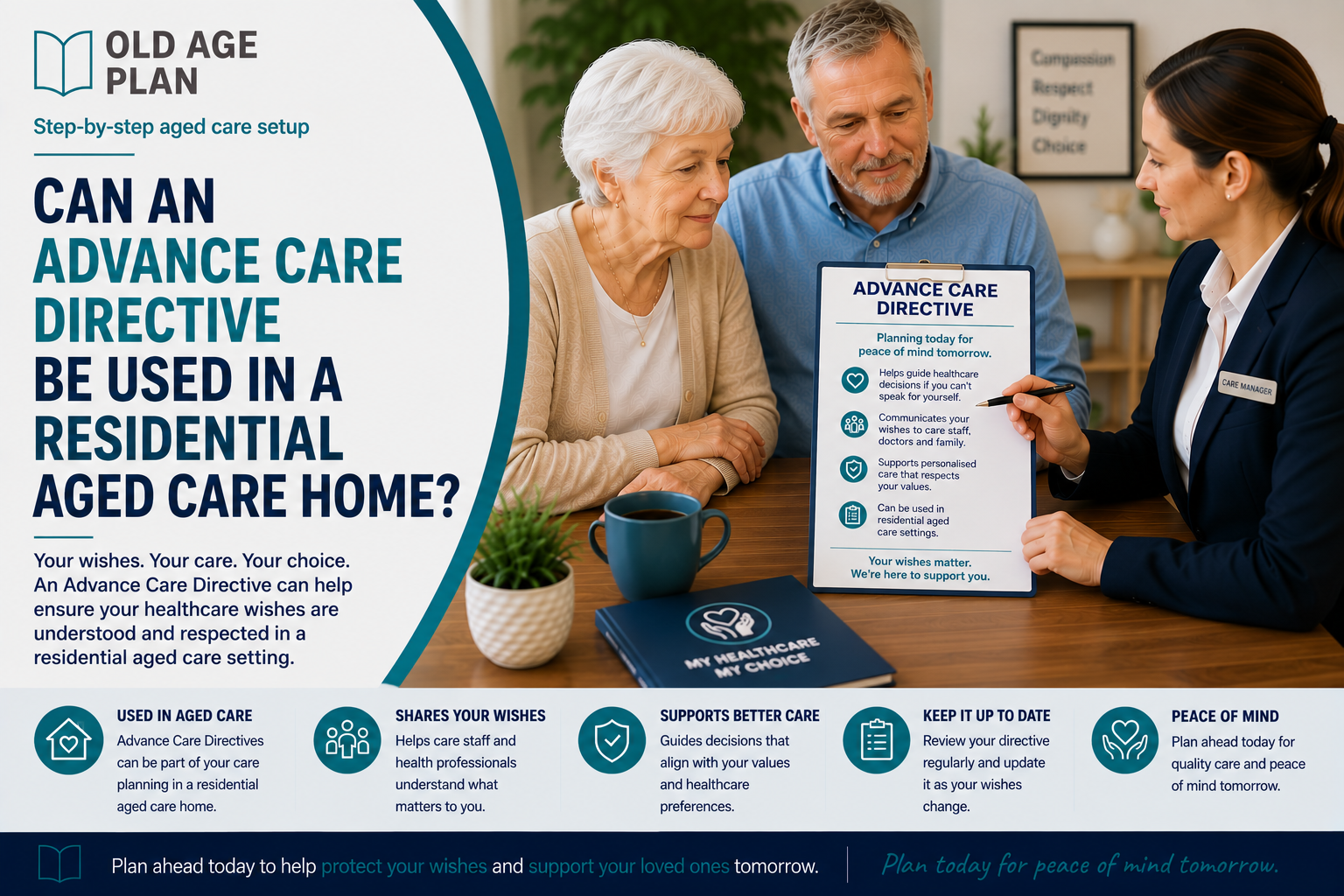

Can An Advance Care Directive Be Used In A Residential Aged Care Home?
Moving into residential aged care is a major life transition.
It often involves new healthcare providers, new support teams and new discussions about future care.
Because of this, many families ask:
Can an Advance Care Directive be used in a residential aged care home?
In many situations, yes.
An Advance Care Directive may help aged care providers understand a resident’s healthcare wishes, values and preferences if the resident becomes unable to make or communicate decisions themselves.
However, the exact role of the document depends on the circumstances involved and the laws that apply in the relevant state or territory.
Short Answer
In many cases, an Advance Care Directive can be an important part of care planning within a residential aged care home.
It may help staff, healthcare providers and family members understand the resident’s wishes about future healthcare and treatment decisions.
Requirements vary across Australia.
Why Advance Care Planning Matters In Aged Care
Many people enter residential aged care later in life when health needs may become more complex.
Future healthcare decisions can arise unexpectedly.
Advance care planning provides an opportunity to communicate wishes before those situations occur.
This can help reduce uncertainty for families and care providers.
What Information Might An Advance Care Directive Provide?
Depending on the document and the person’s wishes, an Advance Care Directive may include:
- Healthcare preferences
- Treatment wishes
- Quality of life priorities
- Personal values
- Religious or cultural considerations
- Information about decision-makers
This information may assist future care discussions.
Should The Aged Care Home Receive A Copy?
Many families choose to provide a copy to the residential aged care home.
This may help ensure staff know the document exists and understand where it is stored.
It may also make the document easier to access if healthcare decisions need to be made.
You should ask the provider about their procedures for recording advance care planning documents.
When Should You Provide The Directive To The Aged Care Home?
Many families provide Advance Care Directives during the admission process.
However, the document can also be provided later if it was not available when the resident first entered care.
Providing important planning documents early may help ensure they are properly recorded and accessible if needed.
Does The Aged Care Home Make Medical Decisions?
Residential aged care homes provide care and support services.
Healthcare decisions may also involve doctors, healthcare professionals, substitute decision-makers and family members.
An Advance Care Directive may help guide those discussions when required.
Can The Directive Help During A Medical Emergency?
Potentially yes.
If a resident becomes seriously unwell and cannot communicate their wishes, an Advance Care Directive may help provide guidance about what matters most to them.
Having the document available can be important.
This is one reason why storage and accessibility matter.
Can The Directive Be Shared With Hospitals?
Residential aged care residents may occasionally require hospital treatment.
If an Advance Care Directive exists, healthcare providers may wish to know that the document is available.
Families should consider whether copies are also held by healthcare professionals who may become involved in future care.
What If The Resident Develops Dementia?
Many people complete Advance Care Directives before significant cognitive decline occurs.
If dementia later affects decision-making capacity, the document may help communicate wishes that were recorded earlier.
This can provide valuable guidance for family members and healthcare providers.
Can Families Still Be Involved?
Yes.
Families often play an important role in supporting residents and communicating with healthcare providers.
However, clear advance care planning can help ensure discussions remain focused on the wishes of the resident.
Should The Directive Be Reviewed After Moving Into Care?
Many people choose to review important planning documents after major life changes.
Moving into residential aged care may be one of those events.
A review can help ensure the document still reflects current wishes and circumstances.
What If The Home Has Its Own Forms?
Some aged care providers may use their own advance care planning forms or care planning processes.
This does not necessarily replace existing legal documents.
It may simply be part of the provider’s internal care planning procedures.
If questions arise, ask the provider how your existing documents will be recorded and used.
Common Mistakes To Avoid
Not Providing A Copy To The Facility
The document is more useful if staff know it exists.
Assuming The Facility Already Has It
Always confirm how documents are stored and recorded.
Never Reviewing The Directive
Major life changes often justify a review.
Keeping Multiple Versions
Outdated copies can create confusion.
Not Discussing Wishes With Family
Conversations remain important even when documents exist.
Real-Life Example
Margaret moved into a residential aged care home after her support needs increased.
During admission, her daughter provided a copy of Margaret’s Advance Care Directive to the facility.
The aged care home recorded the document and discussed it as part of care planning.
Several years later, when significant healthcare decisions arose, staff and healthcare providers were aware that the document existed and knew how to access it.
This helped support discussions about Margaret’s wishes and future care.
Frequently Asked Questions
What happens if the aged care home does not have a copy?
If the document is unavailable, staff and healthcare providers may need to rely on other available information when discussing future care decisions.
Can an Advance Care Directive be used in a residential aged care home?
In many situations, yes. It may help guide future healthcare discussions and decisions.
Should the aged care home have a copy?
Many families choose to provide a copy so staff know the document exists and can access it if needed.
Can the document help if dementia develops?
Yes. It may provide guidance about wishes recorded before decision-making capacity changed.
Should I review my directive after moving into care?
Many people choose to review planning documents after major life changes.
Can family members still be involved?
Yes. Families often remain an important part of future care discussions.
Do aged care homes have their own forms?
Some providers use their own planning documents and procedures alongside existing legal documents.
Sources
- My Aged Care
- Advance Care Planning Australia
- ELDAC – End Of Life Directions For Aged Care
- Healthdirect Australia – Advance Care Planning And Directive
- Australian Government Department Of Health
- Dementia Australia
Related Resources
- What Is An Advance Care Directive?
- Can An Advance Care Directive Cover Dementia Care Preferences?
- Can An Advance Care Directive Be Updated After A Dementia Diagnosis?
- Where Should You Store An Advance Care Directive?
- Who Should Receive A Copy Of Your Advance Care Directive?
- Hospital And Advance Care Directives
- Estate Planning Pillar
- Free Aged Care Tools
Disclaimer
This article provides general information only. It is not legal, medical or financial advice. Advance Care Directive laws, aged care requirements and healthcare decision-making rules vary across Australian states and territories. Always seek professional advice relevant to your circumstances.