
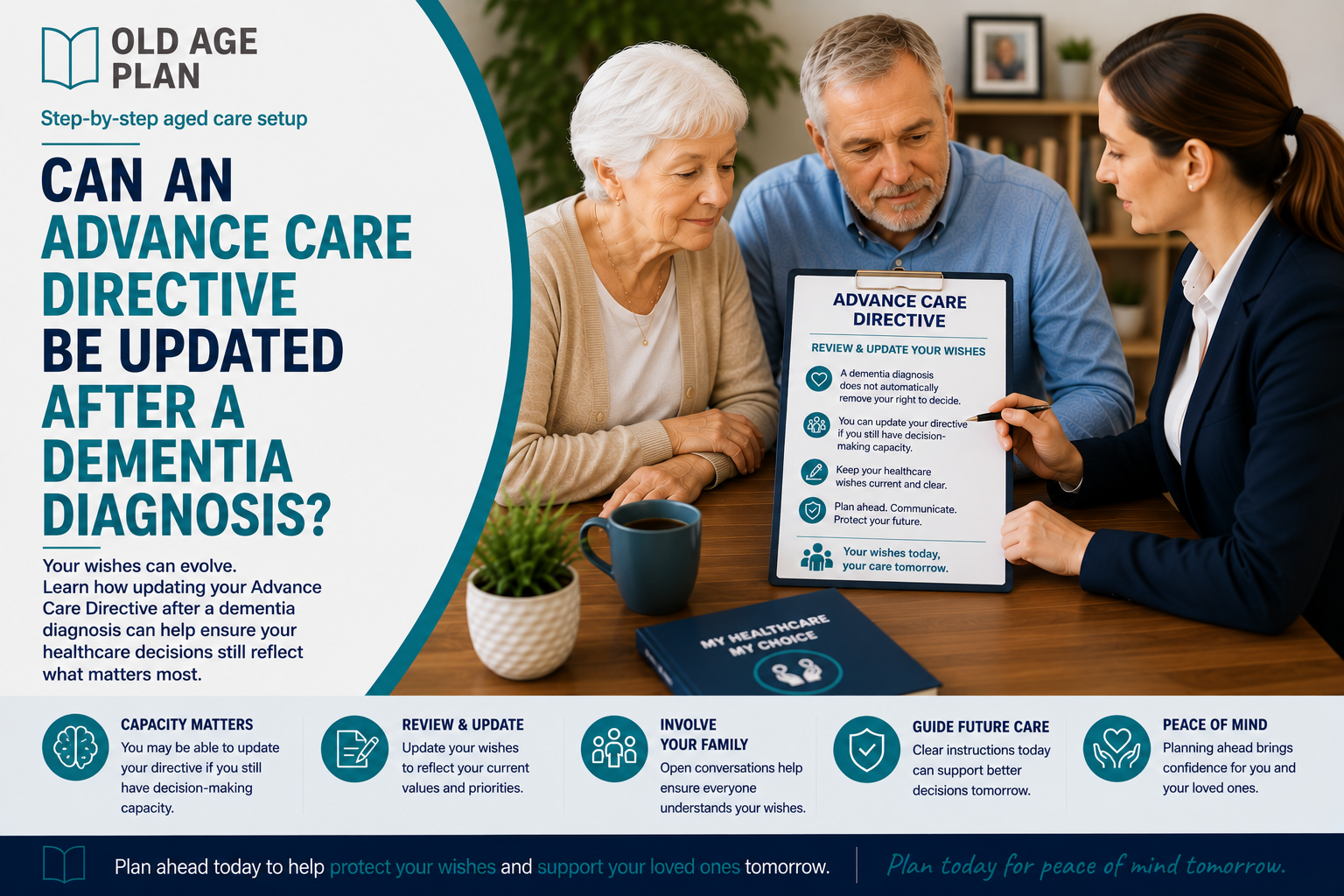

Can An Advance Care Directive Be Updated After A Dementia Diagnosis?
A dementia diagnosis often leads people and families to think more carefully about future planning.
Many people want to ensure their healthcare wishes are documented while they are still able to make their own decisions.
This raises an important question.
Can an Advance Care Directive be updated after a dementia diagnosis?
In many situations, the answer may be yes.
A diagnosis of dementia does not automatically mean a person loses the ability to make decisions.
However, the ability to update important documents depends on whether the person still has the required decision-making capacity.
Short Answer
In many cases, an Advance Care Directive may be updated after a dementia diagnosis if the person still has the decision-making capacity required by law.
Dementia affects people differently and capacity can vary depending on the individual and the stage of the condition.
The rules differ across Australian states and territories.
Does A Dementia Diagnosis Automatically Remove Capacity?
No.
A dementia diagnosis does not automatically mean a person loses the ability to make decisions.
Many people continue making their own financial, legal and healthcare decisions for months or even years after diagnosis.
The important question is not whether dementia exists.
The important question is whether the person has the capacity to understand the decision being made at the time.
How Is Decision-Making Capacity Assessed?
Capacity is not determined simply by age or diagnosis.
Healthcare professionals generally assess whether a person can understand relevant information, consider the consequences of a decision and communicate their choice.
A person may have capacity to make some decisions but not others.
This is one reason professional assessment may be important if questions arise.
Why Capacity Matters
Capacity is a key part of creating, changing or revoking many planning documents.
Generally speaking, a person should understand:
- The nature of the document
- The decisions being recorded
- The consequences of those decisions
- The effect of changing the document
The exact legal requirements vary across Australia.
Why People Update Their Directive After Diagnosis
A dementia diagnosis often encourages people to think more carefully about future healthcare wishes.
Some people decide to update an existing directive because they want to:
- Clarify healthcare preferences
- Add dementia care preferences
- Update treatment wishes
- Review decision-makers
- Record personal values
- Discuss quality of life priorities
Many families find these conversations valuable.
What If The Existing Directive Is Several Years Old?
Older documents may still be useful.
However, many people choose to review their Advance Care Directive after a significant health event.
A dementia diagnosis is often one of those events.
Reviewing the document can help ensure it still reflects current wishes.
Can A New Directive Replace An Old One?
In many situations, yes.
If a person has the required capacity, they may be able to create a new document that reflects their current wishes.
Requirements vary depending on the laws that apply.
Keeping records organised and updating copies can help reduce confusion.
What If Capacity Is Unclear?
Sometimes questions arise about whether a person still has the ability to make certain decisions.
In these situations, professional advice may be helpful.
Healthcare professionals and legal advisers may be able to provide guidance about the requirements that apply.
Addressing these issues early often provides more options.
Why Early Planning Helps
Many experts encourage future planning soon after a diagnosis.
This does not mean decisions need to be rushed.
However, planning while capacity is clear can provide greater certainty.
It also allows more time for discussions with family and healthcare providers.
What If Dementia Progresses Before Changes Are Made?
If a person’s decision-making capacity declines before changes can be completed, updating an Advance Care Directive may become more difficult.
The options available will depend on the person’s circumstances and the laws that apply.
This is one reason many experts encourage reviewing planning documents as soon as possible after a significant diagnosis.
Should Family Members Be Involved?
Many people choose to involve trusted family members in planning discussions.
This can help ensure the people most likely to be involved in future decisions understand the person’s wishes.
Open conversations may also reduce future disagreements.
What About Dementia Care Preferences?
Many people use Advance Care Directives to record what matters most to them if dementia progresses.
This may include:
- Healthcare priorities
- Quality of life considerations
- Personal values
- Cultural preferences
- Religious beliefs
- Future care wishes
These preferences can help guide future decision-making.
Common Mistakes To Avoid
Assuming A Diagnosis Means Capacity Is Lost
Capacity should be assessed based on the person’s ability to make decisions.
Waiting Too Long To Review Documents
Earlier planning often provides more options.
Never Discussing Future Wishes
Conversations can be just as important as the documents themselves.
Keeping Old Versions
Outdated copies can create confusion.
Ignoring Major Health Changes
Significant health events are often a good reason to review planning documents.
Real-Life Example
Margaret was diagnosed with early-stage dementia at age 74.
Although the diagnosis was confronting, she remained capable of making her own decisions.
After discussing the situation with her GP and family, she reviewed her Advance Care Directive.
She updated several sections to better reflect her wishes about future care and quality of life.
Those conversations later helped her family feel more confident when healthcare decisions became necessary.
Frequently Asked Questions
Can an Advance Care Directive be updated after a dementia diagnosis?
In many situations, yes, provided the person still has the required decision-making capacity.
Does dementia automatically remove decision-making capacity?
No. Many people continue making their own decisions after diagnosis.
Should I review my directive after diagnosis?
Many people choose to review planning documents after significant health changes.
Can I create a new directive?
Potentially yes, if the required legal and capacity requirements are met.
Should family members be involved?
Many people find family discussions helpful when planning for the future.
Why is early planning important?
Planning early may provide greater certainty and more opportunities to record your wishes clearly.
Sources
- Advance Care Planning Australia
- Dementia Australia
- Healthdirect Australia – Advance Care Planning And Directive
- My Aged Care
- ELDAC – End Of Life Directions For Aged Care
- Australian Government Department Of Health
Related Resources
- Can An Advance Care Directive Cover Dementia Care Preferences?
- Do Advance Care Directives Cover Mental Health Decisions?
- Can You Change An Advance Care Directive?
- Can An Advance Care Directive Be Revoked?
- How Often Should You Review An Advance Care Directive?
- What Is An Advance Care Directive?
- What Is Enduring Guardianship?
- Estate Planning Pillar
- Free Aged Care Tools
Disclaimer
This article provides general information only. It is not legal, medical or financial advice. Capacity requirements and Advance Care Directive laws vary across Australian states and territories. Always seek professional advice relevant to your circumstances.