
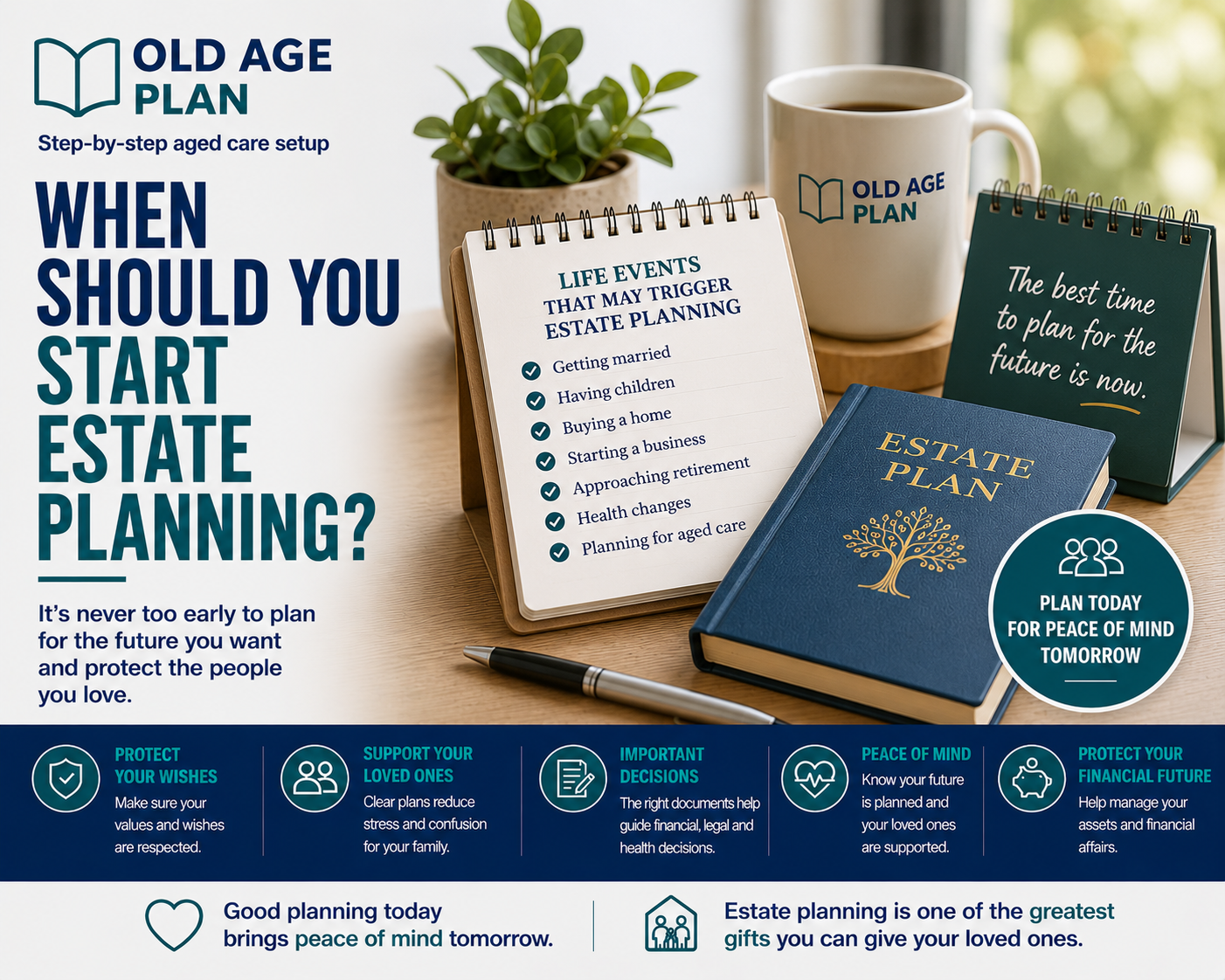

When Should You Start Estate Planning?
Many people assume estate planning is something that only needs to be considered later in life.
However, estate planning can be relevant for adults of all ages.
Major life events, family changes, health issues and financial responsibilities can all create reasons to think about future planning.
Is Estate Planning Only For Older People?
No.
While estate planning often becomes more important as people age, adults of any age may benefit from having important arrangements in place.
Unexpected illness, injury or other life events can occur at any time.
Common Times To Start Estate Planning
Many people begin estate planning after significant life events.
Examples include:
- Getting married
- Entering a long-term relationship
- Having children
- Purchasing a home
- Starting a business
- Receiving an inheritance
- Approaching retirement
- Receiving a serious health diagnosis
- Beginning aged care planning
These events often prompt people to consider how their affairs should be managed in the future.
Why Waiting Can Create Problems
Many people delay estate planning because they believe there is plenty of time.
Unfortunately, important decisions sometimes need to be made unexpectedly.
If arrangements are not already in place, loved ones may face uncertainty about who can make decisions and what wishes should be followed.
Estate Planning Is More Than A Will
Some people think creating a Will means estate planning is complete.
In reality, estate planning may also involve documents such as:
- Enduring Power of Attorney
- Enduring Guardianship arrangements
- Advance Care Directives
- Superannuation beneficiary nominations
- Important financial records
Together, these documents may help create a more complete plan.
A Real-Life Example
Imagine a couple in their forties with children, a mortgage and superannuation.
They assume estate planning can wait until retirement.
After an unexpected medical event, important financial and health decisions need to be made.
Because key documents were never prepared, family members face additional uncertainty during an already stressful time.
When Does Estate Planning Become More Important?
Although estate planning can be valuable at any age, many people review their arrangements more frequently as they approach retirement or begin considering future care needs.
This may include reviewing legal documents, financial arrangements and healthcare preferences.
How Often Should Estate Planning Be Reviewed?
Estate planning is not a one-time activity.
Many people review their arrangements after major life events such as marriage, divorce, retirement, illness, grandchildren or significant financial changes.
Regular reviews help ensure documents continue to reflect current wishes.
Do The Rules Differ Across Australia?
Yes.
Estate planning documents, succession laws and decision-making arrangements vary between Australian states and territories.
It is important to understand the requirements that apply where you live and seek professional advice where appropriate.
Frequently Asked Questions
When should I start estate planning?
Many people begin estate planning after major life events, but adults of any age may benefit from having important arrangements in place.
Is estate planning only for retirees?
No. Estate planning can be relevant for adults of all ages.
What life events should trigger estate planning?
Marriage, children, property ownership, retirement, business ownership and health changes are common examples.
Can I wait until later?
Many people delay estate planning, but unexpected events can occur at any time.
Should I review my estate plan regularly?
Many people review their arrangements after major life events or significant changes in circumstances.
Sources and Additional Information
Related Resources
- What Is Estate Planning?
- Why Is Estate Planning Important?
- What Documents Are Included In Estate Planning?
- What Is A Will?
- What Is An Enduring Power Of Attorney?
- Free Aged Care Tools
Disclaimer: This article provides general information only and does not constitute legal, financial or professional advice. Estate planning requirements vary between Australian states and territories.