
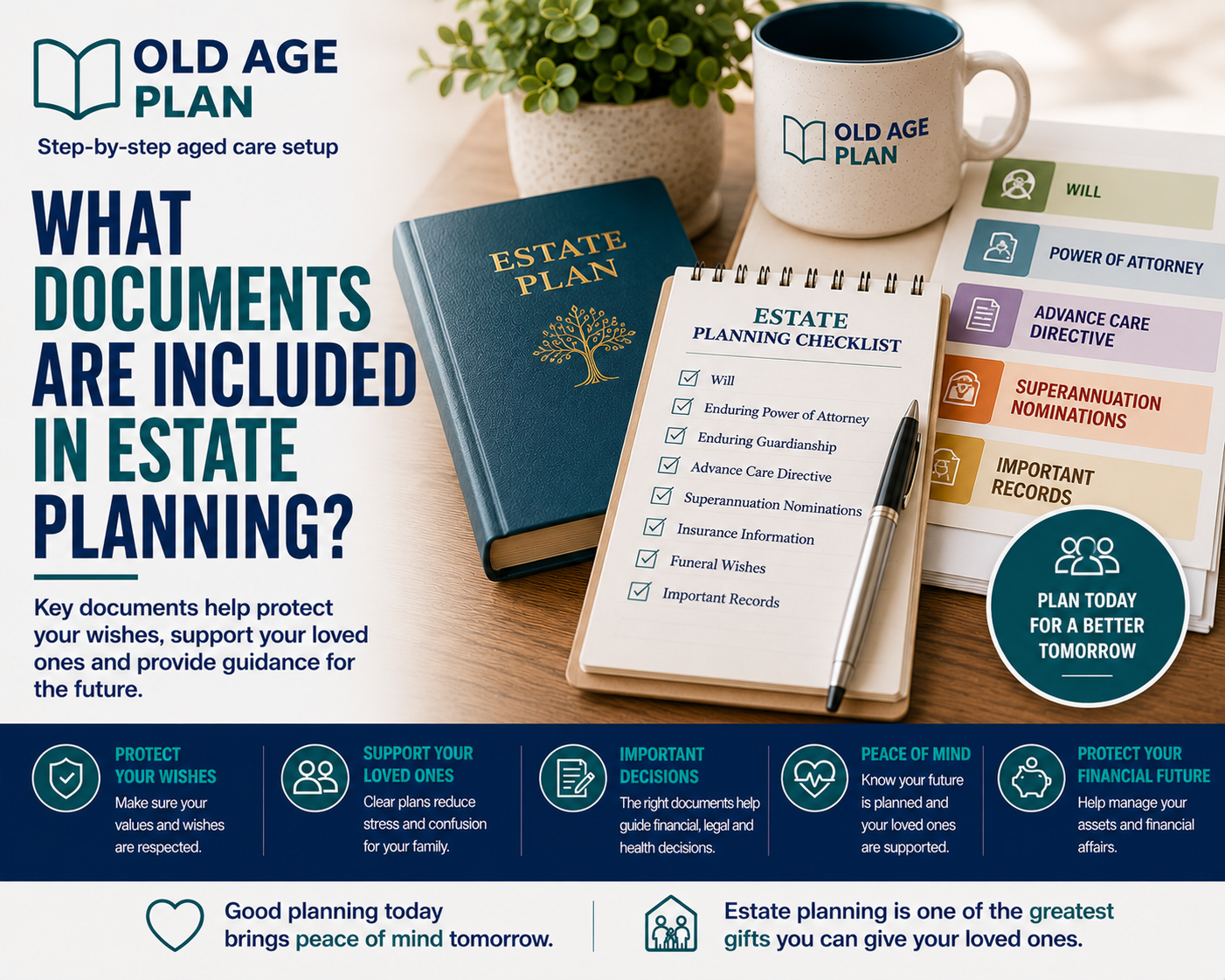

What Documents Are Included In Estate Planning?
Estate planning is more than creating a Will.
A complete estate plan may include several legal, financial and personal documents that work together to help protect your wishes, guide loved ones and reduce confusion during difficult times.
The exact documents you need depend on your circumstances, family situation, health, assets and the laws that apply in your state or territory.
Why Estate Planning Documents Matter
Different documents do different jobs.
A Will may explain what should happen after death, while an Enduring Power of Attorney may help during your lifetime if you lose decision-making capacity.
An Advance Care Directive may record future health care wishes, while superannuation nominations may affect who receives superannuation death benefits.
This is why estate planning is often broader than one document.
Common Documents Included In Estate Planning
Every estate plan is different, but common documents may include:
- A Will
- Enduring Power of Attorney
- Enduring Guardianship arrangements
- Advance Care Directive
- Superannuation beneficiary nominations
- Insurance information
- Funeral wishes
- Important financial records
- Property and asset records
- Contact details for professional advisers
Will
A Will explains what should happen to your estate after you die.
It may identify beneficiaries, appoint an executor and provide instructions about how assets should be distributed.
A Will is often one of the foundation documents in an estate plan.
Enduring Power Of Attorney
An Enduring Power of Attorney allows you to appoint someone you trust to make certain decisions on your behalf if you become unable to make those decisions yourself.
Depending on the state or territory, this may relate to financial, legal, property or personal matters.
Enduring Guardianship
Enduring Guardianship generally relates to personal, health or lifestyle decisions.
Different states and territories use different systems and terminology, so the rules can vary across Australia.
Advance Care Directive
An Advance Care Directive records your wishes, values and preferences about future health care, medical treatment and personal care.
It can help guide family members and health professionals if you are unable to communicate your wishes later.
Superannuation Beneficiary Nominations
Superannuation does not always automatically form part of your estate.
Beneficiary nominations can help indicate who should receive superannuation death benefits, depending on fund rules and legal requirements.
Funeral Wishes
Some people choose to record funeral wishes or preferences.
These may not replace formal estate planning documents, but they can help family members understand what the person would have wanted.
Important Records
Estate planning can also involve keeping important records organised.
This may include bank accounts, insurance policies, property details, superannuation information, debts, subscriptions and professional contacts.
Having these details available can make it easier for trusted people to manage responsibilities if needed.
A Real-Life Example
Imagine an older parent has a valid Will but no Enduring Power of Attorney, no Advance Care Directive and no record of superannuation beneficiary nominations.
After a serious health event, family members may know what should happen after death but may not know who can make decisions during the parent’s lifetime or what health care wishes should be considered.
This is why estate planning often involves several documents working together.
Do You Need Every Document?
Not necessarily.
The right estate planning documents depend on your circumstances.
Some people need a simple arrangement. Others may need more detailed planning due to family structure, health issues, property, business interests or complex financial arrangements.
Do The Rules Differ Across Australia?
Yes.
Estate planning documents, legal requirements, witnessing rules and decision-making arrangements vary between Australian states and territories.
It is important to understand the requirements that apply where you live and seek professional advice where appropriate.
Frequently Asked Questions
What documents are included in estate planning?
Common documents may include a Will, Enduring Power of Attorney, Advance Care Directive, superannuation beneficiary nominations and important financial records.
Is a Will enough for estate planning?
A Will is important, but estate planning often involves more than a Will alone.
Does estate planning include health care decisions?
It can. Documents such as Advance Care Directives or guardianship arrangements may relate to future health, personal or lifestyle decisions.
Does superannuation form part of estate planning?
Yes. Superannuation beneficiary nominations can be an important part of broader estate planning.
Do I need professional advice?
Professional advice may be helpful where family circumstances, assets, health decisions or legal arrangements are more complex.
Sources and Additional Information
Related Resources
- What Is Estate Planning?
- Why Is Estate Planning Important?
- What Is A Will?
- What Is An Enduring Power Of Attorney?
- What Is An Advance Care Directive?
- What Happens To Superannuation When You Die?
- Free Aged Care Tools
Disclaimer: This article provides general information only and does not constitute legal, financial or professional advice. Estate planning requirements vary between Australian states and territories.