
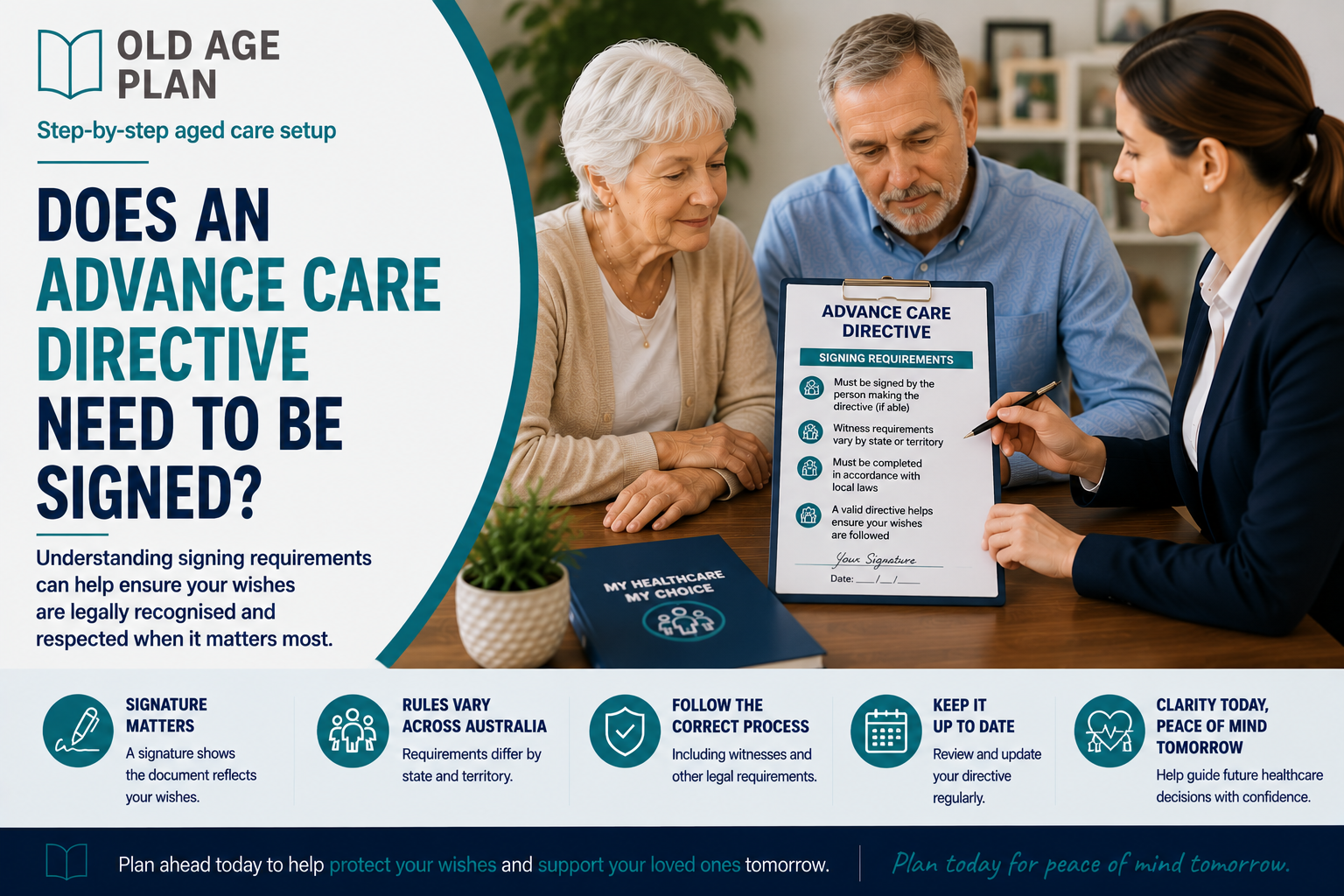

Does An Advance Care Directive Need To Be Signed?
An Advance Care Directive is designed to communicate your healthcare wishes if you become unable to make or communicate decisions yourself.
Many people spend time carefully considering what they want included in the document.
However, another important question often arises.
Does an Advance Care Directive need to be signed?
The answer depends on the laws and requirements that apply in your state or territory.
Different parts of Australia have different advance care planning systems, forms and legal requirements.
Understanding the role of signatures can help ensure your planning documents are completed correctly.
Short Answer
Many Advance Care Directive systems require the document to be signed.
However, the exact signing requirements vary across Australian states and territories.
Some jurisdictions may also have specific witness requirements and additional rules that need to be followed.
Why Signing Matters
A signature helps demonstrate that the person creating the document intended to record their wishes.
It forms part of the process used to show that the document was completed voluntarily and reflects the person’s decisions.
Without proper signing, questions may arise later about whether the document was completed correctly.
Does Every State Use The Same Rules?
No.
Australia does not have one national Advance Care Directive system.
Each state and territory has its own laws, terminology and requirements.
This means signing rules can differ depending on where the document is created.
It is important to understand the requirements that apply in your location.
Why Checking Current Requirements Matters
Advance care planning requirements can change over time.
Forms, procedures and legal requirements may be updated by governments and relevant authorities.
Using current information can help reduce the risk of mistakes when completing an Advance Care Directive.
This is one reason many people confirm the latest requirements before signing important documents.
Is A Signature Enough On Its Own?
Not always.
Signing is often only one part of the overall process.
Other factors may also be important, including:
- Decision-making capacity
- Witness requirements
- Using the correct document
- Compliance with local laws
- Proper completion of required sections
A signature alone may not resolve issues with other aspects of the document.
What If The Document Is Not Signed Correctly?
If signing requirements are not followed, questions may arise about whether the document meets local requirements.
Healthcare providers and decision-makers may need additional information before relying on the document.
This can create uncertainty during situations where clear guidance is important.
What About Witnesses?
Some states and territories require witnesses as part of the signing process.
Who can act as a witness and how the witnessing process works varies across Australia.
This is why checking local requirements is important before signing any document.
Can Someone Sign For You?
The rules around signing on behalf of another person vary depending on the jurisdiction and circumstances involved.
If a person has concerns about their ability to sign, professional advice may help clarify the options available.
What If You Cannot Physically Sign A Document?
Some people experience illness, injury or physical limitations that make signing difficult.
The options available will depend on the laws and procedures that apply in the relevant jurisdiction.
If signing presents a challenge, professional advice may help clarify what alternatives are available.
Should You Date The Document?
Many advance care planning systems include the date the document was completed.
This can help demonstrate when the document was created and may assist if multiple versions exist in the future.
Keeping records up to date is often recommended.
What If You Update The Directive?
If you create a new version, it is important to follow the appropriate signing and witnessing requirements again if required.
It is also sensible to replace older copies where possible and tell relevant people that an updated version exists.
This may help reduce future confusion.
Why Planning Early Helps
Future planning is generally easier while decision-making capacity is clear.
Creating and signing documents early may provide more opportunity to carefully consider your wishes and ensure requirements are met.
Many people find the process less stressful when it is completed before a health crisis occurs.
Common Mistakes To Avoid
Assuming A Signature Is The Only Requirement
Other legal requirements may also apply.
Ignoring Witness Requirements
Some jurisdictions have specific witnessing rules.
Failing To Date The Document
Dates may help identify the most current version.
Keeping Multiple Versions
Older copies can create confusion.
Never Reviewing The Document
Your wishes may change over time.
Real-Life Example
Robert completed an Advance Care Directive after discussing future healthcare planning with his family and GP.
Before signing the document, he checked the requirements that applied in his state.
He followed the required process, arranged the appropriate witnesses and provided copies to the people most likely to need them.
Years later, when healthcare decisions became necessary, the document was readily available and there was little uncertainty about how it had been completed.
Frequently Asked Questions
Does an Advance Care Directive need to be signed?
Many jurisdictions require a signed document, but requirements vary across Australia.
Is a signature enough to make the document valid?
Not necessarily. Other requirements such as capacity, witnesses and correct completion may also apply.
Do witnesses need to be present when signing?
This depends on the rules that apply in your state or territory.
Should the document be dated?
Dating the document may help identify the most current version.
What if I update my directive?
You may need to follow the relevant signing and witnessing requirements again, depending on your location.
Should I seek professional advice?
Professional advice may help ensure the document complies with local requirements.
Sources
- Advance Care Planning Australia
- Healthdirect Australia – Advance Care Planning And Directive
- My Aged Care
- Office of the Public Advocate Victoria
- Office of the Public Advocate Western Australia
- NSW Trustee & Guardian
- Legal Aid NSW
Related Resources
- What Is An Advance Care Directive?
- Who Can Witness An Advance Care Directive?
- What Makes An Advance Care Directive Valid?
- Can You Have Both An Advance Care Directive And Enduring Guardianship?
- Can An Advance Care Directive Be Challenged?
- Can Doctors Ignore An Advance Care Directive?
- What Is Enduring Guardianship?
- What Is An Enduring Power Of Attorney?
- Estate Planning Pillar
- Free Aged Care Tools
Disclaimer
This article provides general information only. It is not legal, medical or financial advice. Advance Care Directive signing requirements vary across Australian states and territories. Always seek professional advice relevant to your circumstances.