
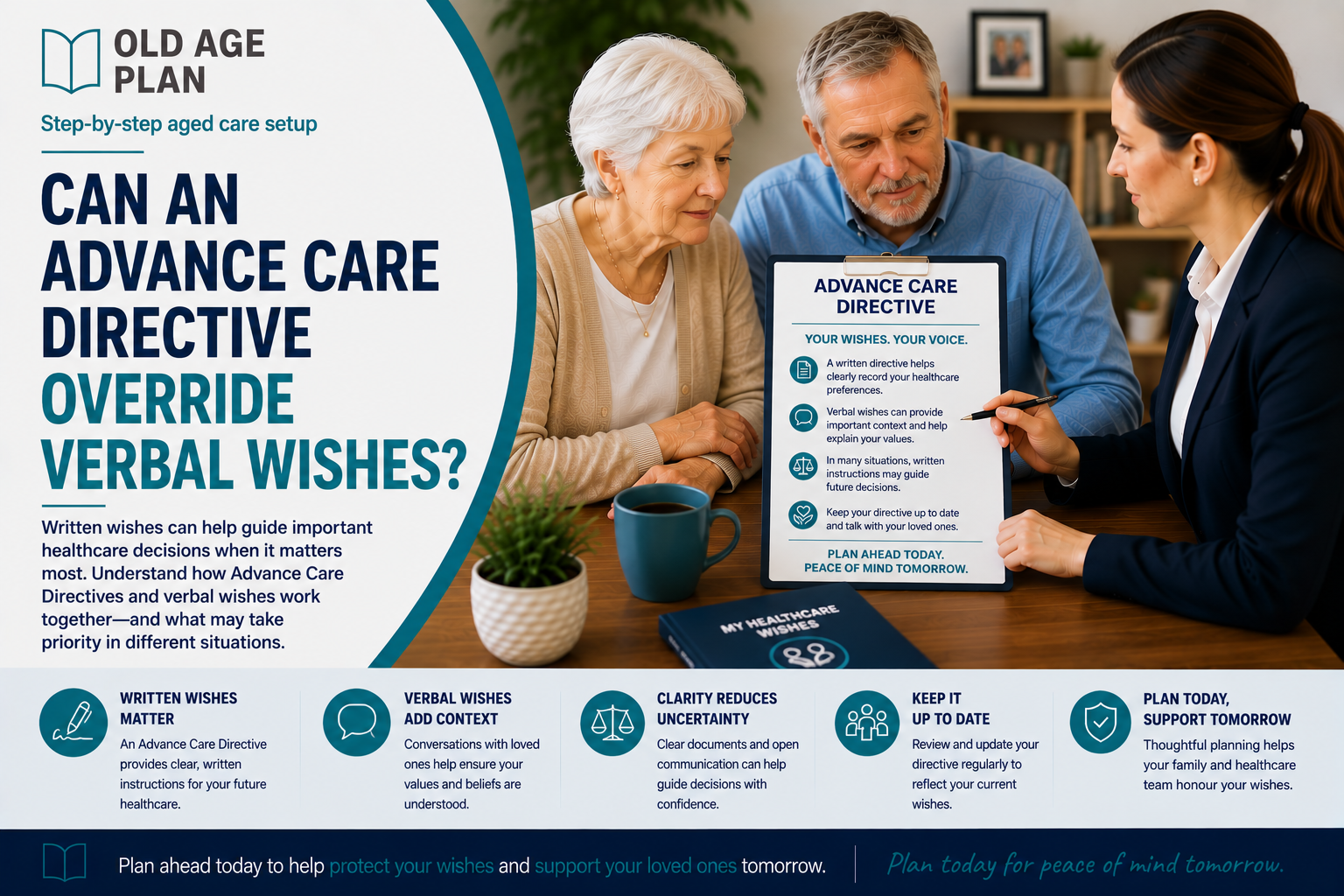

Can An Advance Care Directive Override Verbal Wishes?
Advance care planning is designed to help ensure your healthcare wishes are understood if you become unable to make or communicate decisions yourself.
Many people record their wishes in an Advance Care Directive, but they may also discuss those wishes with family members, friends and healthcare providers.
This often raises an important question.
Can an Advance Care Directive override verbal wishes?
The answer can depend on the circumstances involved, the timing of the conversations, the wording of the directive and the laws that apply in your state or territory.
Understanding the relationship between written and verbal instructions can help families better prepare for future healthcare decisions.
Short Answer
An Advance Care Directive is generally intended to provide clear written evidence of a person’s healthcare wishes.
However, questions may sometimes arise when verbal statements appear to differ from the written document.
The outcome depends on the circumstances and the laws that apply.
Why Written Directives Matter
Healthcare decisions are often made during stressful and emotional situations.
Family members may remember conversations differently.
People may disagree about what was said.
A written Advance Care Directive can provide a clearer record of the person’s wishes.
This is one reason why advance care planning documents are often encouraged.
What Are Verbal Wishes?
Verbal wishes are healthcare preferences communicated through conversations rather than written documents.
Examples may include discussions with:
- Family members
- Friends
- Doctors
- Healthcare providers
- Substitute decision-makers
These conversations can provide valuable context about what matters most to the individual.
Can An Unclear Directive Create More Reliance On Verbal Conversations?
Sometimes yes.
If an Advance Care Directive contains broad or unclear wording, healthcare providers may seek additional information to better understand the person’s wishes.
This may include discussions with family members, substitute decision-makers and healthcare professionals who knew the person.
Clear written instructions can help reduce the need for interpretation.
What Happens If Verbal And Written Wishes Match?
When conversations and written documents align, future decision-making is often easier.
Healthcare providers and family members may have greater confidence that they understand the person’s wishes.
This is why discussing your Advance Care Directive with important people can be beneficial.
What If Verbal Wishes Differ From The Directive?
This is where complexity can arise.
Questions may be asked about:
- When the conversations occurred
- Whether the person’s wishes changed
- Whether the directive remains current
- The clarity of the written document
- The reliability of recollections
The specific outcome depends on the circumstances involved.
Why Timing Matters
A conversation that occurred recently may be viewed differently from one that occurred many years ago.
If a person expressed different wishes after completing a directive, questions may arise about whether they intended to update their instructions.
This is one reason regular reviews are recommended.
What If Verbal Wishes Were Never Written Down?
Many people discuss healthcare wishes without updating their formal documents.
This can create uncertainty if different people remember conversations differently.
Whenever important wishes change, updating written documents may help provide greater clarity.
Can Family Members Rely On Verbal Conversations?
Family conversations are often important.
They may help explain a person’s values, beliefs and priorities.
However, memories can differ.
One family member may recall a conversation differently from another.
Written documents can help reduce this uncertainty.
Can Healthcare Providers Consider Verbal Information?
Healthcare providers often seek as much relevant information as possible when making decisions.
This may include discussions with family members and substitute decision-makers.
The role of verbal information depends on the circumstances involved and the applicable legal framework.
How Can You Reduce The Risk Of Confusion?
Several practical steps may help:
- Keep your directive up to date
- Review it regularly
- Discuss your wishes with family
- Tell decision-makers about changes
- Replace outdated versions
- Record important changes in writing
These actions can help ensure your written and verbal wishes remain consistent.
What Role Does A Substitute Decision-Maker Play?
A substitute decision-maker may help explain your wishes if questions arise.
Their understanding of your values and previous conversations may provide useful context.
This is one reason why choosing the right person is important.
Common Mistakes To Avoid
Never Updating The Directive
Your wishes may change over time.
Assuming Family Members Know Your Wishes
Important conversations should happen clearly and openly.
Keeping Multiple Versions
Outdated documents can create confusion.
Failing To Communicate Changes
People should know when your wishes change.
Relying Only On Verbal Conversations
Written records can help reduce uncertainty.
Real-Life Example
Robert completed an Advance Care Directive several years before becoming seriously ill.
During later conversations with his family, he discussed some changes to how he viewed future healthcare treatment.
Because he updated his written documents and spoke with his family about those changes, there was less uncertainty when healthcare decisions eventually needed to be made.
The combination of written instructions and clear conversations helped provide guidance.
Frequently Asked Questions
Can an Advance Care Directive override verbal wishes?
The answer depends on the circumstances, the timing of the conversations and the laws that apply in your state or territory.
Are verbal healthcare wishes important?
Yes. Conversations may help explain a person’s values and preferences.
Should I update my directive if my wishes change?
Many people choose to review and update their documents when significant changes occur.
Can family members rely on verbal conversations?
Family discussions can be valuable, but written documents often provide greater clarity.
What if my directive is outdated?
Regular reviews can help ensure the document reflects your current wishes.
How can I reduce confusion?
Keep documents current, communicate openly and ensure important changes are recorded appropriately.
Sources
- Advance Care Planning Australia
- Healthdirect Australia – Advance Care Planning And Directive
- My Aged Care
- ELDAC – End Of Life Directions For Aged Care
- Australian Government Department Of Health
- Office of the Public Advocate Victoria
Related Resources
- What Is An Advance Care Directive?
- Can Family Override An Advance Care Directive?
- What Happens If Family Members Disagree About Your Wishes?
- Can You Change An Advance Care Directive?
- Can An Advance Care Directive Be Revoked?
- How Often Should You Review An Advance Care Directive?
- Who Makes Medical Decisions If Your Advance Care Directive Is Unclear?
- Estate Planning Pillar
- Free Aged Care Tools
Disclaimer
This article provides general information only. It is not legal, medical or financial advice. Advance Care Directive laws and healthcare decision-making requirements vary across Australian states and territories. Always seek professional advice relevant to your circumstances.