
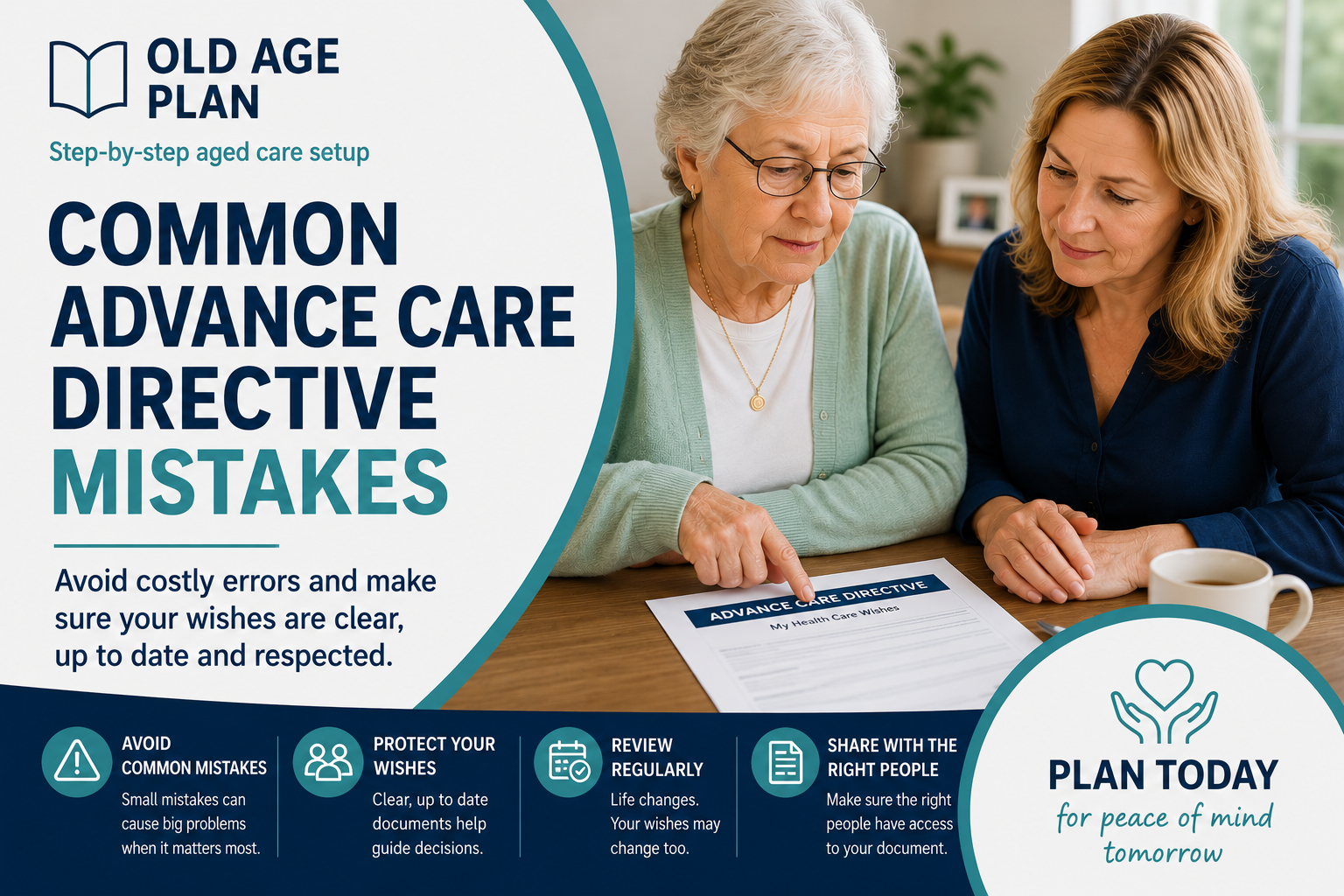

Common Advance Care Directive Mistakes
An Advance Care Directive can be one of the most important planning documents you ever create.
It helps communicate your healthcare wishes if you become unable to speak for yourself.
It can also reduce stress for family members who may be asked to make difficult decisions during a medical crisis.
However, simply having an Advance Care Directive is not always enough.
Mistakes can happen before, during and after the document is created.
These mistakes can lead to confusion, disagreements and uncertainty at the exact time families need clarity.
This article explains some of the most common Advance Care Directive mistakes and how families can avoid them.
Why Advance Care Directives Matter
An Advance Care Directive helps document your wishes about future healthcare and medical treatment.
It provides guidance for doctors, family members and substitute decision-makers if you lose the ability to make or communicate decisions yourself.
The goal is simple.
To help ensure your wishes remain central to future healthcare decisions.
That is why avoiding common mistakes is so important.
Mistake 1: Waiting Too Long
Many people assume Advance Care Directives are only for the very elderly or seriously ill.
As a result, they delay creating one.
The problem is that unexpected illness or injury can happen at any age.
If decision-making capacity is lost before a directive is created, future healthcare decisions may become much more difficult for family members.
Planning early usually provides more options and greater peace of mind.
Mistake 2: Assuming Family Automatically Knows Your Wishes
Many people believe their family already understands what they would want.
Unfortunately, that is not always the case.
During a medical emergency, different family members may remember conversations differently.
Some may have never discussed the topic at all.
An Advance Care Directive helps remove uncertainty by recording your wishes clearly.
Mistake 3: Never Discussing The Directive
Creating the document is only part of the process.
Families often benefit from having conversations about future care wishes.
This does not need to be a formal meeting.
Simple discussions can help family members understand your values and preferences.
Without those conversations, loved ones may be surprised by what the document says.
Mistake 4: Using Vague Language
General statements can sometimes create confusion.
For example, saying you do not want “unnecessary treatment” may sound clear.
However, different people may interpret that phrase differently.
Doctors and family members may struggle to understand exactly what you meant.
Clear language often reduces uncertainty during difficult situations.
Mistake 5: Forgetting To Review The Document
An Advance Care Directive should not be completed and forgotten forever.
Your health may change.
Your family situation may change.
Your views about treatment may also evolve over time.
Regular reviews help ensure the document still reflects your wishes.
Mistake 6: Not Updating Old Copies
When a directive is updated, old versions can create problems.
One family member may have the current version.
Another may still have an outdated copy.
A healthcare provider may have something different again.
If changes are made, the updated version should replace older copies wherever possible.
Mistake 7: Not Giving Copies To The Right People
An Advance Care Directive is difficult to use if nobody can find it.
The people most likely to be involved in your care should know the document exists.
This may include:
- Your substitute decision-maker
- Your spouse or partner
- Adult children involved in your care
- Your GP
- Relevant healthcare providers
The exact people will vary from family to family.
Mistake 8: Failing To Consider Future Health Changes
Many people complete their directive while healthy.
That is often the best time to do it.
However, future health conditions can sometimes change how a person views medical treatment.
Regular reviews help ensure the document remains relevant as circumstances evolve.
Mistake 9: Treating The Directive As A Legal Exercise Only
An Advance Care Directive is not simply a document to sign and file away.
It is part of broader future care planning.
The document is important, but conversations with family and healthcare professionals can be equally valuable.
Understanding your values often helps others make decisions that align with your wishes.
Mistake 10: Assuming One Document Solves Everything
An Advance Care Directive can provide important guidance.
However, no document can predict every possible future situation.
Unexpected circumstances can arise.
That is why ongoing communication and periodic reviews remain important.
The directive provides direction, but it may not answer every question that could arise years later.
How To Avoid These Mistakes
You do not need a complicated system.
In many cases, avoiding common mistakes comes down to a few simple habits.
- Create the document before it becomes urgent
- Talk to family about your wishes
- Review the document regularly
- Keep copies current
- Make sure the right people know where it is stored
- Update it if your circumstances change
Small steps today can make a significant difference later.
Real-Life Example
John completed an Advance Care Directive after retiring.
He placed the document in a drawer and rarely thought about it again.
Ten years later, his health had changed significantly.
His daughter found the directive while helping organise paperwork.
During a family discussion, John realised some of the document no longer reflected his current wishes.
He reviewed the directive with his GP, updated the document and shared the new version with the right people.
The review gave his family much greater confidence about future healthcare decisions.
Frequently Asked Questions
What is the biggest Advance Care Directive mistake?
One of the most common mistakes is delaying the process until a serious health issue occurs.
Should I review my Advance Care Directive regularly?
Yes. Reviews help ensure the document continues to reflect your wishes.
Can outdated copies cause problems?
Yes. Different versions can create confusion during medical emergencies.
Should family members know about my directive?
In most situations, it is helpful for key family members to understand your wishes and know where the document is stored.
Do I need to update my directive after a major illness?
Not necessarily, but it is usually a good time to review it and confirm it still reflects your wishes.
Can an Advance Care Directive cover every possible situation?
No. It provides guidance, but future healthcare situations can sometimes be more complex than any document can predict.
Sources
- Advance Care Planning Australia
- Australian Government Department of Health — Advance Care Directive
- Office of the Public Advocate Victoria
- Victoria Health — Advance Care Planning
- Legal Aid NSW
- My Aged Care
Related Resources
- What Is An Advance Care Directive?
- Advance Care Directive vs Enduring Guardianship
- Advance Care Directive vs EPOA
- When Should You Create An Advance Care Directive?
- Can Family Override An Advance Care Directive?
- What Happens If There Is No Advance Care Directive?
- Can You Change An Advance Care Directive?
- Who Should Receive A Copy Of Your Advance Care Directive?
- How Often Should You Review An Advance Care Directive?
- Estate Planning Pillar
- Free Aged Care Tools
Disclaimer
This article provides general information only. It is not legal, medical or financial advice. Advance Care Directive laws and requirements vary across Australian states and territories. Always seek professional advice relevant to your personal circumstances.