
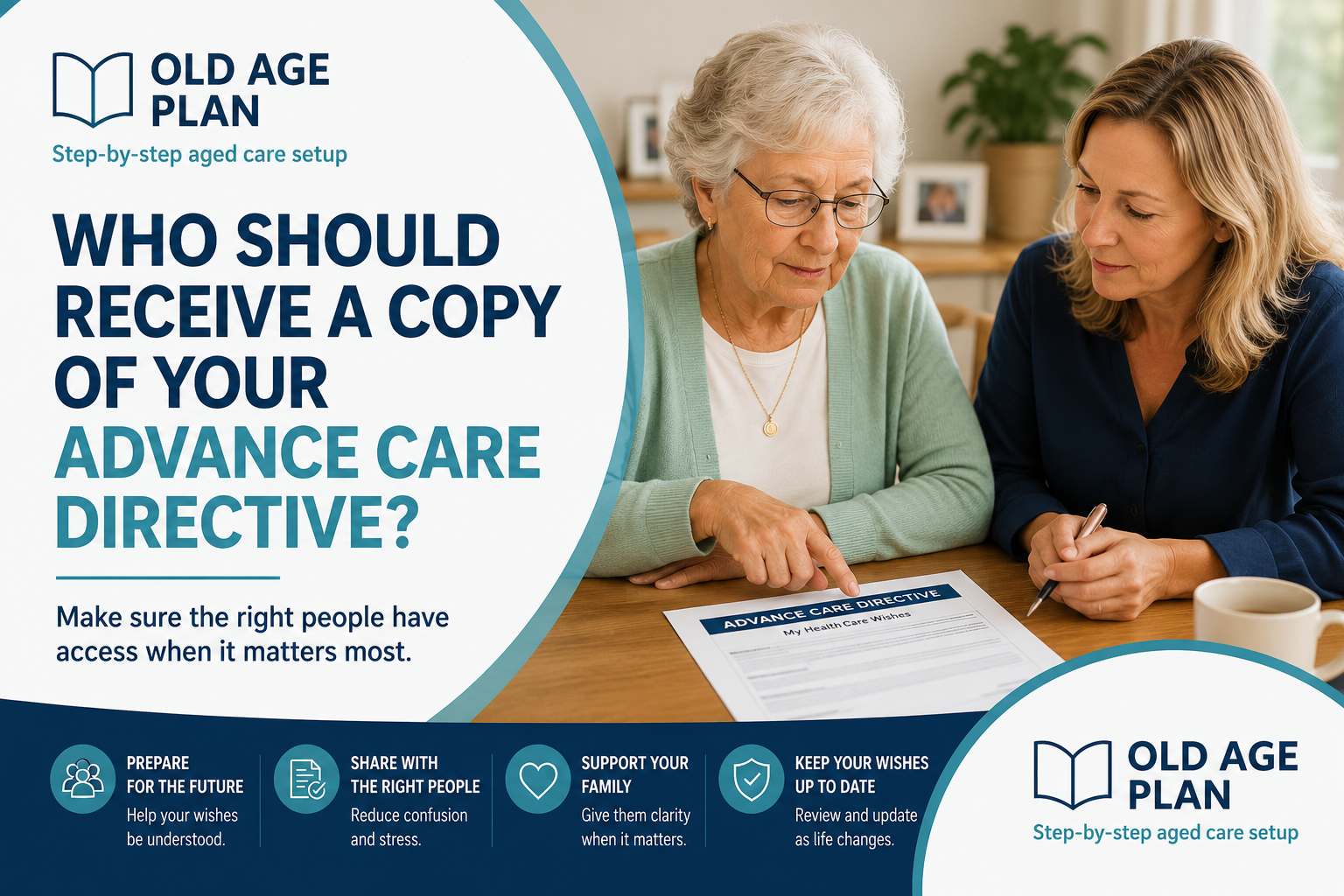

Who Should Receive A Copy Of Your Advance Care Directive?
An Advance Care Directive is only useful if the right people know it exists.
You may have written down your future healthcare wishes clearly. But if nobody can find the document during a medical emergency, your family and doctors may still be left guessing.
That is why families often ask: who should receive a copy of your Advance Care Directive?
The answer depends on your situation, your family, and who may be involved in your care.
This article explains who may need a copy, why it matters, and how sharing the right version can help avoid confusion later.
Why Sharing Your Advance Care Directive Matters
An Advance Care Directive records your future healthcare wishes.
It may help guide doctors, family members and substitute decision-makers if you become too unwell to speak for yourself.
But the document needs to be available when decisions are being made.
If the only copy is locked away at home, it may not help during a hospital admission.
If different people have different versions, it can create confusion.
If your family does not know it exists, they may not know what you wanted.
Sharing a copy with the right people helps make your wishes easier to find and follow.
Your Substitute Decision-Maker Should Have A Copy
If you have appointed someone to make health or personal decisions for you, they should usually have a copy of your Advance Care Directive.
This person may be called different things depending on your state or territory.
They may be an enduring guardian, medical treatment decision-maker, substitute decision-maker, or another appointed person.
The title may change, but the purpose is similar.
They may need to speak for you if you cannot speak for yourself.
Giving them a copy helps them understand your wishes before a crisis happens.
Your Spouse Or Partner May Need A Copy
If you have a spouse or partner, they may be closely involved in your care.
They may be contacted by doctors.
They may be present during hospital visits.
They may also help explain your values and preferences to other family members.
For many people, it makes sense for a spouse or partner to know where the current Advance Care Directive is kept.
In some cases, they may also need their own copy.
Adult Children May Need To Know
Adult children are often heavily involved when an older parent becomes unwell.
They may help with appointments, hospital visits, aged care decisions or family discussions.
Not every adult child needs a full copy in every situation.
But it is usually helpful for the key people involved in your care to know that the document exists.
If you want certain family members to have a copy, tell them clearly.
If you do not want everyone to have one, at least make sure the people responsible for helping with care know where the current version can be found.
Your GP Should Have A Copy
Your GP is often one of the most important people to give a copy to.
They know your health history.
They may be involved in long-term care planning.
They may also help explain your wishes to other healthcare providers if needed.
Giving your GP a copy can help keep your healthcare wishes connected to your medical records.
It can also make reviews easier if your health changes later.
Hospitals And Health Services May Need Access
If you are admitted to hospital, the hospital may need access to your Advance Care Directive.
This can be especially important during serious illness, surgery, emergency care or end-of-life care.
If you already know you are going to hospital for planned treatment, ask how your Advance Care Directive can be added to your records.
In an emergency, your family or substitute decision-maker may need to provide a copy quickly.
This is why it helps when the right people know where the current version is stored.
Aged Care Providers May Need A Copy
If you receive aged care services, your provider may need to know about your Advance Care Directive.
This may apply if you receive home care, respite care or residential aged care.
Aged care staff may not make major medical decisions for you.
But they may need to know that your directive exists and who should be contacted if your health changes.
If you move into residential aged care, ask how they record advance care planning documents.
Your Lawyer Or Document Holder May Keep A Copy
Some people choose to keep copies with a lawyer, trustee service or another trusted document holder.
This may be useful if the directive is part of a broader estate planning folder.
However, this should not be the only practical access point.
A document kept with a lawyer may not be available quickly during a medical emergency.
It is still important that your family, substitute decision-maker or healthcare team can access the current version when needed.
Should Everyone In The Family Get A Copy?
Not always.
The goal is not to hand the document to every relative.
The goal is to make sure the right people can access it when needed.
In some families, giving everyone a copy may create clarity.
In other families, it may create arguments or confusion.
A practical approach is to focus on the people most likely to be involved in your care.
This may include your substitute decision-maker, your partner, one or two trusted adult children, your GP and relevant care providers.
What Happens If Nobody Can Find It?
If nobody can find your Advance Care Directive, your wishes may not be known when they are needed most.
Your family may have to make decisions without clear guidance.
Doctors may need to rely on the information available at the time.
Family members may disagree about what you would have wanted.
This can place a heavy emotional burden on the people closest to you.
Making the document easy to find can reduce stress and confusion.
What If You Update Your Advance Care Directive?
If you update your Advance Care Directive, make sure the old version is not still being used.
This is one of the most common problems.
One person may have the updated copy.
Another person may still have the old copy.
A doctor may have no copy at all.
When you update the document, tell the people who had the old version.
Give them the new version and clearly explain that it replaces the previous one.
Common Mistakes To Avoid
Keeping The Only Copy At Home
If the only copy is in a drawer at home, it may not help during a hospital emergency.
Not Telling Your Substitute Decision-Maker
The person expected to speak for you should understand your wishes before they are under pressure.
Giving People Different Versions
Different versions can cause confusion and family conflict.
Forgetting To Update Your GP
If your GP has an old copy, your medical records may not reflect your current wishes.
Assuming Family Will Just Know
Even close family members may not know what you would want in a serious medical situation.
Real-Life Example
Robert completed an Advance Care Directive after a health scare.
He told his daughter he had made one, but he kept the only copy in a folder at home.
Two years later, Robert was taken to hospital after a serious fall.
His daughter knew the document existed, but she could not find it quickly.
The family had to answer difficult questions without having the document in front of them.
After Robert recovered, he gave a copy to his daughter, his GP and his appointed decision-maker.
He also told his family where the current version was stored.
That simple step gave everyone more confidence for the future.
Frequently Asked Questions
Who should receive a copy of my Advance Care Directive?
The most important people are usually your substitute decision-maker, your GP, and anyone likely to be involved in your care.
Should my adult children all receive a copy?
Not always. It depends on your family situation. At minimum, the people most involved in your care should know where the current version is kept.
Should my GP have a copy?
Yes, this is often a sensible step. Your GP may be involved in your care and can help keep your wishes connected to your health records.
Should an aged care home have a copy?
If you move into residential aged care, ask how they record Advance Care Directives and who should receive a copy.
What happens if I change my Advance Care Directive?
You should give the updated version to the right people and make clear that the old version has been replaced.
Can I keep my Advance Care Directive private?
You can be selective about who receives a copy. But if nobody can access it when needed, it may not be useful in an emergency.
Sources
- Australian Government Department of Health — Advance Care Directive
- Advance Care Planning Australia
- NSW Health — Making an Advance Care Directive
- Legal Aid NSW — Speaking For Myself: Decisions About My Health
- Office of the Public Advocate Victoria — Making An Advance Care Directive
- Victoria Health — Advance Care Planning Forms
- Queensland Government — Advance Health Directive
- Queensland Public Guardian — Advance Health Directive
Related Resources
- What Is An Advance Care Directive?
- Advance Care Directive vs Enduring Guardianship
- Advance Care Directive vs EPOA
- When Should You Create An Advance Care Directive?
- Can Family Override An Advance Care Directive?
- What Happens If There Is No Advance Care Directive?
- Talking To Family About Future Care Decisions
- Hospital And Advance Care Directives
- Can You Change An Advance Care Directive?
- Estate Planning Pillar
- What Is Enduring Guardianship?
- What Is An Enduring Power Of Attorney?
- What Is A Will?
- Free Aged Care Tools
Disclaimer
This article provides general information only. It is not legal, medical or financial advice. Advance Care Directive rules and healthcare decision-making laws vary across Australian states and territories. Always check the rules in your location and seek professional advice for your personal situation.