
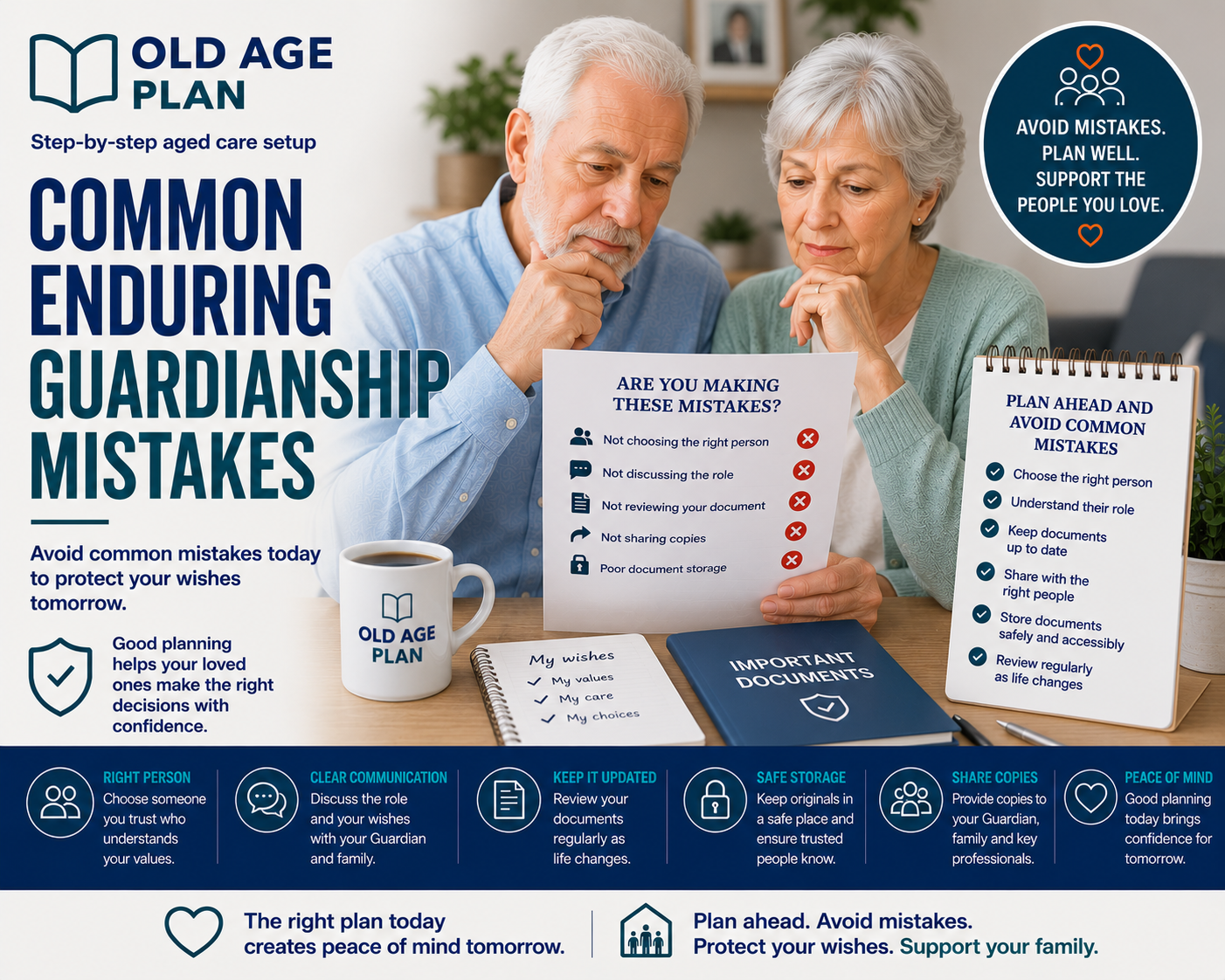

Common Enduring Guardianship Mistakes
Enduring Guardianship can be an important part of future planning, but mistakes can happen when documents are created, stored or reviewed.
These mistakes may create confusion for families when personal, health or lifestyle decisions need to be made.
Understanding common errors can help people plan more clearly and reduce unnecessary stress later.
1. Thinking Enduring Guardianship Is The Same As Power Of Attorney
One common mistake is assuming Enduring Guardianship and Power of Attorney do the same thing.
Enduring Guardianship usually relates to personal, health, lifestyle and care decisions.
Power of Attorney often relates to financial, property or legal matters.
2. Choosing The Wrong Guardian
Your guardian should usually be someone trustworthy, reliable and willing to respect your wishes.
Choosing someone who is unavailable, unwilling or not suited to the role may create problems later.
3. Not Discussing The Role First
Being appointed as an Enduring Guardian can involve difficult decisions.
It is usually wise to speak with the person first so they understand the role and are willing to act if needed.
4. Not Reviewing The Document
Life changes over time.
Relationships, health needs, location, family circumstances and personal wishes may all change.
If the document is not reviewed, it may no longer reflect your current wishes.
5. Not Sharing Copies With The Right People
A guardianship document is only useful if the right people know it exists and can access it when needed.
Your appointed guardian, trusted family members, health care providers or legal adviser may need access to copies.
6. Poor Document Storage
If the original document is lost, damaged or impossible to find, families may face delays and uncertainty.
It is important to keep the original safe and let trusted people know where it is stored.
7. Not Understanding What The Guardian Can Decide
An Enduring Guardian may only be able to make certain decisions depending on the powers granted and the laws that apply.
Assuming they can make every decision may lead to confusion.
8. Forgetting About Advance Care Directives
An Advance Care Directive can record future health care wishes, values and treatment preferences.
Enduring Guardianship and Advance Care Directives may work together, but they are not always the same document.
9. Not Planning For A Backup
Sometimes an appointed guardian may be unavailable, unable or unwilling to act when needed.
Depending on the laws that apply, it may be worth considering whether a substitute or backup arrangement is possible.
10. Assuming The Rules Are The Same Everywhere
Enduring Guardianship laws, forms, terminology and decision-making powers vary between Australian states and territories.
Using the wrong process or assuming the rules are identical everywhere may create problems.
A Real-Life Example
Imagine an older person appoints a guardian but never discusses the role, never shares the document and never reviews it.
Years later, a health crisis occurs and family members need to make decisions about care and living arrangements.
Because the document is hard to find and the guardian is unsure about their role, the family faces avoidable confusion.
Better planning may have made the process clearer.
Do The Rules Differ Across Australia?
Yes.
Enduring Guardianship laws, appointment processes, forms and terminology vary between Australian states and territories.
It is important to understand the requirements that apply where you live and seek professional advice where appropriate.
Frequently Asked Questions
What is a common Enduring Guardianship mistake?
One common mistake is assuming Enduring Guardianship is the same as Power of Attorney.
Should I discuss the role with my guardian first?
Yes. It is usually wise to confirm they understand the role and are willing to act if needed.
Should guardianship documents be reviewed?
Yes. Many people review them after health changes, relationship changes, family changes or aged care planning.
Who should know where my guardianship documents are?
Your appointed guardian and trusted people should usually know where important documents are stored.
Can poor guardianship planning create problems?
Yes. Missing, outdated or unclear documents may create confusion when important decisions need to be made.
Sources and Additional Information
Related Resources
- What Is Enduring Guardianship?
- Who Should You Appoint As Your Guardian?
- What Decisions Can An Enduring Guardian Make?
- Who Should Receive A Copy Of Your Guardianship Documents?
- Enduring Guardianship vs Power Of Attorney
- What Is An Advance Care Directive?
- Free Aged Care Tools
Disclaimer: This article provides general information only and does not constitute legal, financial or professional advice. Guardianship laws vary between Australian states and territories.