
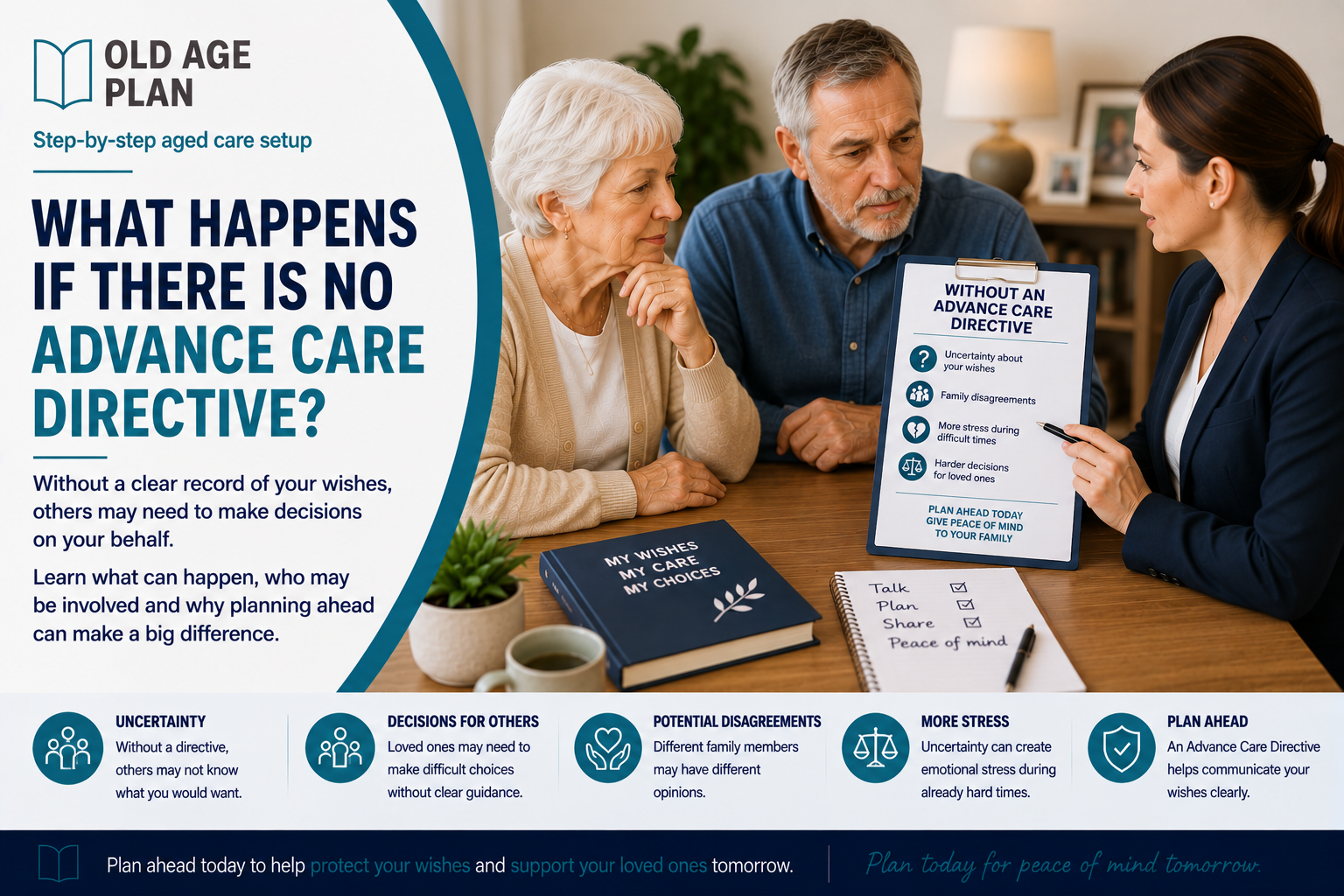

What Happens If There Is No Advance Care Directive?
An Advance Care Directive can help communicate your healthcare wishes if you become unable to make or communicate decisions yourself.
However, many Australians never complete one.
This leads to an important question.
What happens if there is no Advance Care Directive?
Without a written record of your wishes, healthcare providers, family members and substitute decision-makers may need to make decisions using the information available to them at the time.
Understanding how this process works can highlight why future planning is often encouraged.
Short Answer
If there is no Advance Care Directive, healthcare decisions may still need to be made if you lose the ability to make or communicate decisions yourself.
The people involved and the process followed depend on the circumstances and the laws that apply in your state or territory.
Why Advance Care Directives Exist
An Advance Care Directive is designed to provide guidance about your future healthcare wishes.
It can help communicate:
- Treatment preferences
- Healthcare values
- Quality of life priorities
- Religious or cultural considerations
- Personal wishes about future care
Without this information, others may have less guidance when important decisions arise.
Who Makes Decisions If There Is No Directive?
The answer depends on the situation and the laws that apply.
Healthcare providers may work with authorised decision-makers, family members or other people recognised under local laws.
The process differs across Australia.
This is one reason why future planning can be valuable.
Can Family Members Make Decisions?
Family members are often involved in healthcare discussions when a person cannot communicate their wishes.
However, the role family members play depends on the circumstances and applicable legal requirements.
Not every family situation is straightforward.
Different relatives may have different opinions about what should happen.
What Problems Can Arise?
Without a clear record of your wishes, uncertainty may occur.
For example:
- Family members may disagree
- No one may know your preferences
- Different people may remember conversations differently
- Treatment decisions may become more difficult
- Additional stress may be placed on loved ones
This does not mean problems will always occur, but uncertainty can increase.
Can Verbal Conversations Help?
Yes.
Previous conversations about healthcare wishes can provide valuable guidance.
However, memories can differ and verbal discussions may not always provide the same level of clarity as a written document.
This is why many people choose to document their wishes formally.
What If Family Members Disagree?
Disagreements sometimes occur when there is no written guidance.
One family member may believe a person would have wanted one approach, while another believes something different.
Advance care planning can help reduce this uncertainty by recording wishes in advance.
Can Healthcare Providers Help?
Healthcare providers often play an important role when difficult decisions need to be made.
They may gather information from family members, healthcare records and other relevant sources to better understand the person’s wishes and circumstances.
Their responsibilities depend on the situation involved.
Why Planning Ahead Can Help
Future planning allows you to communicate your wishes while you are able to do so.
It may provide:
- Greater clarity
- Less uncertainty
- Reduced family conflict
- Better understanding of your values
- More confidence for decision-makers
Many people view advance care planning as a gift to their loved ones because it can reduce difficult guesswork later.
What If You Have Other Planning Documents?
Even if you do not have an Advance Care Directive, other planning documents may still exist.
Examples may include:
- Enduring Guardianship documents
- Enduring Powers of Attorney
- Wills
- Personal healthcare records
These documents may provide useful information depending on the circumstances.
Common Mistakes To Avoid
Assuming Family Knows Your Wishes
Important preferences are not always obvious.
Never Discussing Future Healthcare Decisions
Conversations can help reduce uncertainty.
Waiting Until A Crisis Occurs
Planning is often easier before urgent decisions are required.
Keeping Important Documents Hidden
Accessibility matters.
Assuming Planning Is Only For Older People
Unexpected health situations can occur at any age.
Real-Life Example
John suffered a serious medical event and was unable to communicate his wishes.
Because he had never completed an Advance Care Directive, his family found themselves trying to determine what he would have wanted.
Different relatives remembered different conversations.
Although healthcare providers helped guide discussions, the process was more stressful than it might have been if clear written instructions had existed.
The experience encouraged several family members to complete their own future planning documents.
Frequently Asked Questions
What happens if I do not have an Advance Care Directive?
Healthcare decisions may still need to be made using the information available at the time.
Can family members make decisions?
Family members are often involved, but the exact process depends on the circumstances and local laws.
Can disagreements occur?
Yes. Different people may have different views about what you would have wanted.
Do verbal conversations help?
Yes. Previous discussions may provide useful guidance.
Is advance care planning only for older Australians?
No. Unexpected health situations can affect adults of any age.
Why do people complete Advance Care Directives?
Many people want their healthcare wishes understood if they cannot communicate them in the future.
Sources
- Advance Care Planning Australia
- Healthdirect Australia – Advance Care Planning And Directive
- My Aged Care
- ELDAC – End Of Life Directions For Aged Care
- Office of the Public Advocate Victoria
- NSW Trustee & Guardian
Related Resources
- What Is An Advance Care Directive?
- Who Makes Medical Decisions If Your Advance Care Directive Is Unclear?
- Can Family Override An Advance Care Directive?
- What Happens If Family Members Disagree About Your Wishes?
- Can An Advance Care Directive Be Challenged By Family Members?
- What Is Enduring Guardianship?
- What Is Estate Planning?
- Free Aged Care Tools
Disclaimer
This article provides general information only. It is not legal, medical or financial advice. Healthcare decision-making laws vary across Australian states and territories. Always seek professional advice relevant to your circumstances.