
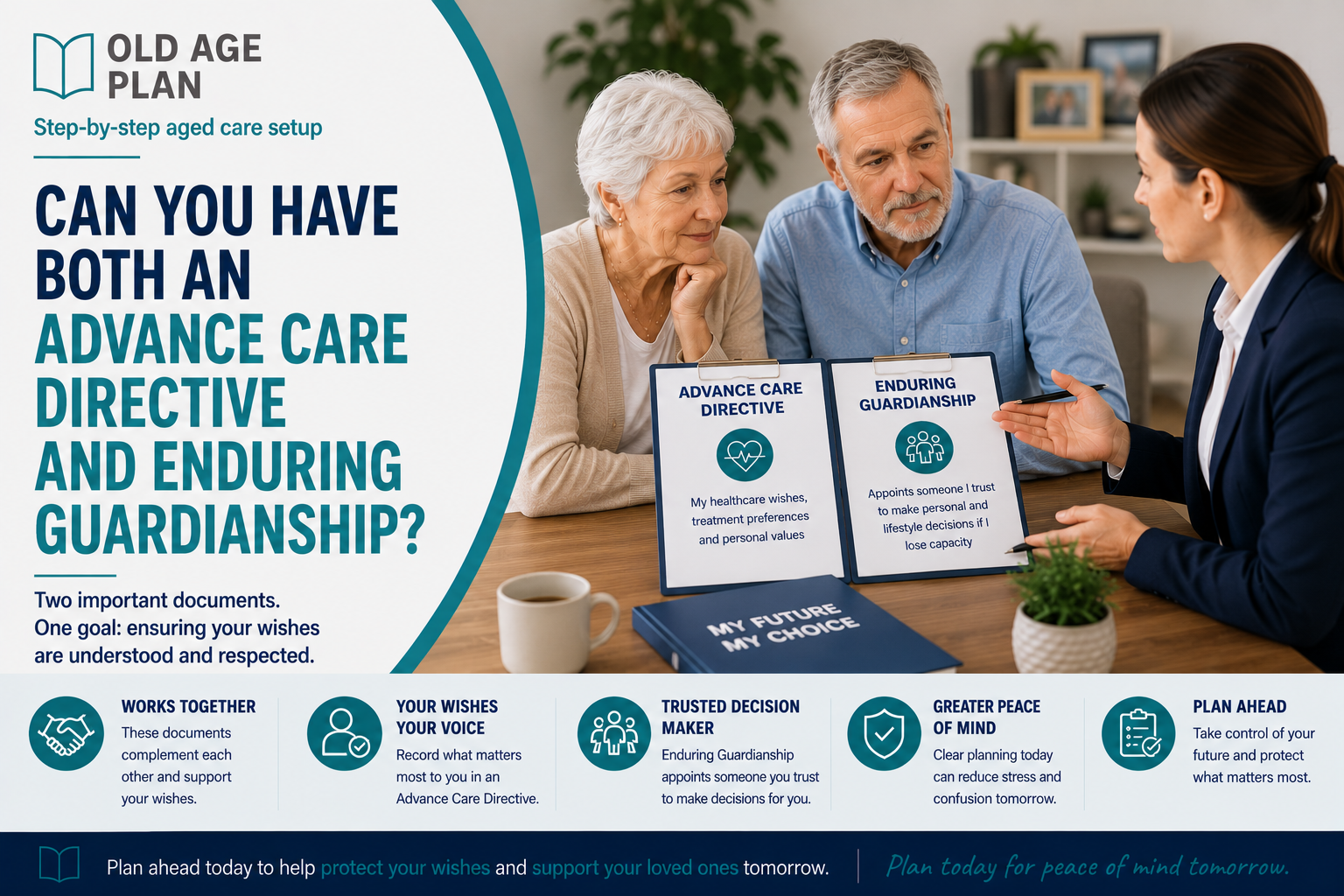

Can You Have Both An Advance Care Directive And Enduring Guardianship?
Many Australians complete future planning documents to help protect their wishes if they become unable to make decisions for themselves.
Two documents that are often discussed together are Advance Care Directives and Enduring Guardianship.
This leads many families to ask:
Can you have both an Advance Care Directive and Enduring Guardianship?
In many situations, the answer is yes.
These documents often work alongside each other and may play different roles in future healthcare decision-making.
Understanding how they differ can help families make more informed planning decisions.
Short Answer
In many Australian jurisdictions, people may have both an Advance Care Directive and an Enduring Guardianship arrangement.
While the exact laws vary across states and territories, the two documents often serve different purposes.
An Advance Care Directive generally records your wishes and preferences, while Enduring Guardianship usually allows a trusted person to make certain decisions on your behalf if you lose decision-making capacity.
What Is An Advance Care Directive?
An Advance Care Directive is a document that allows you to communicate your future healthcare wishes.
It may include:
- Healthcare preferences
- Treatment wishes
- Personal values
- Quality of life considerations
- Religious or cultural beliefs
The purpose is to help healthcare providers and decision-makers understand what matters most to you.
What Is Enduring Guardianship?
Enduring Guardianship generally allows you to appoint someone you trust to make certain personal, lifestyle or healthcare decisions if you lose decision-making capacity.
The exact powers and terminology vary across Australia.
Different states and territories use different legal frameworks.
However, the overall purpose is similar.
The appointed person may help make decisions when you can no longer make them yourself.
Why Do People Have Both?
The two documents often complement each other.
An Advance Care Directive can communicate your wishes.
An Enduring Guardian may help ensure those wishes are understood and represented if questions arise.
Many people see this combination as providing both guidance and representation.
Do You Need Both Documents?
Not necessarily.
Every person’s circumstances are different.
Some people may only require one planning document, while others may choose to use multiple documents that address different aspects of future decision-making.
The most appropriate approach will depend on personal circumstances, family relationships and the laws that apply where you live.
How Do The Documents Work Together?
Think of an Advance Care Directive as explaining what matters to you.
Think of Enduring Guardianship as identifying who may help speak on your behalf if you cannot speak for yourself.
While every situation is different, these documents often work best when they support the same overall planning goals.
Can These Documents Help Reduce Family Stress?
Many families find future healthcare decisions easier when clear planning has already occurred.
An Advance Care Directive may explain your wishes, while an Enduring Guardian may help communicate those wishes if questions arise.
Together, these documents may help reduce uncertainty during difficult situations.
Can An Enduring Guardian Override An Advance Care Directive?
This is one of the most common questions families ask.
The answer depends on the laws that apply in your state or territory and the circumstances involved.
Generally speaking, future planning documents are designed to work together rather than compete with one another.
This is why clear planning and professional advice can be valuable.
Should The Same Person Be Involved?
Many people choose someone they trust to act as their Enduring Guardian.
They also discuss their wishes with that person when preparing an Advance Care Directive.
This can help ensure the person understands their values, priorities and healthcare preferences.
However, every family situation is different.
What Happens If You Only Have One Document?
You may still have valuable planning in place.
However, some people prefer to use multiple planning tools because they address different aspects of future decision-making.
The best approach depends on personal circumstances, family relationships and applicable state or territory laws.
Why Communication Matters
Documents are important.
Conversations are equally important.
The people who may be involved in future decisions should understand your wishes while you are still able to explain them.
This can reduce confusion and make future decisions easier.
When Should You Create These Documents?
Future planning is generally easier while you have decision-making capacity.
Many people create these documents well before they are needed.
Planning early provides more opportunity to consider your wishes carefully and discuss them with trusted people.
Common Mistakes To Avoid
Assuming The Documents Do The Same Thing
Each document may have a different purpose.
Never Discussing Your Wishes
Conversations help people understand your preferences.
Choosing The Wrong Decision-Maker
The person you appoint should be someone you trust.
Failing To Review Documents
Regular reviews help ensure documents remain current.
Keeping Documents Hidden
The right people should know where important documents are stored.
Real-Life Example
Helen completed an Advance Care Directive after discussing future healthcare wishes with her GP.
She also appointed her daughter as her Enduring Guardian.
Years later, when Helen could no longer communicate some healthcare decisions herself, her daughter already understood her wishes and values.
The documents worked together to help guide future discussions about care.
This gave the family greater confidence during a difficult period.
Frequently Asked Questions
Can I have both an Advance Care Directive and Enduring Guardianship?
In many Australian jurisdictions, yes. The documents often serve different but complementary purposes.
Do the documents do the same thing?
No. They generally address different aspects of future decision-making.
Can an Enduring Guardian help explain my wishes?
Yes. They may help healthcare providers and family members understand your preferences.
Should I discuss my wishes with my Enduring Guardian?
Yes. These conversations are often extremely valuable.
Do the rules differ across Australia?
Yes. Laws and terminology vary between states and territories.
Should I seek professional advice?
Professional advice may help you understand the options available in your location.
Sources
- Advance Care Planning Australia
- Healthdirect Australia – Advance Care Planning And Directive
- My Aged Care
- NSW Trustee & Guardian
- Office of the Public Advocate Victoria
- Office of the Public Advocate Western Australia
Related Resources
- What Is An Advance Care Directive?
- Advance Care Directive vs Enduring Guardianship
- What Is Enduring Guardianship?
- Who Makes Medical Decisions If Your Advance Care Directive Is Unclear?
- Can Family Override An Advance Care Directive?
- Can An Advance Care Directive Be Challenged?
- What Is An Enduring Power Of Attorney?
- Estate Planning Pillar
- Free Aged Care Tools
Disclaimer
This article provides general information only. It is not legal, medical or financial advice. Advance Care Directive and Enduring Guardianship laws vary across Australian states and territories. Always seek professional advice relevant to your circumstances.