
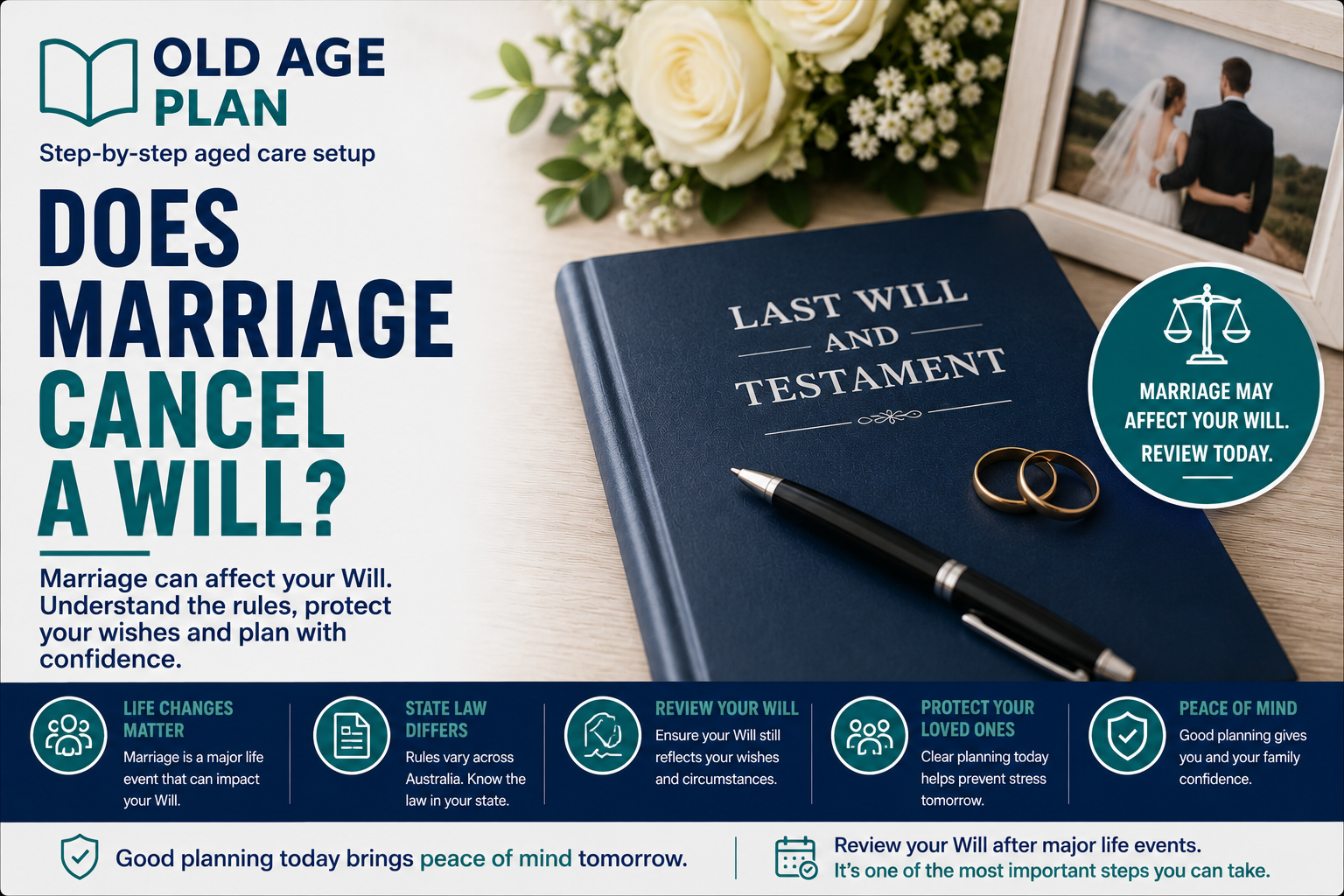

Does Marriage Cancel A Will?
Many Australians are surprised to learn that marriage can affect an existing Will.
If you create a Will and later get married, it is important to understand how that marriage may impact your estate planning arrangements.
The exact rules vary between Australian states and territories, which is why reviewing your Will after marriage is often recommended.
Why Does Marriage Matter?
A Will reflects your wishes at a particular point in time.
Marriage is a significant life event and may affect how estate planning laws apply to your circumstances.
Because of this, marriage can have important consequences for an existing Will.
Does Marriage Automatically Cancel A Will?
In some circumstances, marriage may affect all or part of an existing Will.
However, the exact outcome depends on the laws that apply in your state or territory and the wording of the Will itself.
This is why it is important not to assume your existing Will will continue to operate exactly as intended after marriage.
What If I Made My Will Before Getting Married?
If your Will was created before marriage, it may be worth reviewing it as soon as possible.
Your wishes, financial circumstances and family relationships may have changed.
A review can help ensure your estate planning documents continue to reflect your intentions.
What About Second Marriages?
Second marriages can create additional estate planning considerations.
There may be children from previous relationships, blended families, new financial arrangements and different expectations regarding inheritance.
This can make reviewing your Will especially important.
A Real-Life Example
Imagine a man creates a Will while single.
Several years later, he gets married but never reviews his estate planning documents.
After his death, questions arise about how the marriage affects the operation of the Will.
A simple review after marriage may have helped avoid uncertainty.
Should Newly Married Couples Review Their Wills?
Yes.
Marriage is often considered one of the most important times to review estate planning arrangements.
Even if a Will remains valid, it may no longer reflect current wishes or family circumstances.
What Other Documents Should Be Reviewed?
Marriage can be a good time to review other important documents as well.
These may include:
- Enduring Power of Attorney
- Advance Care Directive
- Superannuation beneficiary nominations
- Insurance policies
- Estate planning arrangements generally
Do The Rules Differ Across Australia?
Yes.
The effect of marriage on a Will varies between Australian states and territories.
It is important to understand the requirements that apply where you live and seek professional advice where appropriate.
Frequently Asked Questions
Does marriage cancel a Will?
Marriage can affect an existing Will, but the outcome depends on the laws that apply in your state or territory.
Should I review my Will after getting married?
Yes. Marriage is one of the most important life events that should prompt a review of estate planning documents.
What if I made my Will before marriage?
It is generally a good idea to review your Will after marriage to ensure it still reflects your wishes.
Does this apply to second marriages?
Yes. Second marriages often involve additional estate planning considerations, particularly where blended families are involved.
Should I review other estate planning documents too?
Many people review documents such as Enduring Powers of Attorney, Advance Care Directives and superannuation nominations after marriage.
Sources and Additional Information
Related Resources
- What Is A Will?
- Can I Change My Will?
- How Often Should You Update Your Will?
- Where Should You Store Your Will?
- Free Aged Care Tools
Disclaimer: This article provides general information only and does not constitute legal, financial or professional advice. Laws vary between Australian states and territories.